
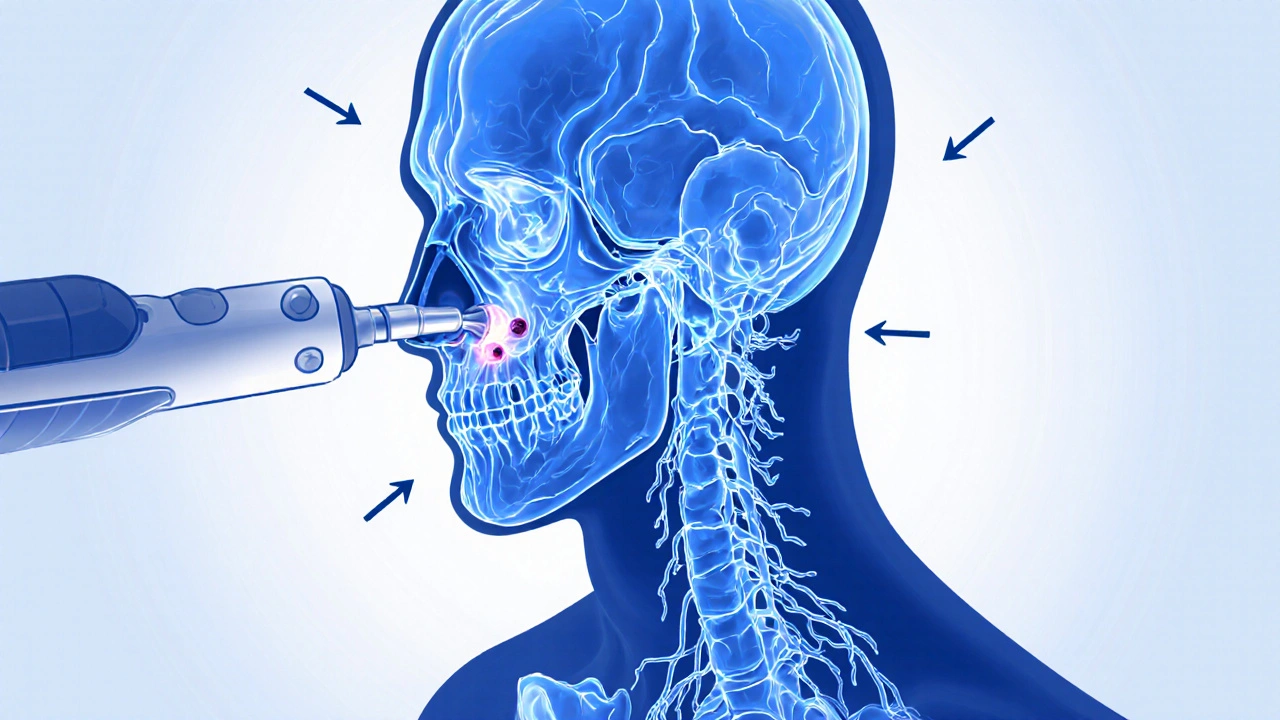
When your body’s main hormone factory — the pituitary gland, a pea-sized organ at the base of the brain that controls thyroid, adrenal, and reproductive hormones — starts growing abnormally, it can throw your whole system out of balance. That’s where pituitary surgery, a precise procedure to remove tumors or correct structural issues in the pituitary gland comes in. It’s not open brain surgery. Most often, it’s done through the nose using a tiny camera and tools — a technique called endoscopic surgery, a minimally invasive approach that avoids scalp incisions and reduces recovery time. This isn’t just about removing a growth. It’s about restoring your sleep, energy, mood, and even your ability to have children.
Pituitary tumors are often benign, but they don’t need to be cancerous to cause serious problems. If the tumor makes too much cortisol, you might gain weight, develop diabetes, or lose bone density. If it’s overproducing growth hormone, your hands and feet keep growing — a condition called acromegaly. If it’s too small or damaged, your thyroid or adrenal glands shut down, leaving you exhausted and cold. Surgery is usually the first real fix when meds don’t cut it. And it’s not just for adults. Kids with hormone-driven growth issues or vision loss from pressure on the optic nerve often need it too. Recovery isn’t overnight. You might feel tired for weeks. Some people need lifelong hormone replacement. But for many, it’s the turning point — the moment they stop feeling "off" and start feeling like themselves again.
What you’ll find here isn’t theory. It’s real-world insight from people who’ve been through it — from how to prep for the procedure, to what the first week home is really like, to how to spot warning signs after surgery. You’ll see how pituitary surgery connects to hormone testing, why some patients need follow-up radiation, and how it intersects with other treatments like thyroid meds or diabetes management. This isn’t a textbook. It’s a guide for anyone who’s been told, "You need surgery," and wants to know what comes next — without the jargon.
Cushing's syndrome, caused by excess cortisol, leads to serious health risks. Surgery is the most effective cure for tumor-related cases, with high success rates when performed at specialized centers. Learn how it works, what to expect, and why timing matters.