
When you need a medication renewal, the process of safely obtaining a new supply of a prescribed drug after the current one runs out. Also known as prescription refill, it’s not just a routine trip to the pharmacy—it’s a critical moment where safety, effectiveness, and your health outcomes intersect. Too many people treat it like ordering coffee: just hit repeat. But drugs aren’t groceries. Stopping and restarting certain medications without guidance can cause withdrawal, rebound effects, or even life-threatening complications—especially with blood thinners, antidepressants, or high-blood-pressure pills.
Medication adherence, how consistently a patient takes their drugs as prescribed is the backbone of any successful treatment, and medication renewal is where adherence often breaks down. Did your doctor review your current meds before renewing? Are you still taking the same dose? Has your kidney or liver function changed? These aren’t minor details—they’re the difference between control and crisis. For example, someone on warfarin might need a blood test before renewal, while a person on a DOAC might not need any monitoring at all. Skipping these checks because "it’s just a refill" is how errors happen.
And then there’s the issue of generic drug substitution, when a pharmacy replaces a brand-name drug with a cheaper version that meets FDA bioequivalence standards. It’s legal, safe, and saves money—but not always seamless. You might get a pill that looks different, has a different filler, or even changes how fast it works in your body. That’s why some people report feeling off after a renewal, even though the label says it’s the same drug. The FDA requires generics to be bioequivalent, but real-world experience shows small differences can matter—especially for narrow-therapeutic-index drugs like seizure meds or thyroid pills.
Renewals also expose gaps in communication. If your doctor didn’t update your medication list after a hospital stay, or if your pharmacist didn’t flag a new interaction, you’re flying blind. That’s why documenting safety alerts on your list—like those from ISMP or the FDA—isn’t optional. It’s your first line of defense. And if you’re traveling, renewing meds abroad, or switching insurance plans, the rules change. Some countries don’t allow certain drugs. Some insurers won’t cover generics unless you try the brand first. You need to know your rights and your options before you run out.
There’s no one-size-fits-all renewal plan. What works for a blood thinner doesn’t work for an antihistamine. What’s safe for a 30-year-old might be dangerous for a 75-year-old. That’s why the posts here cover real cases: how to handle missed doses without doubling up, how to read FDA alerts before renewing, why authorized generics look different but work the same, and how to avoid common home medication errors that lead to ER visits. You’ll find guidance on when to ask for a new prescription, when to push back on a pharmacy substitution, and how to talk to your provider so renewal isn’t a guesswork game.
This isn’t about following rules. It’s about understanding your own body and your meds well enough to know when something’s off. Whether you’re managing hypertension with lisinopril-HCTZ, dealing with a drug allergy, or trying to reverse fatty liver without pills, your next renewal is a chance to get it right—not just to get more pills. The information below gives you the tools to do that—without jargon, without fluff, and without assuming you already know the basics.
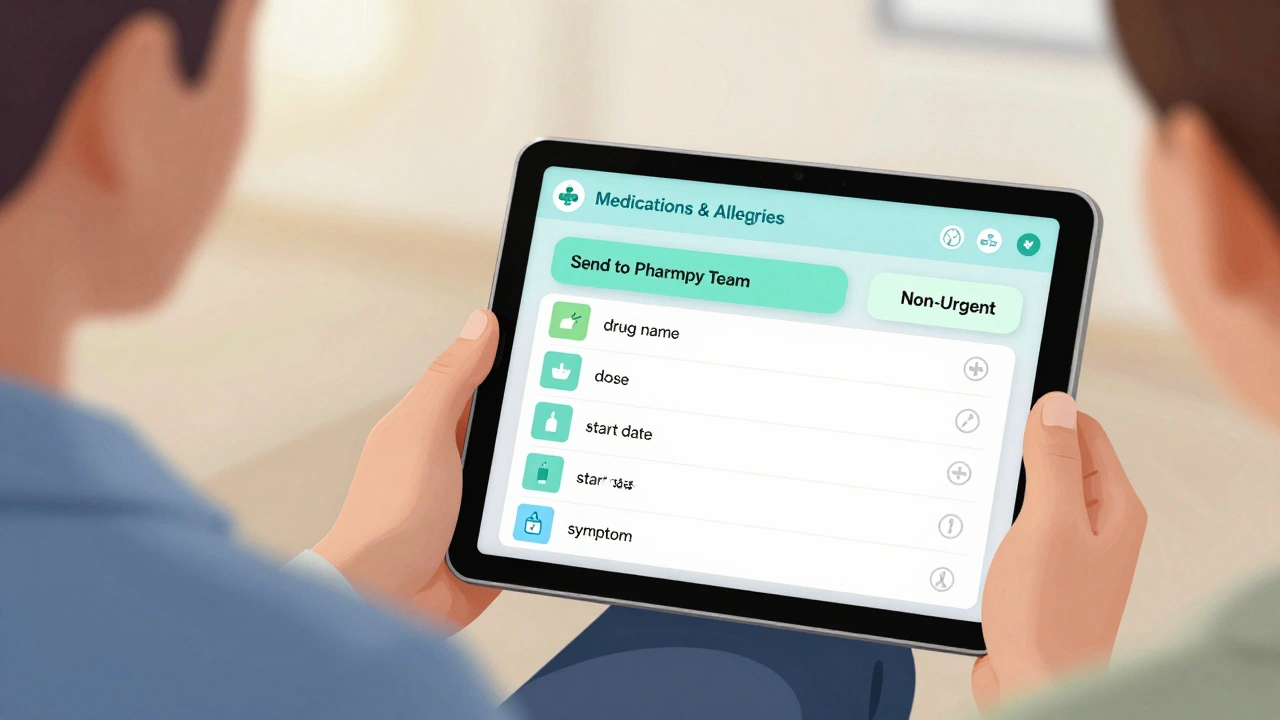
Learn how to use secure messaging to ask medication questions safely and effectively. Get step-by-step guidance on using HIPAA-compliant portals like MyChart to clarify doses, report side effects, and request refills without risking your privacy.