
When healthcare teams send messages about your treatment, prescriptions, or test results, they need to do it in a way that protects your privacy. That’s where HIPAA-compliant messaging, a system for exchanging health information that follows federal rules to protect patient data. Also known as secure health communication, it’s not just about encryption—it’s about who can access the info, how it’s stored, and whether the platform itself is certified to handle protected health information. Many people think any encrypted app works, but that’s not true. If the app isn’t designed for healthcare and doesn’t sign a Business Associate Agreement, it’s not HIPAA-compliant—even if it says "secure" on the box.
HIPAA-compliant messaging isn’t just for doctors. Nurses use it to coordinate care shifts, pharmacists confirm prescriptions, and patients can safely message their care teams about side effects or missed doses. It’s tied to other critical concepts like patient privacy, the legal and ethical right to control who sees your medical details, and secure messaging, the technical methods that prevent unauthorized access to health data during transmission. These aren’t optional. A single unsecured text about a patient’s diabetes or mental health condition can lead to fines, lawsuits, and lost trust. The Department of Health and Human Services has fined providers millions for exactly this kind of mistake.
What makes a messaging tool compliant? It must have end-to-end encryption, user authentication, audit logs, automatic logout, and data retention policies that match HIPAA requirements. It also can’t store messages on public cloud servers unless they’re properly secured. Tools like TigerText, Spruce, and OhMD are built for this. Regular apps like WhatsApp, iMessage, or standard SMS? They’re not enough. Even if your provider says it’s "fine," ask them: Do they have a signed Business Associate Agreement with the vendor? If not, your info isn’t protected under federal law.
And it’s not just about texting. HIPAA-compliant messaging includes secure portals, email systems, and even video consults where personal health data is shared. It’s the backbone of modern care coordination—especially when patients are managing multiple conditions, switching providers, or using telehealth. You’ll find real examples in the posts below: how clinics prevent errors by using secure channels, why skipping compliance puts patients at risk, and how tools like Medication Guides and safety alerts are delivered without breaking the law. Whether you’re a patient, caregiver, or provider, understanding this system helps you ask the right questions and demand better protection for your health data.
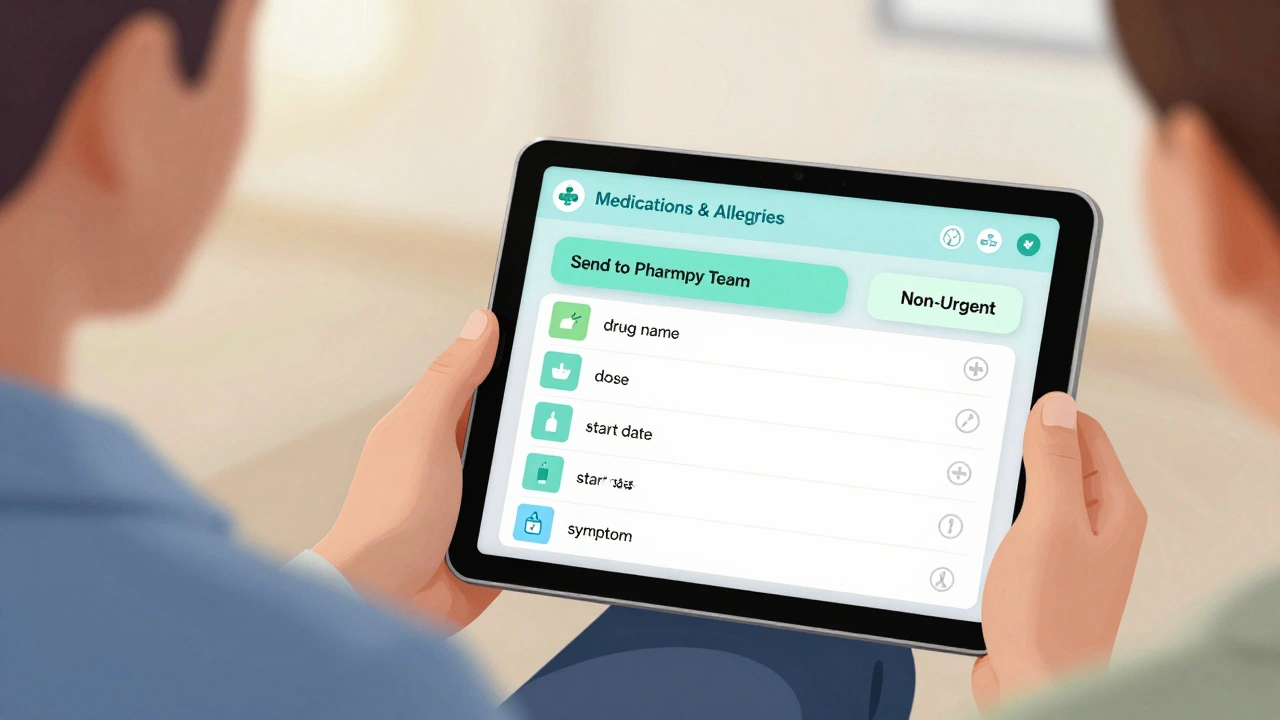
Learn how to use secure messaging to ask medication questions safely and effectively. Get step-by-step guidance on using HIPAA-compliant portals like MyChart to clarify doses, report side effects, and request refills without risking your privacy.