
When it comes to fiber for constipation, a type of indigestible carbohydrate that adds bulk to stool and helps it move through the digestive tract. Also known as dietary fiber, it's one of the most reliable, drug-free ways to keep things moving. But not all fiber is the same—and throwing more at the problem won’t fix it if you’re using the wrong kind or doing it wrong.
Soluble fiber, a type of fiber that dissolves in water and forms a gel-like substance in the gut. Also known as viscous fiber, it’s found in oats, beans, apples, and psyllium slows digestion and softens stool, making it easier to pass. Insoluble fiber, a type of fiber that doesn’t dissolve and adds bulk to stool. Also known as roughage, it’s in whole grains, nuts, and vegetable skins speeds things up by pushing material through the intestines. Most people with constipation need both—but too much insoluble fiber too fast can make bloating worse. That’s why starting with soluble fiber, like psyllium husk, often gives faster relief without the side effects.
It’s not just about what you eat—it’s about how much water you drink, when you take it, and whether you’re doing it consistently. Fiber needs water to work. Without enough fluids, it can turn into a hard plug instead of a smooth passage. And if you jump from zero fiber to 30 grams a day overnight, you’ll likely feel worse before you feel better. Most adults need 25 to 30 grams daily, but if you’re constipated, start with 5 to 10 grams from a supplement like psyllium, then slowly add more from food over a couple of weeks.
Some people swear by prunes. Others find flaxseed helps. But what actually works for one person might do nothing for another. That’s because constipation isn’t one problem—it’s a symptom. It can come from slow transit, pelvic floor dysfunction, medication side effects, or even not drinking enough. Fiber helps in many cases, but not all. That’s why the posts below cover real-world stories and science: from how fiber interacts with common medications, to why some people need more than just bran cereal, to what happens when you combine fiber with probiotics or laxatives.
You’ll find practical advice on what fiber sources actually deliver the most relief, how to avoid the traps that make constipation worse, and what to do when fiber alone isn’t enough. No fluff. No guesswork. Just what works, based on real experiences and evidence.
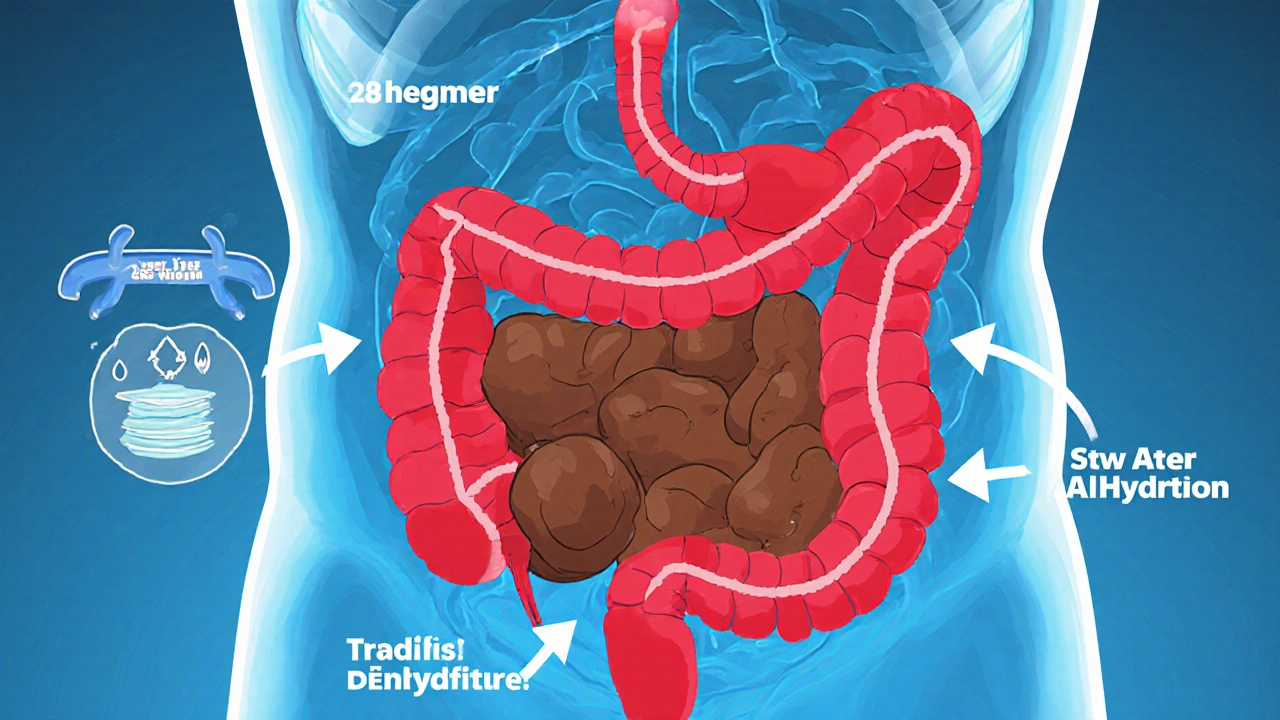
Constipation affects millions, often due to low fiber, dehydration, or medications. Learn the real causes, which laxatives actually work, and how to manage it long-term without dependency.