
When you hear DOACs, Direct Oral Anticoagulants are a class of modern blood-thinning medications designed to prevent dangerous clots without the need for constant blood tests. Also known as novel oral anticoagulants, they’ve changed how millions manage atrial fibrillation, deep vein thrombosis, and pulmonary embolism—without the hassle of warfarin’s dietary restrictions and frequent lab visits. Unlike older blood thinners, DOACs work by directly blocking specific clotting factors in your blood, making them faster-acting and more predictable. You don’t need to check your INR levels every week. You don’t have to avoid spinach or vitamin K-rich foods. That’s why doctors now prescribe them as the first choice for many patients.
DOACs include drugs like apixaban, a commonly prescribed anticoagulant used to reduce stroke risk in people with atrial fibrillation, rivaroxaban, often used after hip or knee surgery to prevent clots, and dabigatran, a direct thrombin inhibitor that blocks a key enzyme in the clotting process. These aren’t just different names—they’re different tools for different needs. Some are taken twice a day, others once. Some work better for people with kidney issues, others are safer for older adults. The right one depends on your health, your lifestyle, and your doctor’s judgment.
But DOACs aren’t magic. They still carry risks—especially if you miss a dose or take them with certain painkillers or antibiotics. Unlike warfarin, there’s no easy way to reverse their effect in an emergency, though specific antidotes exist for some. That’s why knowing what to do if you forget a pill matters just as much as knowing when to take it. And while they’re safer than older drugs, they’re not risk-free. Bleeding can still happen, sometimes without warning. That’s why tracking your meds, knowing your warning signs, and communicating with your provider are non-negotiable.
You’ll find posts here that cover exactly these real-world concerns: how to handle missed doses safely, how to read FDA safety alerts for your DOAC, how to store your meds away from household chemicals, and how to use secure messaging to ask your doctor questions without waiting weeks. You’ll see how patients manage these drugs long-term, what to do if you travel abroad, and how to avoid dangerous interactions with other medications like antipsychotics or antibiotics. These aren’t theoretical guides—they’re practical tools built from patient experiences and clinical guidelines.
Whether you’re just starting on a DOAC, have been on one for years, or are helping a loved one manage it, this collection gives you the clear, no-fluff facts you need to stay safe and in control. No jargon. No guesswork. Just what works, what doesn’t, and what you should ask your doctor next.
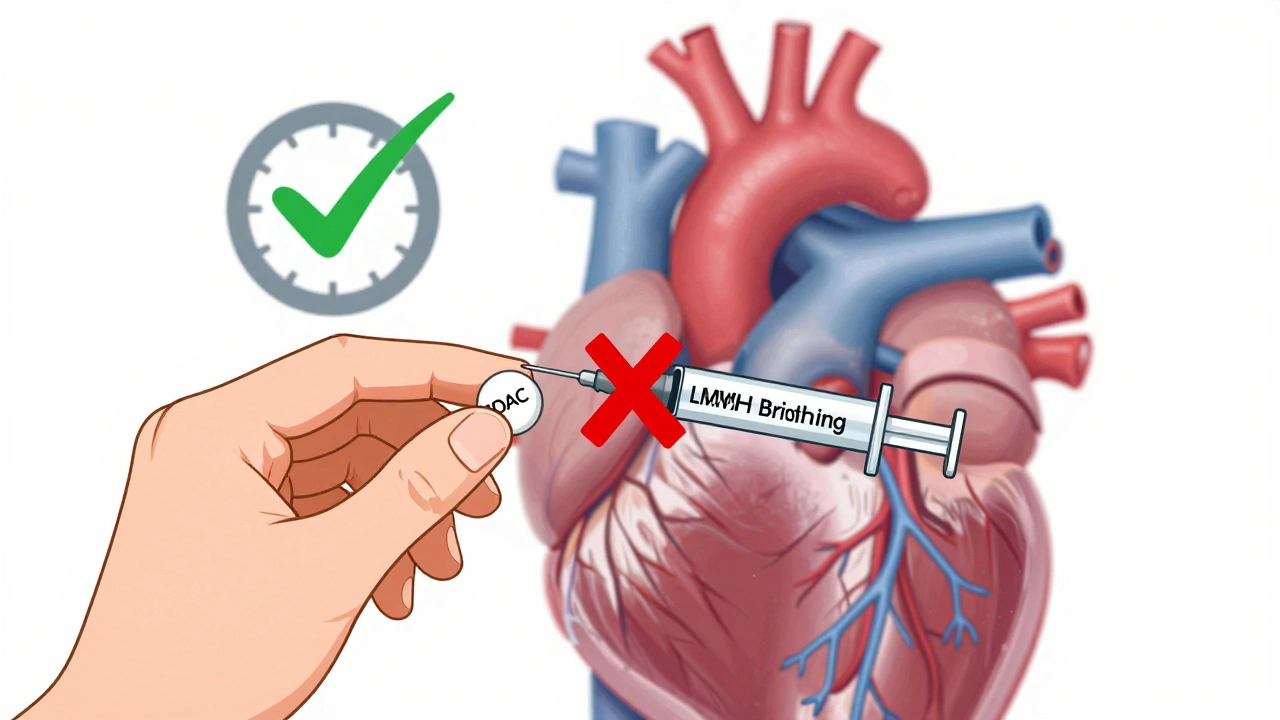
Learn when bridging therapy is truly needed when switching between blood thinners. Most patients don’t require it anymore - especially those on DOACs. Discover the latest guidelines, risks, and safe protocols for warfarin and newer anticoagulants.