
When you're stuck and can't move your bowels, it's not just uncomfortable—it's a signal your body is out of sync. Constipation, a condition where stool moves too slowly through the colon, leading to infrequent or difficult bowel movements. Also known as slow transit, it's one of the most common digestive complaints, affecting nearly one in four adults at some point. But here’s the thing: most people blame diet alone, and that’s only part of the story.
Behind every case of constipation are usually one or more triggers. Medication side effects, including opioids, antidepressants, iron pills, and antacids with aluminum or calcium are a top cause you might not even realize. A study in the Journal of Clinical Gastroenterology found that over 40% of chronic constipation cases in older adults were linked directly to drugs they were taking. Then there’s dehydration, a silent driver that thickens stool before you even feel thirsty. If you're not drinking enough water, your colon pulls moisture out of waste to conserve it—leaving you harder to pass. And don’t forget lack of movement, whether from sitting all day, recovering from surgery, or being bedridden. Your gut needs physical motion to keep things rolling.
Some causes are hidden in plain sight. Constipation often flares up after starting a new supplement, switching to a low-carb diet, or skipping meals. Stress messes with your gut-brain axis, slowing digestion even if you're eating fiber. Hormonal shifts—like during pregnancy or menopause—can also throw off your rhythm. And yes, ignoring the urge to go regularly trains your body to ignore it, making constipation worse over time.
You’ll find posts here that dig into how specific drugs like opioids, antacids, and even some blood pressure meds can lock up your bowels. Others show you how to spot when constipation is a symptom of something bigger—like thyroid trouble or nerve damage. There are real stories from people who fixed their digestion after realizing their medication was the culprit, not their diet. You’ll also learn how to tell the difference between occasional slowdown and chronic trouble, and what steps actually work when fiber and water alone don’t cut it.
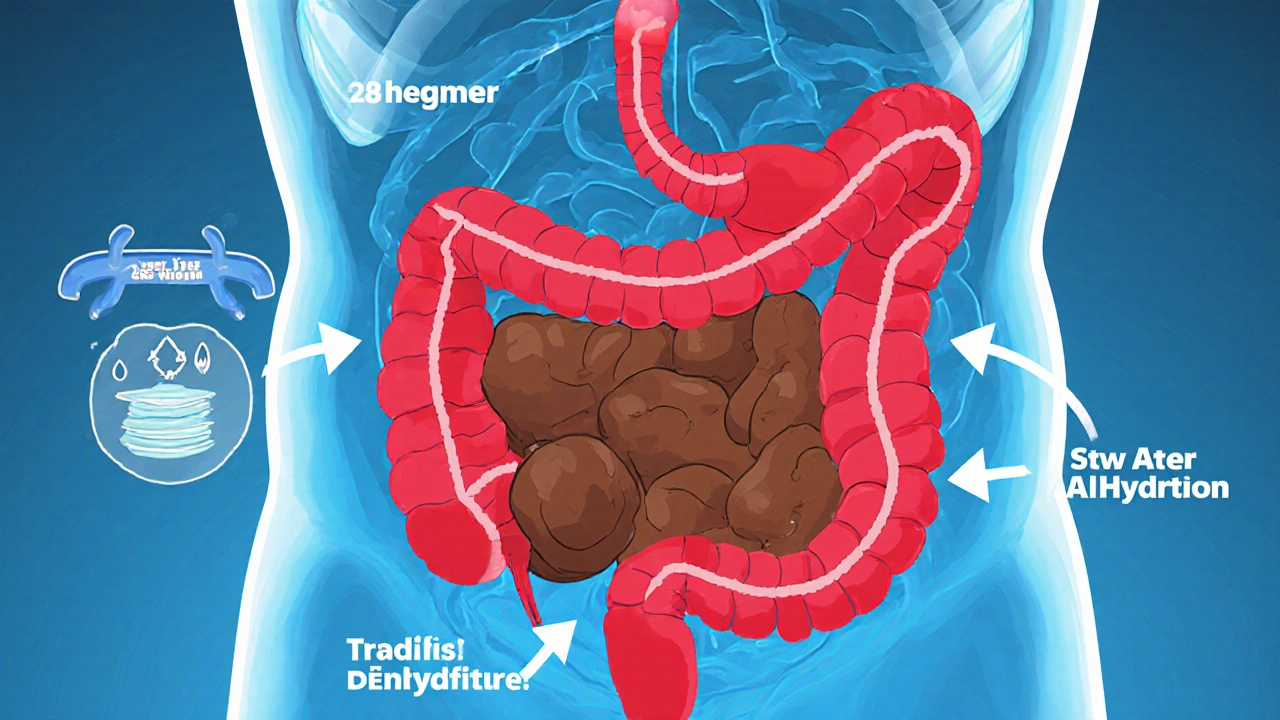
Constipation affects millions, often due to low fiber, dehydration, or medications. Learn the real causes, which laxatives actually work, and how to manage it long-term without dependency.