
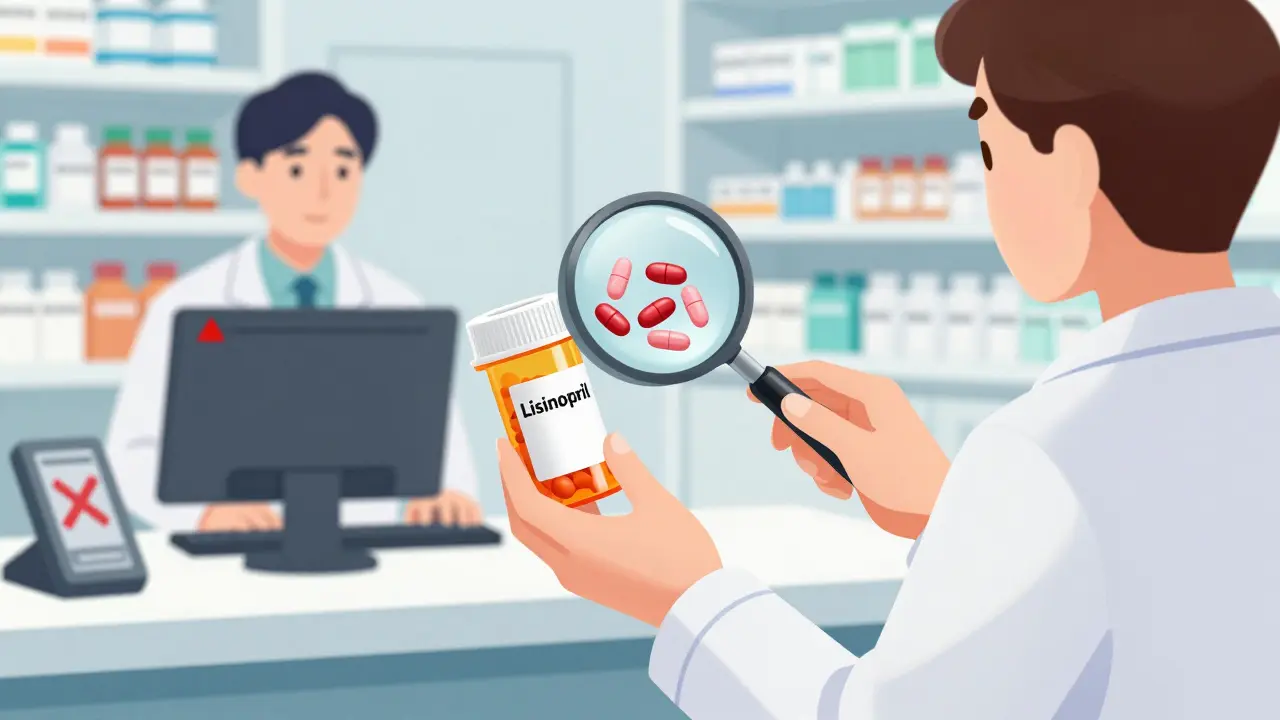
If you open your prescription bottle and the pills look nothing like what you expected, don’t panic-but don’t ignore it either. Wrong medication is more common than most people realize. Every year in the U.S., over 1.5 million people are affected by medication errors, and about a quarter of those happen at the pharmacy counter. The mistake could be a completely different drug, the wrong dose, or even someone else’s prescription. The good news? Most serious outcomes can be avoided if you act quickly and know exactly what to do.
Stop Taking the Medication Immediately
The first and most critical step is to stop taking the pills. Even if you feel fine, continuing to take the wrong medication can lead to dangerous side effects, interactions with other drugs you’re on, or worsening of your condition. For example, someone prescribed blood pressure medication might accidentally get a stimulant like Adderall. Taking that by mistake could send their heart rate into overdrive. Or worse, a diabetic might receive thyroid medication instead of insulin-delaying treatment could lead to a life-threatening crisis. Don’t wait to see if you feel sick. Don’t assume it’s just a different brand. If the color, shape, size, or imprint on the pill doesn’t match what you’ve taken before-or if the label doesn’t match your doctor’s prescription-treat it like a red flag. Put the bottle down. Don’t swallow another pill.Call Your Doctor Right Away
Your doctor needs to know as soon as possible. Call their office and explain exactly what happened: “I picked up my prescription and the pills don’t match what I was told to take.” They’ll ask you for the name of the medication you received, the dose, and when you last took it. Depending on the drug, your doctor might:- Ask you to come in for an exam or blood test
- Prescribe the correct medication immediately
- Recommend you go to the emergency room if there’s any risk of harm
- Advise you to monitor for specific symptoms like dizziness, chest pain, nausea, or confusion
Contact the Pharmacy-Speak to the Manager
Go back to the pharmacy where you got the medication. Don’t just talk to the technician who handed you the bottle. Ask to speak with the head pharmacist or manager. This isn’t about blaming someone-it’s about getting answers and protecting yourself. When you talk to them:- Be calm but clear. Say: “I received the wrong medication. I need to understand how this happened.”
- Ask for a copy of the original prescription they received from your doctor.
- Ask them to check their records for any changes or corrections made to your order.
- Request a written summary of what they found. Email it to yourself if they won’t give you a paper copy.
Preserve All Evidence
This is not optional. If you ever need to file a complaint, make a claim, or take legal action, your evidence is everything. Keep:- The incorrect medication-don’t return it or throw it away
- The original prescription bottle and label
- The pharmacy receipt
- The empty bottle from your previous correct prescription (if you still have it)
- Photos of the pills next to the label
- A video showing the pill and label side by side
Know When to Go to the ER
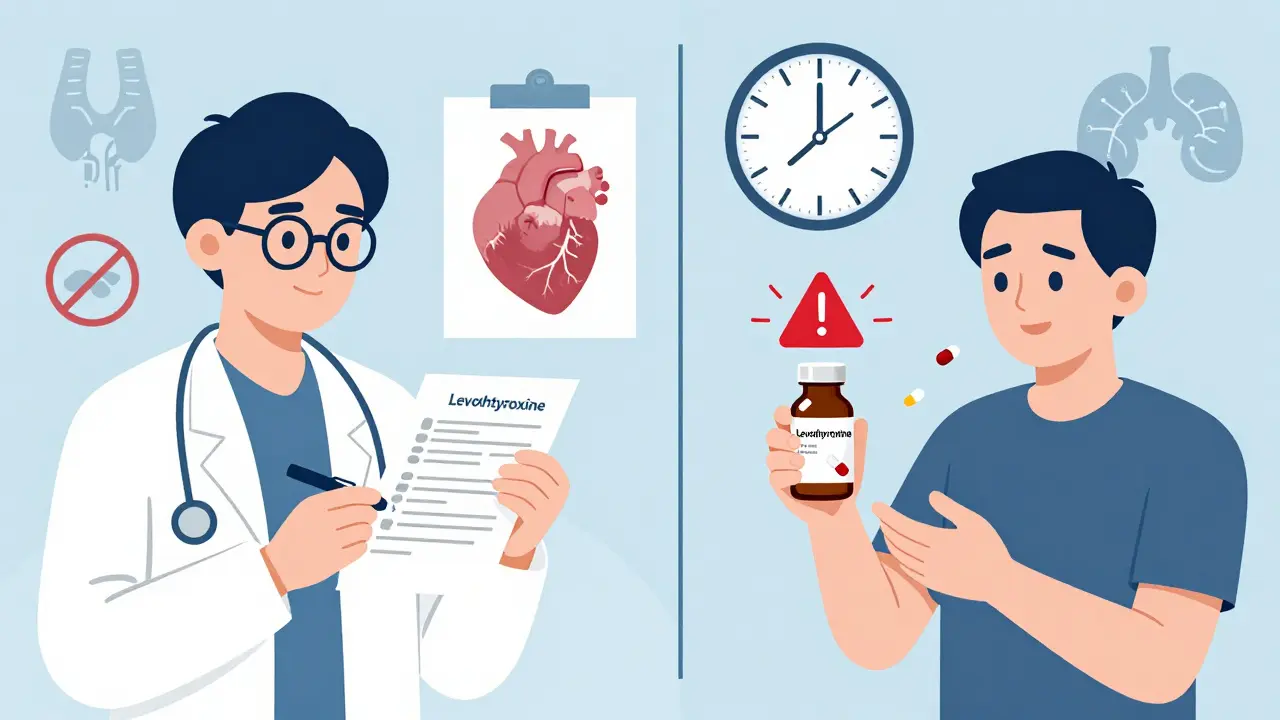
If you’ve already taken the wrong medication and you feel unwell, don’t wait. Symptoms like rapid heartbeat, trouble breathing, severe dizziness, vomiting, confusion, or loss of consciousness are emergencies. Call 911 or go to the nearest emergency room. Tell them: “I was given the wrong medication by the pharmacy and I took it.” Bring the bottle with you. The ER staff will check your vitals, run tests if needed, and document everything. This medical record becomes part of your official case file. Even if you feel fine now, some drugs cause delayed reactions. For example, an overdose of thyroid medication can take 24-48 hours to show symptoms. Keep monitoring yourself. Write down any changes in how you feel.Report the Error to Authorities
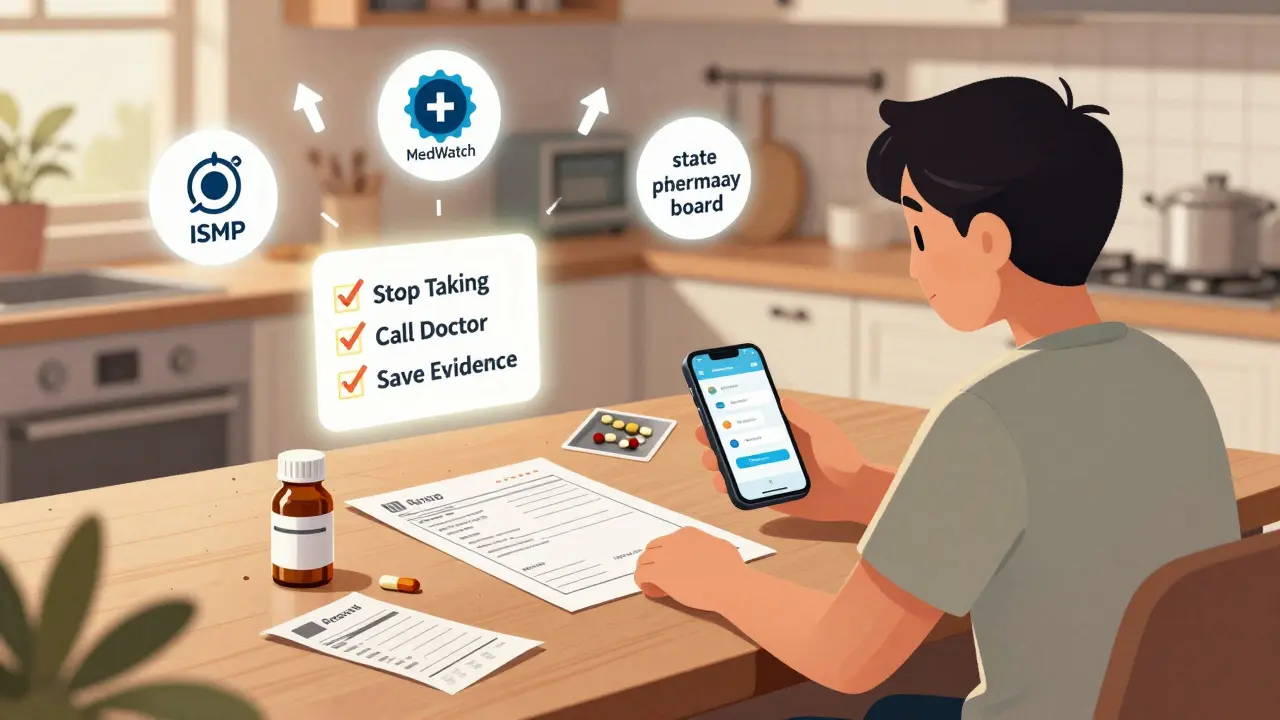
Pharmacies won’t always fix their systems unless they’re held accountable. Reporting the error helps protect others. You can report to:- The Institute for Safe Medication Practices (ISMP) - They run a confidential national reporting system. Over 100,000 errors have been reported since 1991. You don’t need to give your name.
- Your state pharmacy board - Every state has one. In Georgia, for example, you report to the Georgia Composite Medical Board and the Attorney General’s Consumer Protection Division.
- The FDA’s MedWatch program - They received over 92,000 medication error reports in 2022. Most came from pharmacies.
Understand Your Legal Rights
If the mistake caused you harm-physical, emotional, or financial-you may have grounds for a legal claim. Pharmacy errors are considered medical malpractice in many cases. Here’s what you need to know:- You typically have 1 to 3 years to file a claim, depending on your state. In Georgia, it’s 2 years from when you discovered the error.
- Most cases settle out of court-about 70%-with payouts ranging from $50,000 to $500,000. In extreme cases involving permanent injury or death, settlements have exceeded $10 million.
- Never give a recorded statement to the pharmacy’s insurance company without talking to a lawyer first.
- Keep all receipts for medical bills, lost wages, travel costs, and therapy sessions related to the error.
Why This Happens-and How to Prevent It
Pharmacy errors don’t happen because pharmacists are careless. They happen because systems are overloaded. One pharmacist might be filling 150 prescriptions in a single shift. Names sound alike (e.g., “Lisinopril” vs. “Losartan”). Pills look similar. Digital systems glitch. But the best prevention is you. Before leaving the pharmacy:- Check the label against your doctor’s instructions. Does the name match? The dose? The number of pills?
- Ask: “Is this what my doctor ordered?”
- Compare the pill to your last prescription. If it looks different, ask why.
- Use apps like Medisafe or MyTherapy to track your meds and flag mismatches.
Long-Term Risks of Ignoring a Mistake
Many people think, “I didn’t feel sick, so it’s fine.” But the data says otherwise. According to the Journal of the American Medical Association, patients who experience a medication error have a 28% higher risk of dying within five years. Cardiovascular and diabetes meds are especially dangerous if mixed up. A wrong dose of insulin can cause coma. A wrong blood thinner can cause internal bleeding. The cost to the U.S. healthcare system? Over $21 billion a year-$8.4 billion of that from pharmacy mistakes alone. These aren’t just numbers. They’re people who got sicker because a pill was mislabeled. By speaking up, you’re not just protecting yourself. You’re helping fix a broken system.What to Do Next: Your Quick Action Checklist
- Stop taking the medication immediately.
- Call your doctor and explain what happened.
- Go back to the pharmacy and speak to the manager.
- Take photos and videos of the wrong pills and label.
- Save the bottle, receipt, and empty packaging.
- Write down when you took the pills and what symptoms you experienced.
- Report the error to ISMP and your state pharmacy board.
- Consult a lawyer if you had any adverse effects.
What should I do if I accidentally took the wrong medication?
Stop taking it immediately. Call your doctor or go to the emergency room if you feel unwell. Keep the medication, bottle, and receipt as evidence. Even if you feel fine, monitor yourself for delayed symptoms like dizziness, nausea, or rapid heartbeat. Contact your pharmacy to report the error and request a written explanation.
Can I get in trouble for keeping the wrong medication?
No, you should not return or dispose of the wrong medication until you’ve reported the error and documented it. Returning it may destroy critical evidence needed if you need to file a complaint or legal claim. Keep it in a safe place, out of reach of children or pets, until you’ve spoken with your doctor or lawyer.
How common are pharmacy errors?
About 1.5 million people in the U.S. are affected by medication errors each year, with pharmacy dispensing errors accounting for roughly 26% of all medication-related incidents. Experts estimate that less than 15% of errors are ever reported, meaning the real number could be much higher.
Will my insurance cover costs if I was given the wrong drug?
Your insurance may cover emergency care or follow-up treatment, but not necessarily the cost of the error itself. The pharmacy or its insurer is typically responsible for reimbursing you for medical bills, lost wages, and other expenses caused by their mistake. Keep all receipts and medical records to support your claim.
Can I sue the pharmacy for giving me the wrong medication?
Yes, if the error caused you harm, you may have grounds for a medical malpractice claim. Most cases settle out of court, with payouts ranging from $50,000 to $500,000. Catastrophic cases involving permanent injury or death have resulted in settlements over $10 million. Consult a lawyer before speaking to the pharmacy’s insurance company.
How can I prevent this from happening again?
Always check your prescription label before leaving the pharmacy. Compare the pill to your last refill. Ask the pharmacist: “Is this what my doctor ordered?” Use medication apps to track your prescriptions. Choose pharmacies that use barcode scanning systems. If you’re unsure, ask for a second verification.
sagar patel
December 25, 2025 AT 14:17Christopher King
December 27, 2025 AT 13:45Terry Free
December 29, 2025 AT 05:04Sophie Stallkind
December 30, 2025 AT 12:53Linda B.
December 31, 2025 AT 12:40Michael Dillon
December 31, 2025 AT 19:50Gary Hartung
December 31, 2025 AT 21:56Ben Harris
January 1, 2026 AT 05:01Oluwatosin Ayodele
January 3, 2026 AT 02:51Jason Jasper
January 4, 2026 AT 06:49Mussin Machhour
January 5, 2026 AT 17:20Carlos Narvaez
January 5, 2026 AT 21:27Harbans Singh
January 7, 2026 AT 08:26Justin James
January 8, 2026 AT 13:13