
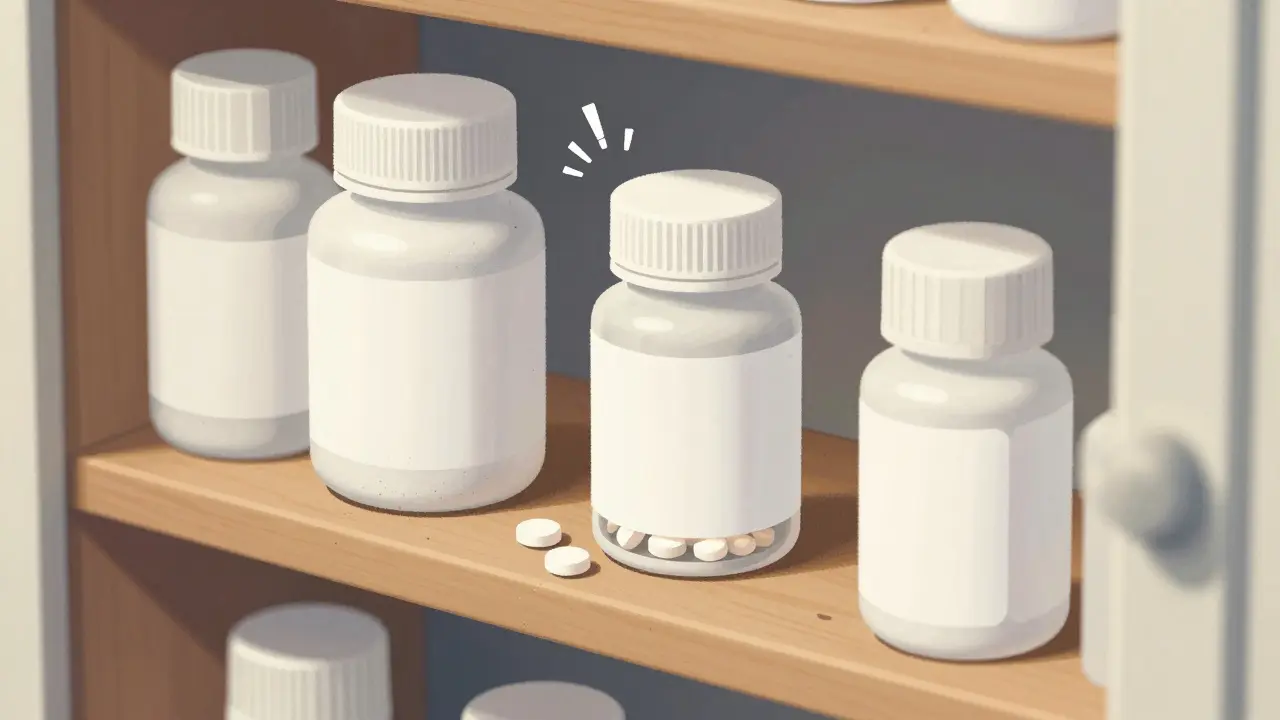
You've probably found that little white bottle in your bathroom cabinet with a date stamped on the lid. Maybe it was two months ago, maybe it was two years ago. Your instinct tells you to throw it away. But here is the thing most people don't realize: that date is likely a guess about legal liability, not necessarily a hard stop on safety or effectiveness.
We spend hundreds of billions on medicine every year. Throwing away perfectly good pills because of an inked date on a label creates massive waste, financially and environmentally. So, how long do these medicines actually last? Can you really trust an old stash of antibiotics or pain relievers?
The Real Meaning of Expiration Dates
When manufacturers print an expiration date on your prescription, they aren't telling you exactly when the drug turns into poison. They are guaranteeing that up until that day, the medication remains at its full, tested strength under normal conditions. In short, it's a contract between the company and the government, not a bomb timer for your health.
The U.S. Food and Drug Administration (FDA) regulates this through the Drug Registration and Listing System. They require companies to set dates based on initial stability testing, typically ranging from 12 to 60 months after production. Federal Drug Agency However, regulations don't force companies to keep testing past that point. They simply stop measuring. This means the date is often arbitrary. Once you pass the deadline, the manufacturer stops guaranteeing potency, but the chemistry of the drug doesn't suddenly reverse gears.
Expiration dating serves primarily as a safeguard for pharmaceutical companies, ensuring they meet quality standards while protecting them from liability claims once the product ages.
What Science Says About Old Meds
If the date isn't a cliff edge, what happens next? We have decades of hard data to answer this. Research shows that the vast majority of solid medications remain well within their safety limits long after the printed date.
In November 2012, researchers from the University of California-San Francisco School of Pharmacy California Poison Control System published a landmark study in the Archives of Internal Medicine. Led by Dr. Lee Cantrell, the team analyzed eight prescription drugs containing 15 different active ingredients. Here is the kicker: these drugs were between 28 and 40 years old. That is up to 480 months past their original expiration dates.
The results were staggering. Twelve of the 14 medications tested retained at least 90% of their original potency even after those three to four decades. Only aspirin and amphetamine fell below the acceptable threshold. Most drugs stayed stable for the entire duration of the test. While the FDA allows for "reasonable variation" (meaning a pill can contain between 90% and 110% of the active ingredient and still be considered accurate), finding 90% potency after 40 years suggests the chemical breakdown is incredibly slow.
This aligns with the findings of the Department of Defense. Since 1986, their Shelf-Life Extension Program (SLEP) has been testing federal drug stockpiles kept in ideal conditions. Out of 122 different drugs tested, 88% qualified for extended expiration dates. On average, the Army extended shelf life by 66 months-more than five years. Some went up to 278 months longer. This isn't just theory; the military is actively using these drugs to save taxpayers money, proving the science works in practice.
Solid vs. Liquid: Form Changes Everything
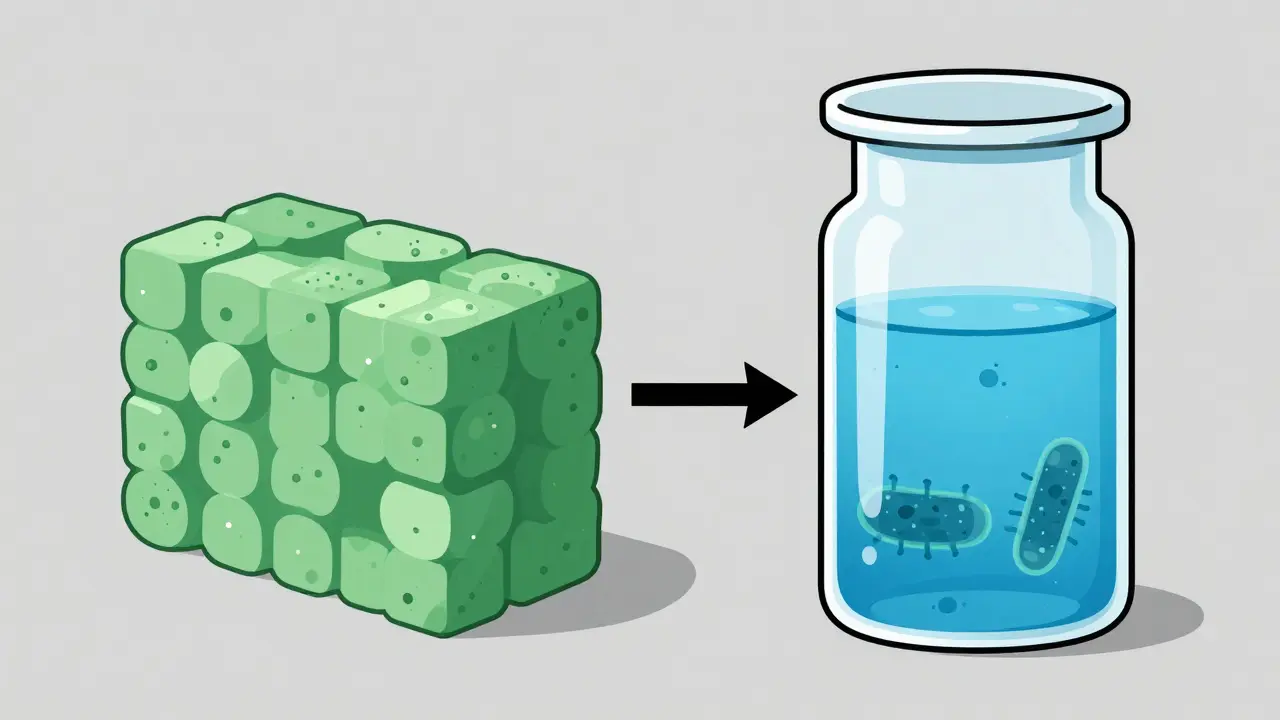
While the headline numbers are impressive, you cannot generalize every medicine into one bucket. The physical form of your medication determines its lifespan far more than the date itself. Think of a tablet like a brick-it's dense, dry, and resists changes. A liquid, on the other hand, is like soup; bacteria and moisture can creep in easily.
Solid dosage forms, such as tablets and capsules, are the most robust. They generally maintain stability for years after the labeled date. Conversely, liquid solutions, suspensions, and reconstituted powders degrade much faster. If a child's cough syrup sits open in a humid cabinet, the water content accelerates chemical breakdown and invites microbial growth.
| Meditation Form | Average Stability Past Expiration | Risk Level |
|---|---|---|
| Tablets / Capsules | High (Years to Decades) | Low (if sealed) |
| Liquid Suspensions | Moderate (Months) | Moderate |
| Reconstituted Powders | Low (Days to Weeks) | High |
Storage plays a massive role here too. Many patients move their meds from the manufacturer's sealed glass bottles into those little plastic organizer containers we buy from pharmacies. Harvard Medical School experts note that this transfer removes the protective desiccant (the little silica gel packet) and exposes the pills to humidity and air directly. This can cause degradation years before the actual chemical limit is reached. Keep the med in its original, unopened bottle whenever possible.
The Danger Zone: Drugs to Never Trust Expired
I need to be very clear: just because most pills are fine doesn't mean all pills are fine. There are critical exceptions where relying on expired medication could get you hurt or kill you. These are usually drugs that treat life-threatening situations where a drop in potency equals treatment failure.
Here are the categories you should always check carefully:
- Nitroglycerin: Used for heart chest pain (angina). This molecule is extremely volatile. Studies show it degrades quickly after opening. An expired dose might give you zero relief during a heart attack.
- Insulin: Diabetes management requires precision. Temperature and time significantly alter insulin's ability to regulate blood sugar. Using old insulin can lead to dangerous spikes or crashes.
- Antibiotics: Particularly liquid versions for children. Tetracycline specifically has historical evidence of toxicity issues when degraded, though modern formulations are safer. However, taking half-strength antibiotics breeds superbugs by failing to kill all bacteria.
- Epinephrine Auto-Injectors (EpiPens): For severe allergic reactions. A study analyzing outdated EpiPens found reduced bioavailability between 1 and 90 months after expiry. If your throat closes up, you need 100% power.
- Blood Thinners (Warfarin): Small changes in strength can tip the scale toward dangerous bleeding or clots.
Dr. William Eggleston, medical director of the Central New York Poison Center, puts it well: "It may be fine to take an allergy medication that's a month past its expiration date," he told Harvard Health. But he warns strongly against using time-sensitive, high-risk meds like nitroglycerin beyond expiration.
Practical Storage Tips to Extend Life
If you plan to keep emergency medication on hand, how do you maximize its shelf life? Chemistry tells us the main enemies of drugs are heat, light, and moisture.
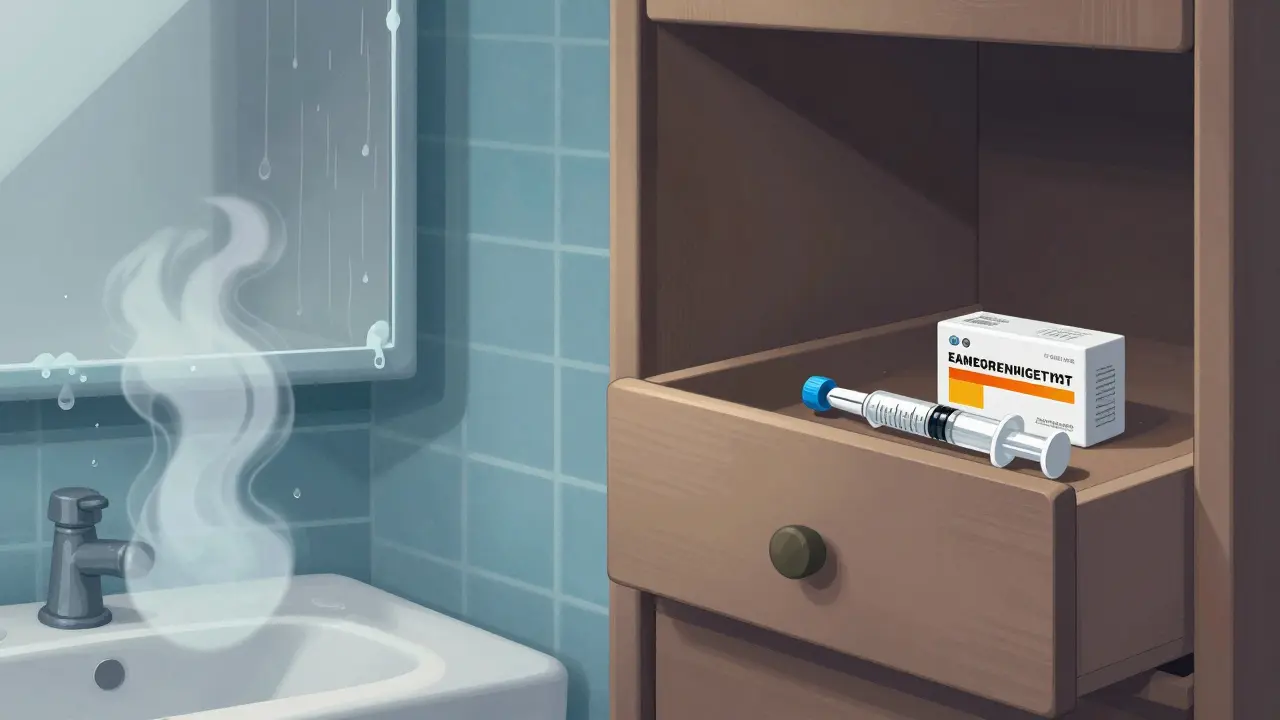
Don't store your meds in the bathroom cabinet. That shower steam destroys tablets faster than almost anything else. The kitchen is hot due to the oven. The best spot is often a bedroom drawer or a closet away from windows, where temperatures stay cool and consistent.
Keep original packaging intact. The plastic caps on bottles often come with tamper-evident rings, but the bottle interior is designed to limit oxygen exposure. Do not put individual pills in loose bags or daily organizers for long-term storage. Reserve those organizers for the week you intend to take them.
Also, consider why you are hoarding old meds. Is it for a natural disaster kit? If so, rotate them. Write down the manufacture date yourself. Every few years, check the color or smell. If a tablet starts crumbling, looking yellow, or smelling off, throw it out regardless of the date.
Economic Impact and Waste Reduction
Why does this matter beyond personal health? The economics are huge. In 2012 alone, Americans spent over $300 billion annually on prescription medications. A significant portion of that money ends up wasted when patients toss working drugs. The Stanford Medicine News analysis highlighted that companies establish dates arbitrarily because they don't benefit from extending them. Longer dates mean less repurchasing.
The NIH reviewed this topic again in 2020, confirming that "expired drugs have not necessarily lost potency." They noted that potency decreases gradually from the moment of manufacture, not suddenly on the expiration date. By understanding the science, we can make smarter decisions about disposal. You don't need to flush everything down the toilet on schedule. Just know the rules for the specific drugs you own.
Is it safe to take an expired antibiotic?
Generally, no. Liquid antibiotics and reconstituted powders lose potency quickly and risk bacterial growth. While some solid pills might still be effective, the risk of treatment failure with serious infections makes them unsafe to rely on if expired.
How long do Tylenol or Ibuprofen expire?
Solid tablets like acetaminophen (Tylenol) and ibuprofen tend to be very stable. Studies suggest they can retain nearly full potency for years past the printed date, provided they are stored in a dry place away from heat and light.
Can expired medicine hurt me?
Most expired solid meds won't hurt you immediately, but they may not work as well. The primary risk is relying on ineffective medication during an emergency. Some specific chemicals, like tetracycline, have historically caused kidney damage when heavily degraded, though this is rare today.
Should I check with my pharmacist before using old meds?
Yes. While many drugs are stable, regulations advise caution. Pharmacists can assess specific compounds and help you decide if a drug is safe to keep based on its formulation and your local pharmacy's protocols.
What is the Shelf-Life Extension Program (SLEP)?
SLEP is a U.S. Department of Defense initiative started in 1986. It tests military stockpiles of drugs annually. Their data proves that 88% of medications tested remained viable for an additional 66 months beyond the label, validating the safety of extended storage times.
Divine Manna
April 2, 2026 AT 18:38The fundamental misunderstanding lies in distinguishing liability from chemistry.
Manufacturers prioritize risk management over chemical stability data.
This creates a false narrative regarding safety windows for consumers.
Legal contracts dictate these timelines rather than biological decay rates.
Stability testing stops because funding does not extend beyond the shelf life.
Consequently, the data suggests potency remains high past that marker.
However, companies cannot afford to publish indefinite extension results.
Liability lawsuits would destroy margins if they suggested usage past the date.
Therefore, the date serves as a shield against litigation claims primarily.
We must separate corporate strategy from pharmacological reality clearly.
The military program confirms this divergence exists across many compounds.
Their stockpile testing proves viability exceeds standard commercial limits.
Ignoring this fact leads to unnecessary financial and environmental waste globally.
Rational individuals should consider storage conditions before disposal rituals.
Knowledge empowers decisions better than blind adherence to printed ink.
Beth LeCours
April 4, 2026 AT 09:23You just toss perfectly good medicine into the trash.
Will Baker
April 5, 2026 AT 12:54Oh great fear based logic makes sense now so let us trust the government labels completely.
Your ignorance is honestly refreshing given how dangerous negligence can be for everyone involved.
I suppose you also think fire hydrants expire every morning so they do not work later.
Sarcasm aside the point stands that caution is better than regret.
Sam Hayes
April 6, 2026 AT 07:40humidity ruins everything so keep them sealed tight
plastic organizers let air in and bad things happen
just leave them in the bottle until you take them
Sakshi Mahant
April 7, 2026 AT 17:24In my culture we often reuse medicines when resources are scarce.
This perspective offers a different view on waste and safety protocols globally.
We learn to judge quality by smell and appearance rather than paper dates.
Storage methods vary significantly across regions due to climate differences.
It is important to respect local knowledge while acknowledging scientific findings.
Merging traditional wisdom with modern data can create better health practices for everyone.
angel sharma
April 7, 2026 AT 23:40I totally agree that sharing knowledge helps communities survive much better in tough times because we need every resource possible for survival.
When we throw away working drugs we contribute to landfills which hurts the planet we all share together.
Every single pill counts towards reducing our carbon footprint significantly if managed with care and proper attention paid to details.
The economy benefits greatly when families stop buying replacements for items they already possess in their cabinets safely stored away from light.
We must educate ourselves on the actual science behind expiration dates so we do not fall prey to marketing strategies designed for profit maximization only.
My motivation comes from wanting everyone to access affordable healthcare options regardless of what the label prints on the bottle lid.
Joey Petelle
April 8, 2026 AT 22:01The FDA is basically a joke organization printing fake numbers to protect shareholders from lawsuits nobody wants to file.
These regulations exist solely to shift responsibility away from doctors onto patients who lack scientific training to verify claims.
Corporate greed drives the arbitrary dates while taxpayers foot the bill for discarded stockpiles every fiscal year.
Real Americans know how to manage their own health without bureaucratic interference telling them what is usable.
Clean up your own house before telling the rest of us how to handle our pharmaceutical inventory responsibly.
Joseph Rutakangwa
April 8, 2026 AT 23:54listen to science guys
do not panic sell
check your storage
Dee McDonald
April 9, 2026 AT 05:40Stop acting like regulations are the law of the land when common sense contradicts printed warnings.
You need to push back against the system that profits from your ignorance and wasteful behavior patterns.
Take control of your medical decisions because nobody else cares enough to prioritize your safety over margin reports.
Question everything you read unless it comes from peer reviewed data outside of pharmaceutical marketing budgets.
Wake up and realize that compliance often breeds dependency on flawed systems that serve profit above people.