
When your drug look different, a common experience when switching from brand-name to generic medication. Also known as pill appearance change, it’s not a mistake — it’s the law. The FDA requires generic drugs to work the same as the brand-name version, but it doesn’t require them to look the same. That’s why your round white pill turned into an oval blue one. The active ingredient? Identical. The shape, color, or markings? Totally different — and completely legal.
This happens because drug manufacturers can’t copy the exact appearance of brand-name pills. Trademark laws protect the visual design of medications, so generic makers must create their own look. That’s why you might see the same generic drug from two different companies looking completely different. One might be green with a score line, another might be white with a symbol. Neither is fake. Neither is weaker. Both meet the same strict standards for bioequivalence, the scientific proof that a generic drug delivers the same amount of medicine into your bloodstream as the brand. Studies show these differences in appearance don’t affect how well the drug works — only how you recognize it.
But when a generic substitution, the process of replacing a brand-name drug with a generic version at the pharmacy causes confusion, it’s not just about looks. Some people panic when their pill changes, thinking they got the wrong medicine. Others stop taking it. That’s dangerous. The real risk isn’t the shape or color — it’s skipping your dose because you don’t recognize the pill. That’s why pharmacists are required to tell you when a substitution happens. Always check the label. Look at the drug name, strength, and manufacturer. If you’re unsure, call your pharmacist. They can show you the exact match between your old and new pills.
There are exceptions. If your drug is on the narrow therapeutic index, a category of medications where tiny changes in blood levels can cause serious side effects or treatment failure — like warfarin, lithium, or certain seizure drugs — your doctor might ask for the same generic maker every time. Even then, the pill might still look different between batches. What matters is the active ingredient staying consistent. That’s why some patients on these drugs get their blood levels checked regularly — not because the pill looks different, but because small variations in how the body absorbs it can matter.
Don’t let a changed pill scare you. The system is built to keep you safe while saving you money. Generic drugs cut costs by up to 85% without sacrificing effectiveness. What you’re seeing isn’t a flaw — it’s a feature of how the system works. If you’re ever unsure, don’t guess. Ask your pharmacist. Keep your medication list updated. And if you notice a pill that looks wrong — like a totally different drug — report it. But if it’s just a new color or shape? That’s normal. Your medicine still works. You’re still protected. And you’re still saving money.
Below, you’ll find real guides that explain how to spot safe changes, what to do when your prescription looks unfamiliar, how to read FDA labels to confirm you’re getting the right drug, and why some generics are more consistent than others. No fluff. Just facts you can use.
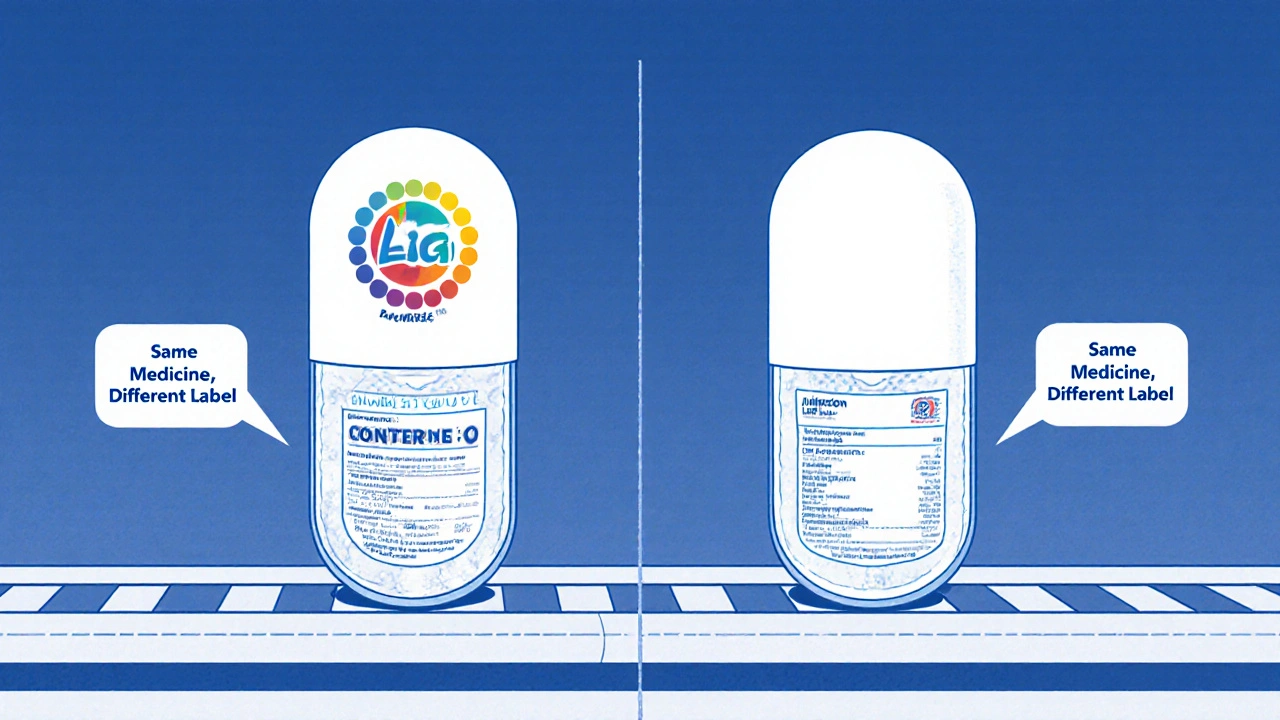
Authorized generics look different from brand-name drugs due to trademark laws - not because they’re different medicine. Learn why the pill changes color and shape, but not effectiveness.