
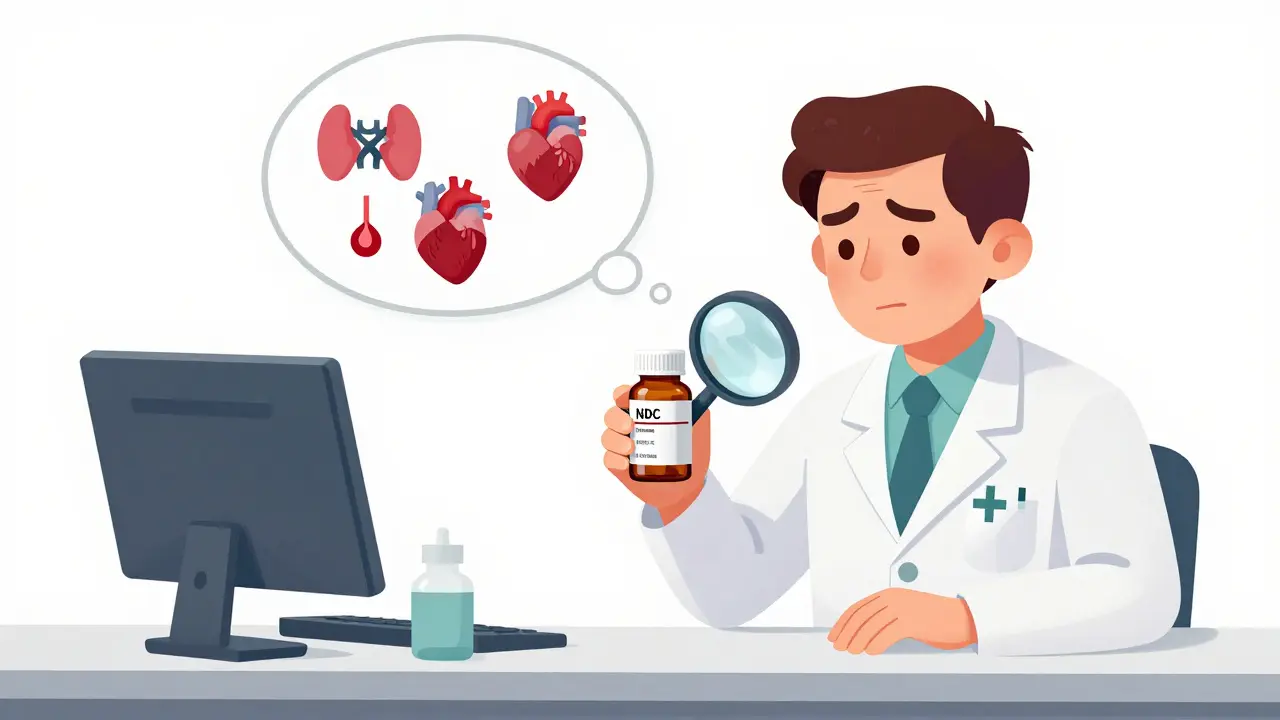
Every day, pharmacists hand out millions of generic drugs. They’re cheaper, widely used, and trusted. But what happens when a generic drug doesn’t work like it should? When a patient reports nausea after switching from one brand of levothyroxine to another? When blood pressure meds suddenly stop controlling pressure even though the dose hasn’t changed? These aren’t just bad luck. They could be signs of therapeutic inequivalence-a real, documented problem with generic drugs that often goes unreported.
Why Pharmacists Are the First Line of Defense
Pharmacists are the last healthcare professional a patient sees before taking a medication. They see the patient’s reaction. They notice when a drug that used to work suddenly doesn’t. They hear the patient say, “This new pill makes me dizzy,” or “I’ve been on this for years, but now I feel awful.” That’s not just anecdotal-it’s critical safety data.The FDA doesn’t require pharmacists to report these issues. But the American Society of Health-System Pharmacists (ASHP) says it’s a fundamental professional responsibility. Why? Because pharmacists are the only ones who see the full picture: the brand switched, the batch number, the timing of symptoms, the patient’s history. Doctors prescribe. Patients take. But pharmacists connect the dots.
In 2022, the FDA received nearly 29,000 reports mentioning generic drug problems. Only 3% came from pharmacists-even though pharmacists dispense 75% of all prescriptions in the U.S., and 90% of those are generics. That’s a massive gap. The problem isn’t lack of awareness. It’s lack of time, confusion about what to report, and uncertainty about whether the issue is with the drug or the patient.
What Exactly Counts as a Generic Drug Problem?
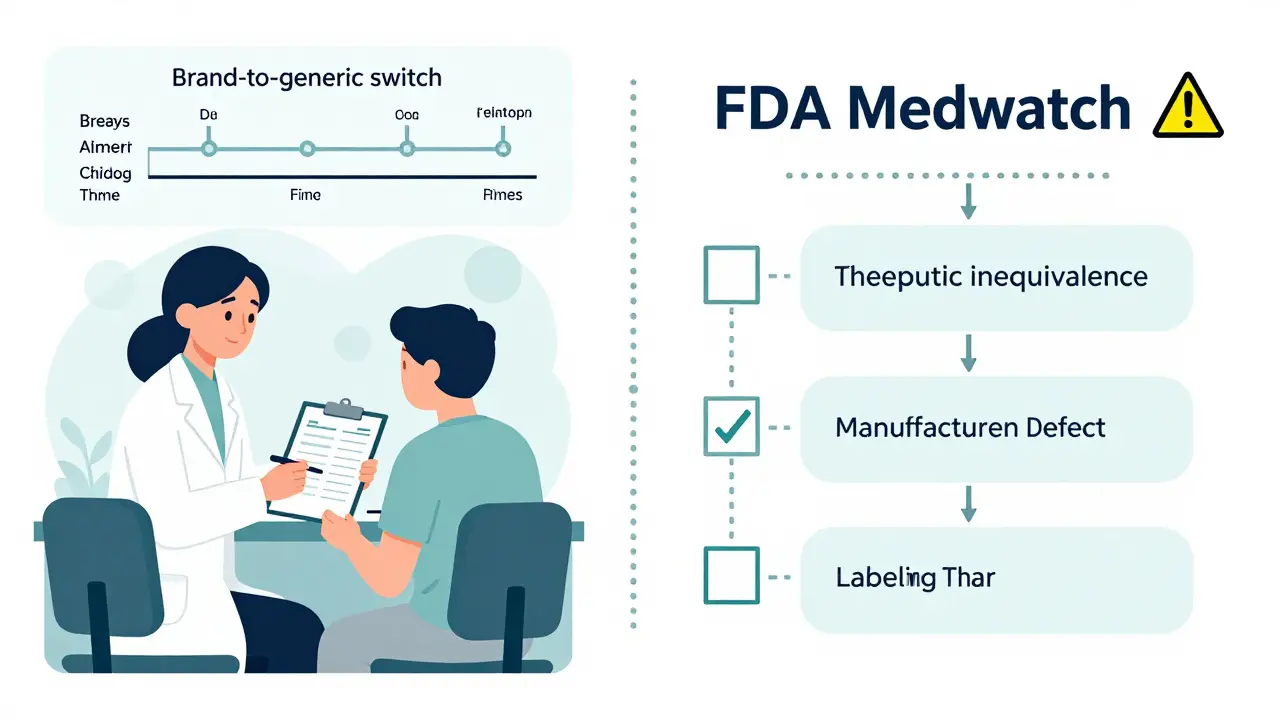
Not every side effect is a reporting issue. The FDA defines reportable problems around three main categories:- Therapeutic inequivalence: When a generic drug doesn’t produce the same clinical effect as the brand-name version-even though it passed FDA bioequivalence tests. This could mean lower effectiveness, more side effects, or sudden loss of control over a chronic condition like epilepsy, thyroid disease, or heart rhythm disorders.
- Manufacturing quality issues: Tablets that crumble, capsules that don’t dissolve, or pills with unusual color or odor. These aren’t always obvious to patients, but pharmacists spot them during dispensing.
- Labeling discrepancies: When the label on the generic doesn’t match the approved FDA labeling, or when important safety info is missing.
The FDA updated its MedWatch form in 2023 to include a specific checkbox for “generic drug concern,” letting reporters pick whether it’s about therapeutic failure, manufacturing, or labeling. That’s a big step forward. But many pharmacists still don’t know it’s there.
What Details Do You Actually Need to Report?
You don’t need a perfect diagnosis. You don’t need to prove causation. You just need enough detail for the FDA to spot a pattern.The FDA requires four key elements in every report:
- An identifiable patient (age, gender, initials are fine-no full name needed).
- The suspect drug-include the exact name (e.g., “levothyroxine sodium 88 mcg”) and the National Drug Code (NDC) from the bottle.
- The adverse event-be specific. Don’t say “patient felt bad.” Say “patient developed tremors and palpitations 3 days after switching from brand levothyroxine to generic A.”
- An identifiable reporter-your name, license number, pharmacy contact info.
Even if you’re not sure the drug caused the problem, report it anyway. The FDA’s 2023 guidance says: “Reports should be submitted even where the healthcare provider is not certain the product caused the event.”
Here’s what a real report might look like:
“72-year-old male, history of atrial fibrillation. Took brand-name warfarin for 5 years with stable INR between 2.0-2.5. Switched to generic warfarin (NDC: 00078-1155-01, Lot #G22-456) on 10/15/2025. INR dropped to 1.1 on 10/20/2025. No other changes in meds or diet. Patient reported no bleeding, but risk of clotting increased. Suspected therapeutic inequivalence.”
That’s enough for the FDA to flag it. If 10 other pharmacists report the same NDC and same issue? That’s a safety signal.
Why Reporting Is So Hard-And Why It Still Matters
Let’s be honest: reporting takes time. Most community pharmacists are stretched thin. A 2023 survey found 68% say lack of time is the biggest barrier. Another 52% aren’t sure if what they’re seeing qualifies as reportable. And 42% can’t tell if the issue is with the generic brand or the patient’s condition.There’s also a legal blind spot. Because of the 2011 Supreme Court case PLIVA v. Mensing, generic manufacturers can’t update their own warning labels-even if they know a drug is causing problems. The label has to match the brand-name version. So if a generic drug causes a new side effect, the manufacturer can’t warn patients. That means the only way the FDA finds out is through reports from frontline providers-like pharmacists.
And here’s the kicker: after that ruling, reports of generic drug problems dropped by 17%. Why? Because manufacturers had less legal incentive to monitor or report. Pharmacists became even more critical.
But the FDA is listening. In 2019, they created a Therapeutic Equivalence Working Group specifically to review pharmacist-submitted reports. In 2022, 147 generic drugs were put under extra review because of pharmacist reports. Twelve of those led to direct communications to doctors and patients.
What You Can Do Right Now
You don’t need to wait for a crisis. Here’s how to start reporting today:- Know your NDC. Always check the NDC on the bottle. Write it down if you suspect an issue.
- Track patterns. If three patients on the same generic report the same problem? That’s not coincidence. Document it.
- Use the MedWatch form. Go to fda.gov/medwatch and fill out Form 3500. It takes 10-15 minutes.
- Report even if you’re unsure. The FDA prefers too many reports than too few.
- Share with your team. Train your pharmacy staff. Make reporting part of your daily workflow.
Some states are catching up. California, Illinois, Massachusetts, and New York now require pharmacists to report serious adverse events. Even if your state doesn’t, your professional ethics do.
The Bigger Picture: Why This Isn’t Just About One Drug
Generic drugs save the U.S. healthcare system over $300 billion a year. That’s huge. But if we don’t monitor them closely, we risk undermining trust in the entire system.Think of it this way: if a patient has a bad reaction to a generic, they might refuse to take any generic in the future. That means they go back to expensive brand drugs. Costs go up. Access goes down.
Or worse-they stop taking their meds altogether. That’s when hospitalizations happen. That’s when lives are at risk.
Pharmacists aren’t just dispensers. We’re safety monitors. We’re the ones who see the real-world impact of regulatory decisions. And when we report, we help the FDA fix problems before they hurt more people.
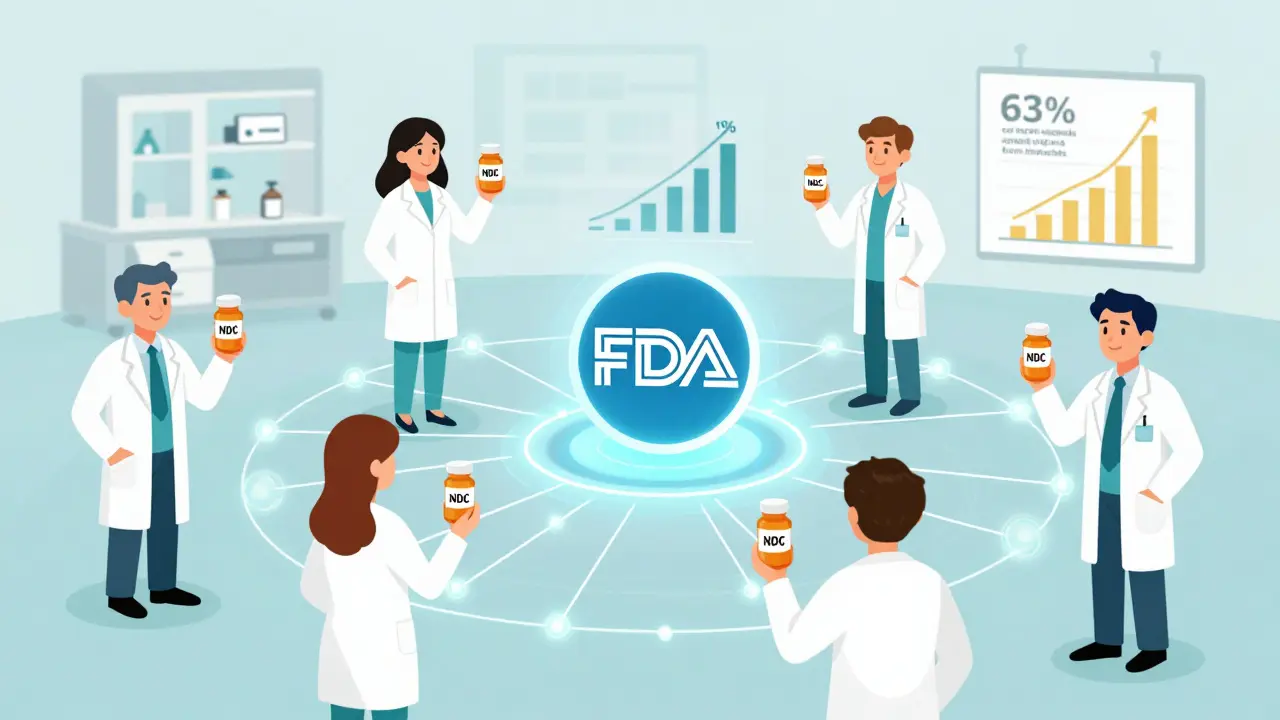
The data doesn’t lie. In 2023, researchers at the University of North Carolina found that 63% of potential safety signals in generic drugs were first spotted by pharmacists. Not manufacturers. Not doctors. Pharmacists.
That’s power. And responsibility.
Frequently Asked Questions
Do I have to report generic drug problems by law?
No, federal law does not require pharmacists to report adverse events. But professional organizations like ASHP and the American Pharmacists Association consider it a core ethical duty. Some states, including California and New York, have made reporting mandatory for serious events. Even where it’s not required, failing to report when you see a pattern can be seen as a breach of professional standards.
What if I can’t tell which generic brand caused the problem?
Report it anyway. The FDA understands that patients often don’t know which generic they’re on. Include the NDC from the bottle, the manufacturer name, and the lot number. If you’re unsure, write “unknown generic brand” and describe the clinical effect. The FDA can still track patterns across multiple reports-even without perfect attribution.
Can I report a problem even if the patient didn’t go to the hospital?
Yes. The FDA encourages reporting of any unexpected, serious, or life-threatening reaction-even if it didn’t require hospitalization. For example, if a patient develops a rash, severe dizziness, or a sudden drop in blood pressure after switching generics, that’s reportable. The goal is to catch problems early before they become more serious.
How long do I have to file a report?
For serious adverse events-those that are life-threatening, disabling, or require hospitalization-you should report within 15 calendar days of becoming aware of the issue. For non-serious but unexpected reactions, report as soon as possible. The sooner you report, the faster the FDA can act.
Is there training available for pharmacists?
Yes. The FDA offers free online training through the MedWatch Training Portal. Module 4, “Reporting for Healthcare Professionals,” is updated annually and includes specific guidance on reporting generic drug issues. It takes less than 30 minutes and is accredited for continuing education credits in most states.
Next Steps for Pharmacists
If you’ve never reported a generic drug problem before, start today. Pick one patient case from the last month where you had doubts. Write down the NDC, the event, and the timeline. Then go to the FDA’s MedWatch portal and submit it. It’s not about blame. It’s about safety.If you’re a pharmacy manager, make reporting part of your quality assurance checklist. Add a simple note to your dispensing workflow: “Check for unexpected reactions after generic switches.” Train your staff. Celebrate reports-not as extra work, but as professional excellence.
Generic drugs are essential. But they’re not perfect. And the only way we fix them is by speaking up. You’ve seen the problem. Now make sure the FDA hears it.
Sarah Williams
December 19, 2025 AT 19:30Just reported my third case this month after a patient’s INR went haywire post-switch. Took 12 minutes. FDA doesn’t bite. And honestly? If we don’t do it, who will?
Theo Newbold
December 21, 2025 AT 11:25Let’s cut through the noise. The FDA’s bioequivalence standards are a joke. They test AUC and Cmax over 24 hours, but what about steady-state plasma concentrations over 30 days? That’s where real-world failure happens. And no, pharmacists aren’t trained to analyze pharmacokinetic curves. This is systemic negligence dressed up as professional responsibility.
Jay lawch
December 22, 2025 AT 17:46Let me tell you something about America. Big Pharma owns the FDA. They let generics in because they’re cheaper, but they don’t want you to know that the same factory in India that makes your ‘generic’ levothyroxine also makes fertilizer. They test the pill for dissolution in a lab with distilled water, not in the stomach of a 70-year-old with acid reflux. And now they want pharmacists to be their unpaid spies? This isn’t healthcare-it’s corporate espionage with a stethoscope.
And don’t get me started on the NDC codes. Half the time the label doesn’t even match the pill. I saw a bottle last week with ‘Apo-88’ printed on it but the NDC said ‘Teva-88’. Same pill? Maybe. But the FDA won’t admit they can’t track their own supply chain. So why should I risk my job reporting it?
They want us to report? Fine. But first, fix the system. Make manufacturers liable. Stop letting them copy brand names and then hide behind ‘bioequivalence’. This isn’t science. It’s capitalism with a pharmacy coat.
Christina Weber
December 24, 2025 AT 11:19There is a fundamental error in the premise of this article. The term ‘therapeutic inequivalence’ is not a scientifically valid concept under current pharmacological standards. Bioequivalence, as defined by the FDA, is statistically and clinically sufficient. Any perceived difference is most likely due to placebo effect, non-adherence, or comorbid conditions. To suggest that pharmacists are ‘first-line defenders’ against some mysterious generic drug failure is not only misleading-it is dangerously unscientific.
Furthermore, the article misuses the term ‘reportable’. There is no ethical or professional obligation to report anecdotal patient complaints without objective clinical correlation. Doing so floods the system with noise and undermines legitimate pharmacovigilance. If you cannot distinguish between patient perception and pharmacological reality, you should not be dispensing medication.
Cara C
December 24, 2025 AT 21:50I’ve been a pharmacist for 18 years and I’ve seen this play out a dozen times. A patient comes in saying, ‘I used to feel fine on this pill, now I’m exhausted.’ We switch them back, and boom-they’re themselves again. It’s not always the drug. But sometimes it is. And yeah, reporting takes time. But I keep a little notebook in my drawer. One line per case. NDC, date, symptom. At the end of the month, I send one email to MedWatch. It’s not heroic. It’s just what we’re supposed to do.
And if you’re worried about being ‘that pharmacist’ who reports? Don’t be. The FDA doesn’t come knocking. They just quietly flag the NDC and maybe, just maybe, someone else sees the same thing. That’s how patterns start. That’s how we fix things.
Erika Putri Aldana
December 26, 2025 AT 03:06Why do we even care? Generic drugs are just knockoffs. If they don't work, just pay for the brand. Problem solved. Stop making it a thing.
Sandy Crux
December 27, 2025 AT 08:28One must wonder: is this article truly advocating for pharmacists as ‘safety monitors,’ or is it merely a thinly veiled plea for increased labor without compensation? The FDA’s MedWatch form, as cited, remains an archaic, web-based relic-designed in the early 2000s, with no mobile optimization, no auto-fill, no API integration. To expect overburdened community pharmacists to manually input NDCs, patient initials, and clinical narratives-after an eight-hour shift-is not professionalism; it is exploitation dressed in ethical language.
And the notion that ‘the FDA is listening’? Please. The agency receives over 1.2 million reports annually. A single pharmacist’s submission is a drop in a tsunami of noise. The real problem isn’t reporting-it’s the absence of systemic feedback loops. Until pharmacists receive confirmation that their reports led to action, this is performative activism.
mukesh matav
December 27, 2025 AT 18:10I work in Mumbai, and we don’t have this problem. Our generics are mostly from Indian manufacturers who follow WHO-GMP. Patients don’t complain because they know the brand. But if someone does, we write it down and tell the doctor. Simple. No forms. No bureaucracy. Maybe the U.S. system is just too complicated.
Peggy Adams
December 29, 2025 AT 17:28lol so now pharmacists are supposed to be detectives too? next they'll ask us to do the doctor's charting and the nurse's rounds. i'm tired. just give me my paycheck and let me count pills.
Dan Adkins
December 29, 2025 AT 20:14It is an incontrovertible fact that the professional obligations of pharmacists are not circumscribed solely by statutory mandates but are also grounded in the deontological imperatives of the healing arts. The failure to report potential adverse drug events constitutes, in the strictest sense, a dereliction of fiduciary duty owed to the patient, the profession, and the public trust. While logistical constraints are acknowledged, they cannot serve as a valid justification for the abdication of ethical responsibility. The United States healthcare infrastructure, in its current configuration, demands a re-evaluation of resource allocation to empower frontline providers-not to burden them with additional responsibilities without institutional support.
Grace Rehman
December 31, 2025 AT 12:23Pharmacists are the last line of defense… against a system that treats patients like numbers and drugs like commodities. Funny how the same people who cheer for generics as ‘cost-saving’ never ask why the brand-name version costs $2000 but the generic is $4… and still doesn’t work right. We’re not just dispensers. We’re the only ones left who still care enough to notice when something’s broken. So yeah, report it. Even if no one’s listening. At least you’ll know you didn’t look away.