
Pharmaceutical Temperature Exposure Calculator
This tool calculates how temperature excursions affect medication efficacy based on real-world pharmaceutical supply chain data. Many biologic drugs lose effectiveness when exposed to temperatures outside their recommended range.
Result
When you pick up a prescription, you expect it to work. You don’t think about the journey it took to get there - the refrigerated trucks, the customs checks, the barcodes scanned across continents, the warehouses holding it at exactly 5°C. But if any of those steps fail, the medicine you’re counting on could be useless - or worse, dangerous.
What Happens When the Supply Chain Breaks?
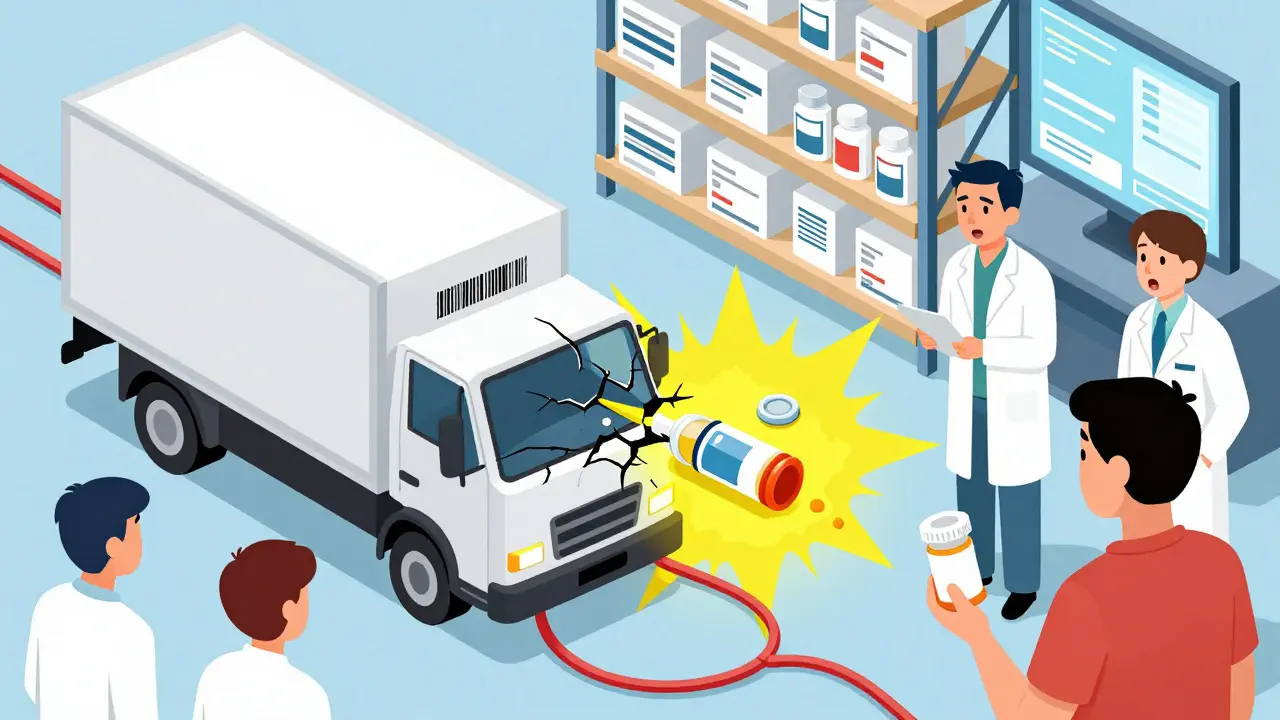
The pharmaceutical supply chain isn’t just about moving pills from factories to pharmacies. It’s a high-stakes system where a single broken link can mean the difference between life and death. In 2023, a hurricane knocked out Baxter’s North Carolina plant, triggering shortages across the U.S. More than 80% of hospitals couldn’t get critical IV fluids, dialysis solutions, or anesthetics. Surgeries were canceled. Patients waited days for basic treatments. This isn’t rare. In 2024, a software glitch from CrowdStrike took down 759 hospitals, halting pharmacy systems and locking out access to medication inventories. Nurses had to rely on handwritten lists. Pharmacists scrambled to find alternatives. One ICU nurse in Ohio told Reddit users she had to give a patient a different brand of insulin because the original was out - and the patient’s blood sugar spiked dangerously. These aren’t isolated incidents. They’re symptoms of a system under constant strain. The FDA’s Drug Supply Chain Security Act (DSCSA) requires every prescription drug to have a unique 2D barcode by now. But many hospitals still struggle to integrate these systems with their old software. A 2024 survey found 76% of hospitals face integration headaches. And when the barcode doesn’t scan, how do you know if that vial is real - or counterfeit?Temperature: The Silent Killer in Your Medicine
Seventy-two percent of biologic drugs - like insulin, cancer therapies, and autoimmune treatments - must stay between 2°C and 8°C. Fifteen percent need to be frozen below -60°C. One degree too warm, and the medicine degrades. One hour too long in a hot truck, and it becomes ineffective. In rural areas, last-mile delivery is a nightmare. Thirty-two percent of rural shipments experience temperature excursions. A patient in Montana received their $12,000 monthly infusion therapy after a 48-hour delay in a non-cooled van. The drug was still within the legal temperature range - but the manufacturer’s own data showed efficacy dropped by 30% after 36 hours at 10°C. The patient’s condition worsened. Their MRI showed new lesions. Real-time monitoring now covers 68% of high-value shipments, cutting temperature failures by 42%. But that still leaves a third of critical drugs traveling without live tracking. And in places like the Caribbean, the supply chain pressure index hits 8.1 - far above the safe target of -0.5. Hospitals there wait weeks for shipments. Patients miss doses. Diseases progress.Counterfeits: The Hidden Threat
Every year, 1.5 million Americans suffer medication errors tied to supply chain issues. Some of those are from substitutions. Others? From fake drugs. Counterfeit medicines aren’t just bad labels. They’re filled with chalk, rat poison, or no active ingredient at all. The WHO estimates 1 in 10 medical products in low- and middle-income countries are fake. But even in the U.S., the problem is growing. In 2023, the FDA seized over 1.2 million fake opioid pills from online sellers - many shipped through third-party logistics hubs that didn’t verify their sources. Blockchain track-and-trace systems have grown by 37% since 2020. Companies like Pfizer and Merck now use them to follow every box from factory to pharmacy. But smaller manufacturers? Many still rely on paper logs. And if a distributor doesn’t scan a shipment? That drug disappears into the black market. A pharmacist in Texas shared on a professional forum that they once received a batch of metformin with mismatched batch numbers. The label said it was from a U.S. manufacturer - but the packaging felt off. A quick check with the supplier confirmed it was a knockoff. The batch was destroyed. No one was hurt. But how many weren’t so lucky?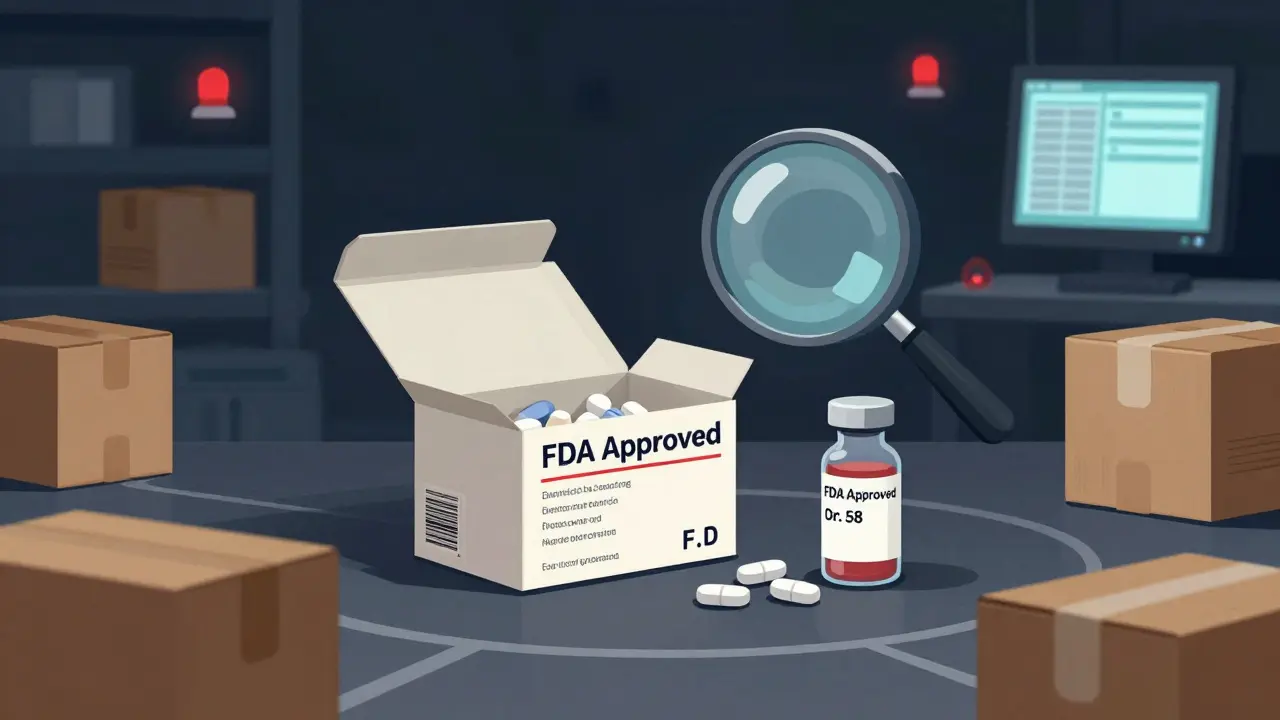
Why Shortages Keep Happening
The U.S. imports 80% of its active pharmaceutical ingredients (APIs) - the actual medicine inside the pill. Over 78% of those come from just two countries: China and India. That’s not diversification. That’s a single point of failure. When a factory in Shanghai shuts down for inspections - or when a trade war hits - the ripple effect is immediate. In the first six months of the pandemic, drug shortages jumped 300%. Epinephrine, the lifesaving shot for anaphylaxis, vanished for months. Pharmacists rationed it. One parent on RateMDs wrote: “I had to carry two EpiPens for my 5-year-old. One was expired. The other was all we had left.” Even when drugs are available, forecasting is broken. Hospitals over-order to avoid shortages - then waste millions on expired stock. Or they under-order - and patients go without. A 2024 Mathematica report found that inaccurate demand forecasts directly delay treatment and force last-minute substitutions that increase error rates.Who’s Fixing This - And Who’s Falling Behind
The big players are investing. McKesson, AmerisourceBergen, and Cardinal Health control 67% of the U.S. market. They’ve spent an average of $12.7 million each year on blockchain, sensors, and automation. Pfizer’s supply chain protocols scored 4.7 out of 5 in a 2024 review. Their drugs are tracked, temperature-monitored, and verified at every step. But generic manufacturers? Their average score was 3.2. Many still use manual logs. Their warehouses lack real-time sensors. Their staff haven’t been trained on DSCSA compliance. The learning curve for new systems is 14 to 18 months. And the cost? Up to $450,000 per hospital to upgrade. The FDA now requires full electronic tracing by November 2025. But 62% of manufacturers are already compliant - meaning nearly 40% are behind. And if they don’t catch up? Their drugs could be blocked from entering the U.S. market.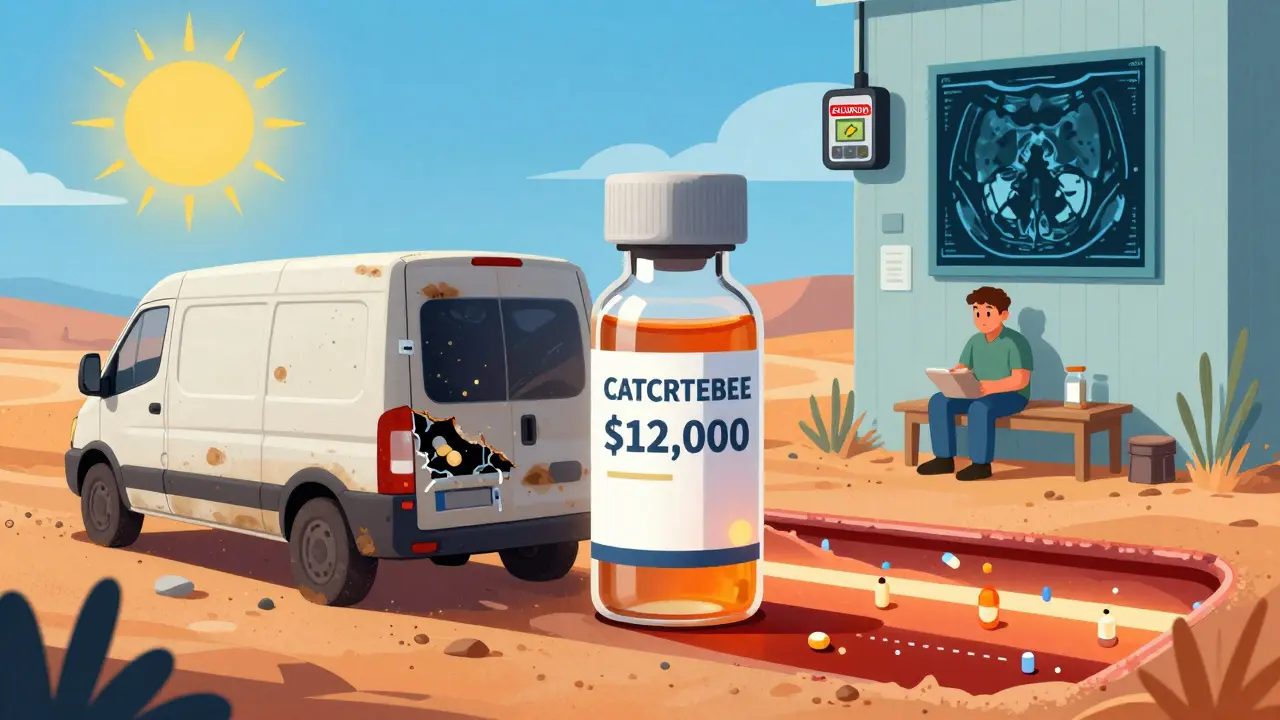
What Patients Can Do
You can’t control the supply chain. But you can protect yourself.- Ask your pharmacist: “Is this the same brand I’ve been taking? Has it changed?” If the pill looks different or the packaging feels off, question it.
- Know your meds: Keep a list of your prescriptions, including the manufacturer name and dosage. If your insulin brand changes mid-treatment, check your blood sugar more often.
- Report issues: If you experience side effects after a new batch, tell your doctor. Then report it to the FDA’s MedWatch program. One report won’t stop a shortage - but 1,000 might.
- Plan ahead: If you’re on a long-term therapy like Tysabri or Humira, ask your doctor about backup options. Some insurers allow early refills during known shortage periods.
The Future: AI, Blockchain, and a Few Hard Truths
By 2028, 85% of high-value shipments will use blockchain. AI-driven forecasting could cut shortages by 35% by 2027. That’s promising. But technology alone won’t fix this. The real fix? Diversifying manufacturing. Building cold chain infrastructure in Africa and Latin America. Training more supply chain specialists - only 8,400 have earned the PharmChain certification so far. And enforcing standards across all manufacturers, not just the big names. McKinsey projects a 22% drop in critical shortages by 2030 - if we act now. But they also warn: without strategic diversification, geopolitical tensions could increase supply chain vulnerability by 18% in the same period. This isn’t a tech problem. It’s a human one. Every delay, every counterfeit, every failed temperature log - it’s a patient who waits too long. A child who misses a vaccine. A cancer patient who gets a weaker dose. The supply chain is invisible. But its failures? They’re anything but.Can counterfeit drugs really reach U.S. patients?
Yes. While the U.S. has strong regulations, counterfeit drugs enter through online pharmacies, third-party distributors, and international shipments. In 2023, the FDA seized over 1.2 million fake opioid pills. Many were sold as legitimate prescriptions. Always verify your medication’s packaging and ask your pharmacist if something looks unusual.
Why do some medicines cost more when there’s a shortage?
When supply drops and demand stays the same, prices rise. Generic drug manufacturers often have low profit margins. When a competitor’s product is out of stock, the remaining supplier can raise prices - sometimes by 500% or more. This isn’t always illegal, but it’s a direct result of supply chain fragility.
How do temperature excursions affect drug effectiveness?
Even brief exposure to heat or cold can break down active ingredients. For biologics - like insulin or monoclonal antibodies - degradation can reduce potency by 20-50%. That means the drug might not work at all. Patients may not notice until their condition worsens - and by then, it’s too late to reverse the damage.
Are there safer alternatives if my drug is on shortage?
Sometimes. But substitutions aren’t always safe. Insulin brands, for example, aren’t interchangeable without medical supervision. Antibiotics may have different side effect profiles. Always consult your doctor or pharmacist before switching. Never take a substitute just because it’s available.
What’s being done to fix the global supply chain?
The WHO launched a Global Benchmarking Tool in 2025 to rate countries’ supply chain resilience. The FDA is pushing for full electronic tracing by 2025. AI forecasting and blockchain adoption are growing. But progress is uneven. The real solution requires global cooperation - not just better tech, but diversified manufacturing, better training, and stronger enforcement.
Melissa Cogswell
January 29, 2026 AT 19:45I’ve worked in hospital pharmacy for 12 years, and this post hits way too close to home. We’ve had to substitute insulin brands three times in the last year alone. One patient’s A1c jumped from 7.2 to 9.8 in six weeks because the new brand didn’t match their metabolism. No one warned us. No one tracked it. We just had to hope they didn’t crash.
And the barcode scanners? Half of them still glitch out because the hospital’s EHR system is from 2012. We scan, it says ‘invalid,’ we manually type it in, and pray the batch isn’t counterfeit. It’s not tech failure-it’s systemic neglect.
Patients think meds are magic. They don’t know the vial they’re holding might’ve spent 18 hours in a hot delivery truck in Texas with no temperature log. That’s not a glitch. That’s a waiting disaster.
I’ve seen nurses cry because they had to ration epinephrine. I’ve seen parents beg for refills because their kid’s EpiPen expired and the next shipment’s delayed. We’re not just managing inventory. We’re managing survival.
And yeah, blockchain helps. But if the small distributors can’t afford the upgrade? The drugs still slip through. The system’s broken because we treat medicine like a commodity, not a lifeline.
Diana Dougan
January 30, 2026 AT 01:29OMG this is why I stopped trusting my prescrptions. Like, I got a bottle of metformin that looked like it was printed on a dot matrix printer from 1997. I called the pharmacy and they said ‘oh that’s just the generic.’ NO. IT’S NOT. IT’S A FAKE. I’M SURE OF IT.
Also, why is everyone so chill about this? We’re letting Chinese factories make our life-saving drugs and then acting like it’s no big deal. I’m pretty sure if this was cars, we’d all be rioting.
Bobbi Van Riet
January 30, 2026 AT 02:50My mom’s on Humira and last winter, her shipment got stuck in a warehouse in Ohio because the refrigerated truck broke down. Took five days to get to her. She didn’t know until her flare-up hit hard. The pharmacy didn’t even call. They just handed her the box with a sticky note saying ‘new batch.’
I dug into the manufacturer’s data sheet and found out that even if it was within legal temp range, efficacy drops 30% after 36 hours at 10°C. That’s not ‘close enough.’ That’s dangerous.
And the worst part? No one tracks it. No one’s accountable. The system says ‘it’s fine’ because the thermometer said 11°C instead of 12°C. But the drug? It’s not fine. The patient? They’re suffering.
It’s not just about tech upgrades. It’s about culture. We treat medicine like a product, not a person’s health. And until we change that, we’re just rearranging deck chairs on the Titanic.
I’ve started keeping a log of every med change-brand, batch, date, how I felt. I wish more people did. One report won’t fix it, but 10,000 might make someone in Washington finally listen.
Holly Robin
January 31, 2026 AT 20:51THIS IS A GOVERNMENT CONSPIRACY. THEY WANT YOU SICK. Why else would they let Chinese labs make 80% of our meds? Why else would they let hospitals use 20-year-old software? Why else would they let temperature-controlled drugs sit in unmonitored vans for days?
It’s not incompetence. It’s intentional. The pharmaceutical-industrial complex needs you dependent. They need you buying new drugs every month because the old ones ‘expired’ or ‘weren’t effective.’
And don’t even get me started on the FDA. They’re in bed with Pfizer. They’re the ones who blocked real-time tracking for small manufacturers so Big Pharma could keep their monopoly.
My cousin died last year. His cancer drug was counterfeit. The label looked real. The bottle looked real. The pharmacy swore it was legit. But the active ingredient? Sugar and lead.
Wake up. This isn’t a supply chain problem. It’s a murder scheme.
And yes, I’ve contacted the media. And the DOJ. And the UN. No one will listen. But I’m not stopping.
Shubham Dixit
February 1, 2026 AT 00:34India makes over 60% of the world’s generic drugs. We have the best quality control in the world. Why do you Americans keep blaming us? Your hospitals can’t even scan barcodes properly. Your warehouses are outdated. Your staff doesn’t know how to handle cold chain logistics.
Our factories meet USFDA standards. We export billions of doses every year. You have the tech, you have the money. But you refuse to invest in your own infrastructure.
Stop blaming India. Fix your own system. We’re not the problem. Your laziness is.
KATHRYN JOHNSON
February 2, 2026 AT 10:58There is no excuse for this level of negligence. The FDA has had authority to enforce DSCSA compliance since 2019. The deadline is November 2025. 62% of manufacturers are compliant. That means 38% are operating illegally. This is not a ‘challenge.’ It is a federal crime.
Every hospital that fails to implement electronic tracing is endangering lives. Every distributor that skips a scan is complicit in fraud. Every pharmacist who dispenses without verification is violating the oath they took.
There should be criminal charges. There should be mandatory audits. There should be public naming of non-compliant entities. This is not a suggestion. It is a moral emergency.
Blair Kelly
February 2, 2026 AT 17:08Let me tell you about the time I had to drive 90 miles to a specialty pharmacy because my local one ran out of my MS drug. I got there. The vial was warm. The barcode didn’t scan. The pharmacist said, ‘It’s fine, we’ve given this to 20 people this week.’
I didn’t take it. I drove home. I called the manufacturer. They confirmed it was a batch from a distributor that hadn’t been verified.
And now? I’m not just angry. I’m terrified. Because this isn’t just happening to me. It’s happening to everyone. And no one’s doing anything.
They call this ‘supply chain.’ I call it a death sentence with a receipt.
Lily Steele
February 3, 2026 AT 10:34My dad’s on insulin. We’ve had three bad batches in two years. One time, his sugar spiked so high he ended up in the ER. The pharmacy said ‘it’s the same formula.’ But the pen looked different. The liquid was cloudy.
We started asking questions. We kept the box. We called the manufacturer. Turns out it was a mislabeled batch from a third-party vendor.
Now we always check the lot number. We take pictures. We report everything to MedWatch. It’s a pain. But it’s worth it.
If more people did this, they’d have to fix it. We’re not helpless. We just need to stop being quiet.
Gaurav Meena
February 4, 2026 AT 16:01As someone from India who works in pharma logistics, I want to say: we care. We are working 16-hour days to get these drugs to you. We have sensors, we have cold rooms, we have trained staff.
But your customs delays? Your last-mile delivery gaps? Your lack of investment in rural distribution? That’s where things break.
We need global partnerships-not blame. Let’s build cold chain hubs in Africa, train local workers, share tech. This isn’t about countries. It’s about people.
I’ve seen kids in rural Kenya wait 3 weeks for insulin. I’ve seen nurses in Ohio handwrite prescriptions because the system crashed.
We can fix this. But only if we work together. 🙏
Jodi Olson
February 6, 2026 AT 05:40The supply chain is a mirror. It reflects our values. We outsource the most vital elements of human survival to the lowest bidder. We prioritize profit over precision. We treat medicine as inventory, not integrity.
When a child receives a degraded vaccine because the refrigerated container lost power for 47 minutes, we are not failing a system. We are failing a covenant.
The covenant that says: if you are sick, you will be healed.
That covenant is broken. And no blockchain will mend it unless we first choose to honor life over ledger.