
Medication Reformulation Checker
Enter your medication details to check if you might have a reformulated version.
Have you ever picked up your prescription and noticed the pill looks different? Maybe it’s a different color, shape, or even comes as a liquid instead of a tablet. You might wonder: Is this the same medicine? The answer is usually yes-but the way it’s made has changed. This isn’t a mistake. It’s called medication reformulation, and it’s happening more than you think.
What Exactly Is a Medication Reformulation?
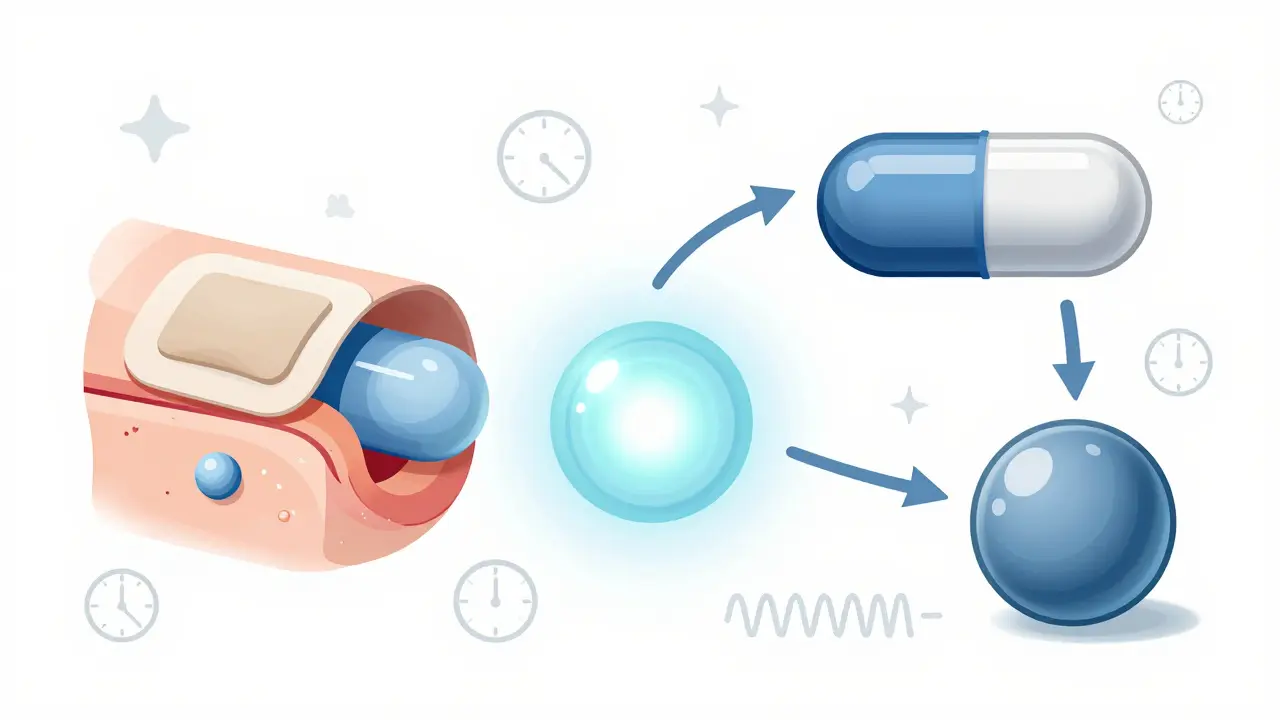
A reformulation isn’t a new drug. It’s the same active ingredient-the chemical that actually treats your condition-but the rest of the pill or liquid has been tweaked. Think of it like upgrading a smartphone. The processor stays the same, but now it has a better battery, a faster charger, or a lighter case. The core function doesn’t change, but the experience does. These changes can include:- Switching from a tablet you swallow to a patch you stick on your skin
- Changing how slowly or quickly the drug releases in your body
- Removing an ingredient that causes stomach upset
- Making it easier for kids or older adults to take
- Using a new coating so the pill doesn’t break down too early in the stomach
Why Do Companies Bother Changing the Formula?
You might assume it’s just about making more money. And yes, extending patent life is part of it. But the real reason most reformulations happen? Patients. After a drug has been on the market for years, doctors and patients learn what works-and what doesn’t. Maybe the original version causes nausea. Maybe it needs to be taken four times a day. Maybe it’s hard to swallow. That’s when companies go back to the lab. Take a common example: a painkiller originally sold as a tablet you swallow every 4 hours. A reformulated version might release the same dose slowly over 12 hours. Now you take it just twice a day. That’s not just convenient-it means fewer missed doses, fewer flare-ups, and better control of your pain. One case study from Kymanox showed a mid-sized company reformulated an orphan drug for a rare disease. The original version required painful injections. The new version? A once-daily oral tablet. Patient compliance jumped. Quality of life improved. And the company didn’t have to start from scratch.How Is a Reformulated Drug Approved?
This is where things get interesting. If a company wants to make a brand-new drug, it has to run full clinical trials-often costing over $2 billion and taking more than a decade. Reformulations? They can use data from the original drug. The FDA created a special pathway called 505(b)(2) back in the 1980s to make this easier. Companies only need to prove their new version behaves the same way in the body as the old one. That’s called bioequivalence. For example, if you change a pill’s coating to make it dissolve slower, you don’t need to test it on thousands of people again. You just show that the amount of drug absorbed into the bloodstream is within a tight range of the original. That’s much faster. Much cheaper. And it works. About 30% of reformulated drugs get approved. For brand-new drugs? Only about 10%. That’s why so many companies choose this path.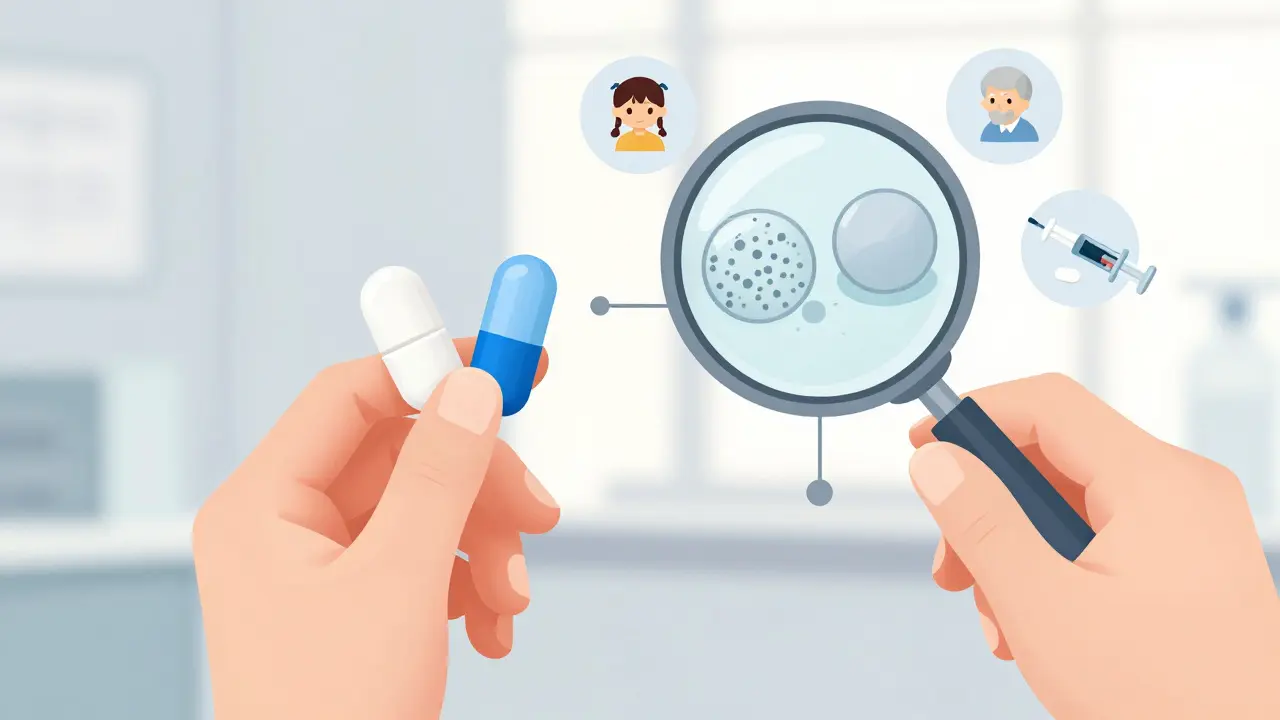
Is It Always Safe?
Generally, yes. But not always. Most reformulations are safe and improve things. But sometimes, small changes can cause big problems. If the new version releases the drug too fast, you might get side effects. Too slow, and it might not work as well. There have been cases where patients switched to a reformulated version and reported new side effects-headaches, dizziness, or even reduced effectiveness. These aren’t common, but they happen. That’s why pharmacists and doctors still ask if you’ve noticed any changes after a switch. The FDA requires reformulated drugs to meet the same quality standards as the original. But if the change is too big-like switching from oral to injectable-it might need full clinical testing. That’s rare, but it’s the rule.Reformulation vs. Evergreening: Where’s the Line?
Here’s the dark side: some companies make tiny, meaningless changes just to keep patents alive. This is called evergreening. Imagine a drug that expires in 2026. The company changes the pill from white to blue. Adds a new flavor. Makes the packaging a little bigger. Then files a new patent. Suddenly, generics can’t come in until 2036. Is that ethical? Many critics say no. It doesn’t help patients. It just keeps prices high. But here’s the counterpoint: not all changes are trivial. A reformulation that turns a pill you have to take with food into one you can take anytime? That’s meaningful. A version that reduces nausea by 70%? That’s life-changing. The line between real improvement and gimmick isn’t always clear. That’s why regulators are watching closer than ever. In 2022, the FDA released new guidance to make sure reformulations actually benefit patients-not just profits.
Who Benefits the Most?
Not everyone gets the same advantage. Patients with chronic conditions win big. If you take a drug every day for years, a reformulation that cuts your doses in half or removes a side effect is huge. Children and elderly patients benefit too. A liquid version of a drug that used to require crushing pills? That’s a game-changer for families and caregivers. People with rare diseases often have few options. Reformulating an existing drug to work better for their condition can be the only path to treatment. That’s why orphan drugs are a major focus of reformulation efforts. Health systems save money too. Fewer hospital visits because patients stick to their meds? That’s less cost overall. But there’s a catch: insurance companies and pharmacies sometimes push reformulated versions without telling you. You might not even know you’ve been switched. That’s why it’s important to check your pill each time you refill.What Should You Do If Your Medication Changes?
Here’s what to do when your prescription looks different:- Don’t panic. It’s likely a reformulation, not a mistake.
- Check the label. The active ingredient should be the same. Look for the name on the bottle.
- Ask your pharmacist. They’ll know if it’s a reformulation and why it was changed.
- Watch for side effects. Did you start feeling dizzy? Nauseous? Less relief? Write it down.
- Talk to your doctor. If something feels off, don’t assume it’s all in your head. It might be the new formula.
The Future of Reformulation
Reformulation isn’t going away. In fact, it’s growing. New technologies are making it easier to control how drugs are released-think patches that respond to body temperature, or capsules that only open in the intestine. These aren’t sci-fi. They’re already in development. Orphan drugs, pediatric formulations, and once-weekly versions of daily pills are all hot areas. The FDA is actively encouraging them. And with the cost of new drug development skyrocketing, reformulation is becoming the smartest bet for pharmaceutical companies. It’s faster. Cheaper. Higher success rate. The key question isn’t whether reformulation is good or bad. It’s whether the change actually helps you. So next time your pill looks different, don’t just take it. Ask. Understand. Stay informed. Because your health isn’t just about the chemical inside-it’s about how it gets to you.Are reformulated drugs the same as generics?
No. Generics copy the original drug exactly, down to the inactive ingredients. Reformulations change those ingredients or how the drug works in your body. A generic version of a drug might look identical to the brand-name pill. A reformulated version might be a liquid, a patch, or a pill that lasts twice as long. Both are approved by the FDA, but they’re not the same thing.
Can a reformulation make my medication less effective?
It’s rare, but possible. If the new version doesn’t release the drug the same way, your body might not absorb enough-or too much. This is especially true for drugs with a narrow therapeutic window, like blood thinners or seizure medications. Always monitor how you feel after a switch and report any changes to your doctor.
Why do pharmacies switch me to a reformulated version without telling me?
It’s often about cost. Pharmacies and insurers prefer lower-priced versions. If a reformulated version is cheaper (even if it’s still brand-name), they may automatically switch you. But they’re not always required to notify you. That’s why it’s important to check your pills each time you refill and ask if anything changed.
Do reformulations always cost more than the original?
Not always. Sometimes reformulations are cheaper because they’re made more efficiently. But often, especially if it’s still under patent, they cost more. Insurance may cover them, but you might pay a higher copay. Always compare prices and ask if a generic version is available.
How do I know if my drug has been reformulated?
Check the pill’s appearance, size, color, or markings. Look at the manufacturer’s name on the bottle. If it’s different from before, or if the dosage form changed (e.g., tablet to capsule), it’s likely a reformulation. Call your pharmacy or check the FDA’s database of approved drug products for confirmation.
Celia McTighe
December 27, 2025 AT 19:45OMG I just realized my anxiety med changed from white to blue last month and I thought I was going crazy 😭 Turns out it was a reformulation-same active ingredient, but now it doesn’t make me nauseous. I almost called my doctor in tears. So glad I didn’t panic. 🙏
Ryan Touhill
December 28, 2025 AT 11:31Let’s be honest-this entire reformulation narrative is corporate propaganda dressed up as patient care. The FDA’s 505(b)(2) pathway is a backdoor for Big Pharma to extend monopolies while charging the same prices. That ‘once-daily’ version? It’s the same pill, just with a fancy coating. And don’t get me started on the ‘chiral switch’ loophole-pure patent gaming.
Patients don’t benefit. Shareholders do. And now we’re told to ‘ask our pharmacists’ like that’s some kind of safeguard. Please. They’re paid by the pharmacy benefit managers who push the most profitable version.
Don’t be fooled. This isn’t innovation. It’s financial engineering with a side of placebo effect.
Teresa Marzo Lostalé
December 28, 2025 AT 20:45You know… I used to think medicine was just science. But now I see it’s also storytelling. The pill doesn’t change. But the story around it? That changes everything. One person sees a blue tablet and thinks ‘new hope.’ Another sees it and thinks ‘they’re trying to trick me.’
Maybe the real reformulation isn’t in the drug-it’s in how we trust it.
I keep my old pill bottle just to remember how I felt before. It’s not about the chemical. It’s about the ritual. The weight of it in my hand. The quiet moment before I swallow.
And now? Now I wonder if we’re losing that.
ANA MARIE VALENZUELA
December 30, 2025 AT 14:04Ugh. Another ‘patient-centered’ PR piece. Real talk: reformulations are a scam unless they’re proven to improve outcomes, not just convenience. And guess what? Most aren’t. I’ve seen patients switch to ‘improved’ versions and end up in the ER because the release profile was off. Especially with anticoagulants. This isn’t ‘upgrading your phone’-it’s playing Russian roulette with your life.
And don’t get me started on pharmacies switching meds without consent. That’s not service. That’s negligence. Someone should sue them.
Nicole Beasley
December 31, 2025 AT 11:00Wait so if I take a reformulated version of my thyroid med, do I need to get my levels checked again?? I’ve heard mixed things 😅
sonam gupta
January 2, 2026 AT 02:30USA always making things complicated. In India we just take the pill whatever color it is. If it works it works. Why waste time on packaging and coatings? Medicine is medicine. Stop overthinking.
Vu L
January 2, 2026 AT 07:22Reformulation my ass. It’s just brand-name companies trying to keep generics off the market. I’ve been on the same med for 12 years. They changed the shape, now it’s twice as expensive. Same exact chemical. They’re laughing all the way to the bank.
Payton Daily
January 3, 2026 AT 12:21Think about it. Every time you take a pill, you’re trusting a system that’s designed to profit off your body. Reformulation isn’t progress-it’s performance. The drug doesn’t change. But the narrative? Oh honey, that’s been rewritten with glitter and corporate jargon.
We’ve turned healthcare into a Broadway show where the actors are pharmacists, the script is written by lawyers, and the audience? Us. Taking our little blue pills like good little subjects.
Who are we really serving here?
Kelsey Youmans
January 3, 2026 AT 15:01While the article presents a generally balanced perspective, it is imperative to underscore the ethical obligations incumbent upon pharmaceutical entities when implementing reformulations. The principle of non-maleficence must remain paramount, and transparency in labeling, coupled with proactive patient notification, constitutes a fundamental component of professional responsibility in pharmacotherapy.
It is regrettable that institutional inertia often supersedes patient autonomy in this domain. We must advocate for regulatory frameworks that prioritize informed consent over cost-efficiency.
Sydney Lee
January 4, 2026 AT 13:05Let me tell you something: if you’re not checking the NDC code on every prescription refill, you’re being reckless. I’m a pharmacist. I’ve seen people take reformulated versions of lithium and end up hospitalized because they didn’t realize the bioequivalence window was narrower than they thought. This isn’t ‘maybe you should ask your pharmacist’-this is ‘your life could end if you don’t verify.’
And yes, I know the FDA says it’s ‘safe.’ But safety isn’t binary. It’s a spectrum. And most patients have no idea how thin the margin is.
oluwarotimi w alaka
January 6, 2026 AT 01:09USA always playing games with medicine. In Nigeria we dont have these fancy pills. We use what we got. If your body dont like it you go to herbalist. No patent no scam. No blue pill no white pill. Just medicine. Why you guys make it so hard?
Debra Cagwin
January 6, 2026 AT 10:28To anyone who just got a new pill: you’re not alone. I’ve been there. I was terrified too. But I called my pharmacist, asked the right questions, and found out the reformulation was actually better for my stomach. It’s okay to be cautious-but don’t let fear stop you from asking. You deserve to understand what’s in your body. And you’re not being ‘difficult’ for caring. You’re being smart.
Keep asking. Keep checking. Keep advocating. You’ve got this.
Hakim Bachiri
January 7, 2026 AT 01:26Reformulation? More like re-marketing. They change the color, the shape, the damn flavor-and slap a new patent on it. Meanwhile, people who can’t afford the new version get stuck with the old one that gives them acid reflux. And you wanna know what’s worse? The FDA lets them do it. They’re not protecting patients-they’re protecting profits. And the media? They’re just the cheerleaders.
Wake up. This isn’t science. It’s capitalism with a stethoscope.