
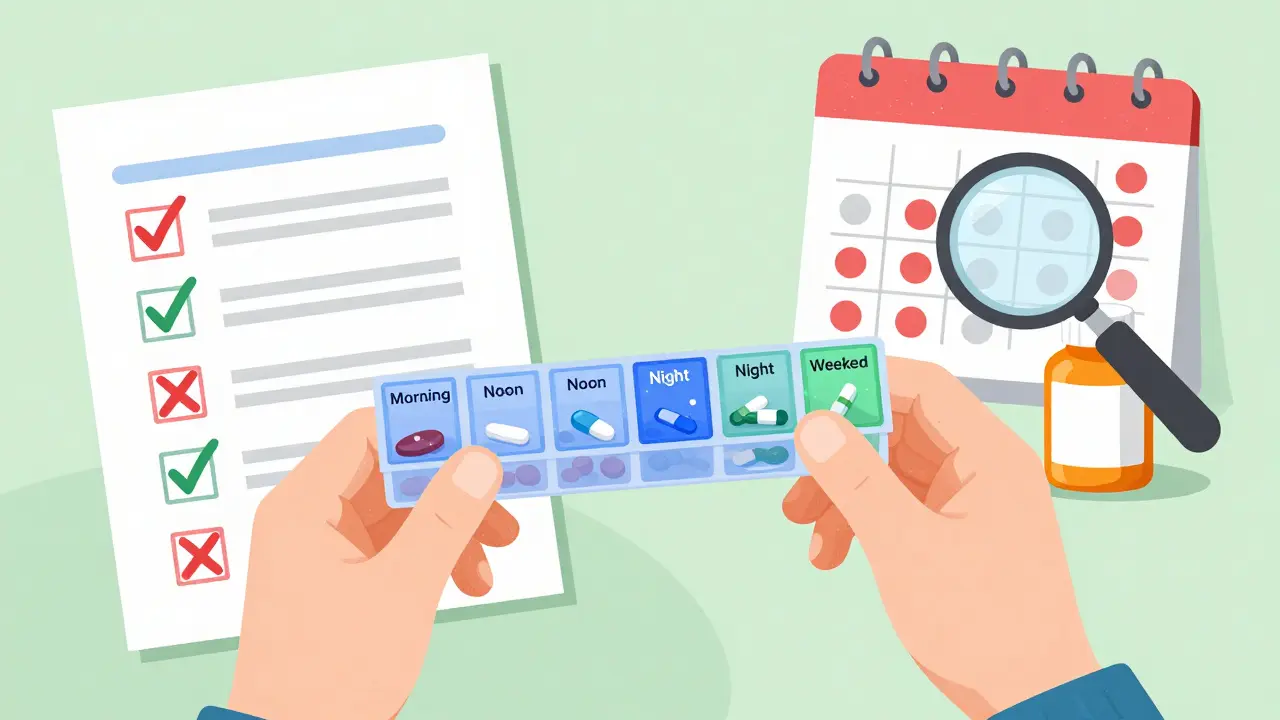
Why Medication Adherence Matters More Than You Think
You’ve been prescribed a medication for high blood pressure, diabetes, or maybe even depression. Your doctor explained how important it is to take it every day. But between busy schedules, side effects, or just forgetting, you don’t always take it as directed. You’re not alone. Medication adherence is one of the biggest hidden problems in modern healthcare - and it’s costing lives and money.
More than half of people with chronic conditions don’t take their meds as prescribed. That’s not laziness. It’s not ignorance. It’s human. Life gets messy. Pills get lost in bags. Refills get forgotten. Side effects make you want to quit. But here’s the hard truth: skipping doses doesn’t just mean you feel worse - it can land you in the hospital, speed up disease progression, or even lead to death. The U.S. spends between $100 billion and $300 billion every year on avoidable hospital visits caused by people not taking their medications properly.
So how do you know if you’re on track? You can’t just guess. You need to measure it. And the good news? You don’t need fancy gadgets or expensive apps. You just need a simple, honest system.
What Is Medication Adherence - And Why It’s Not Just About Taking Pills
Medication adherence isn’t just about swallowing a pill when the clock hits noon. It’s a three-part process, according to the EQUATOR Network:
- Initiation - Did you start the medication at all?
- Implementation - Are you taking it the right way, at the right time, in the right dose?
- Persistence - Did you keep taking it for as long as your doctor intended?
Many people start their meds fine. But they stop after a few weeks because they don’t feel immediate results. Or they skip doses when they feel fine. That’s not adherence. That’s hoping the problem will go away on its own.
Real adherence means following the plan - even when you feel okay. Especially when you feel okay. That’s when the real work happens.
The Four Best Ways to Track Your Adherence (No Tech Required)
You don’t need a smart pill bottle or an AI app to know if you’re taking your meds right. Here are four simple, proven methods anyone can use - starting today.
1. The Pill Count Method
It’s old-school, but it works. Every Sunday, take out your pill container. Count how many pills are left. Then check your prescription label: how many were you supposed to have left? If you have more than you should, you’ve skipped doses. If you’re running out early, you might be taking too many.
Example: You have a 30-day supply of metformin. You’re supposed to take one pill a day. On day 24, you count 12 pills left. That means you took 18 pills - but you should’ve taken 24. You missed six doses. That’s 25% non-adherence. Not good.
This method is cheap, immediate, and hard to fake. It doesn’t lie.
2. The Daily Log (Paper or Digital)
Grab a notebook, a sticky note, or even a notes app on your phone. Every time you take a pill, mark an X or check a box. Simple. No tech. No passwords. Just you and your commitment.
Use a calendar view. Put a red dot for each day you missed. After a week, look at the pattern. Did you miss doses on weekends? When you traveled? After meals? Patterns tell you what’s really going on.
Studies show people who track their doses are 30% more likely to stay on track than those who don’t. Why? Because writing it down makes it real.
3. The Medication Adherence Report Scale (MARS-5)
This is a five-question tool developed by researchers and used in clinics around the world. Answer honestly. No one’s watching.
- I sometimes forget to take my medication.
- I sometimes stop taking my medication when I feel better.
- I sometimes skip doses if I feel unwell.
- I sometimes reduce my dose because of side effects.
- I sometimes don’t take my medication because I’m afraid of side effects.
For each question, choose: Very often (1), Often (2), Sometimes (3), Rarely (4), Never (5).
Add up your scores. A total of 20-25? You’re doing great. 15-19? You’re slipping. 14 or below? You need help - and it’s not too late to get it.
Don’t just score yourself. Talk to your pharmacist or doctor with your answers. They’ve heard it all before. They won’t judge. They’ll help.
4. The Prescription Fill Tracker
Check your pharmacy records. Log into your pharmacy’s website or call them. Look at your refill history for the last 6 months.
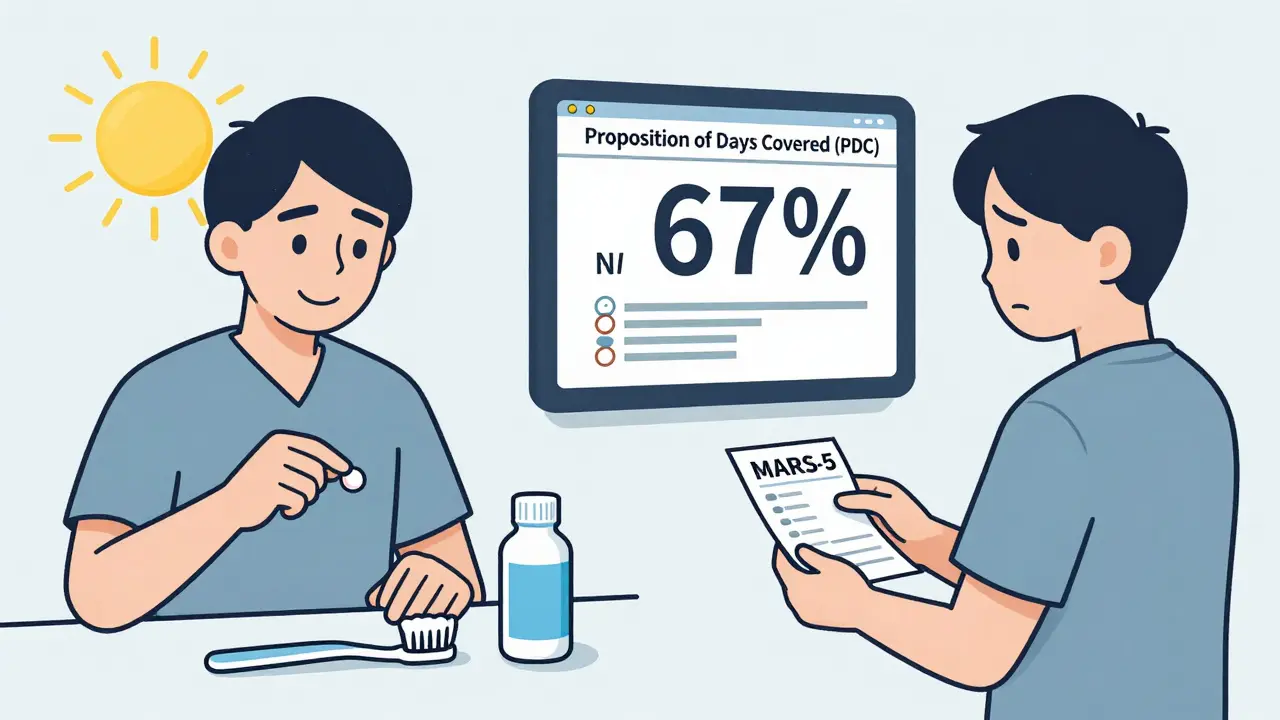
Calculate your Proportion of Days Covered (PDC). Here’s how:
- Add up all the days’ supply from your refills in the last 6 months.
- Divide that by 180 (the number of days in 6 months).
- That’s your PDC.
Example: You were prescribed a 30-day supply of lisinopril every month for 6 months. That’s 180 days total. But you only picked up refills for 4 months. So you had 120 days of medication. 120 ÷ 180 = 0.67. That’s 67% adherence.
Experts say you need at least 80% PDC to get the full benefit. Below 80%? Your treatment isn’t working as well as it should. That’s not your fault - it’s a system problem. But now you know.
Common Reasons You’re Missing Doses (And How to Fix Them)
Here’s what really stops people from taking their meds - and how to beat each one.
“I forget.”
Fix: Set a daily alarm on your phone. Put your pills next to your toothbrush. Link taking your pill to a habit you already do - like brushing your teeth or drinking your morning coffee.
“The side effects are too much.”
Fix: Don’t quit. Talk to your doctor. Maybe the dose can be lowered. Maybe another med works better. Maybe timing it differently helps. Never assume it’s hopeless.
“I don’t feel sick, so why take it?”
Fix: Remember - you’re not taking it to feel better. You’re taking it to stay well. High blood pressure doesn’t scream. Diabetes doesn’t yell. But they both wreck your body quietly.
“It’s too expensive.”
Fix: Ask your pharmacist about generic versions. Ask if your insurer has a mail-order program. Many drug companies offer patient assistance programs. You’d be surprised how many people qualify.
“I’m confused about what to take and when.”
Fix: Get a pill organizer with compartments for morning, noon, night, and weekend. Write down your schedule on a card. Take it with you. Show it to your pharmacist. They’ll help you sort it out.
Your 7-Day Medication Adherence Checklist
Use this every week. It takes 5 minutes. It could save your health.
- Count your pills. Do you have more than you should?
- Check your daily log. Did you miss any days?
- Answer the MARS-5 questions honestly.
- Look at your pharmacy refill history. What’s your PDC?
- Did any side effects make you skip a dose?
- Did you run out of pills before your refill was ready?
- Will you talk to your doctor or pharmacist about any issues this week?
Keep this checklist printed out. Tape it to your fridge. Or save it in your phone. Do it every Sunday. You’ll start seeing patterns. And you’ll start taking back control.
When to Ask for Help - And Who to Talk To
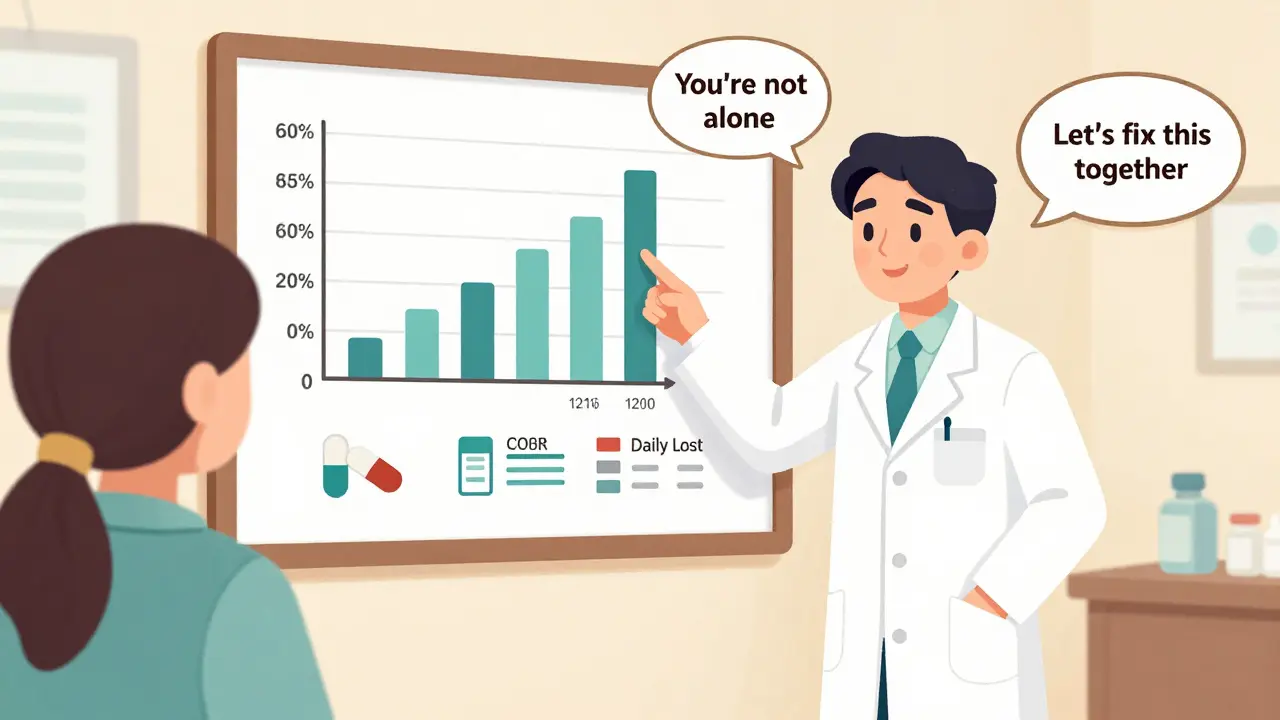
If your PDC is below 80%, or your MARS score is under 18, don’t wait. Don’t feel guilty. Don’t think you’re failing. This isn’t about willpower. It’s about support.
Go to your pharmacist. They’re trained in adherence. They can help you with:
- Setting up a refill reminder system
- Switching to a once-daily pill
- Connecting you with low-cost programs
- Explaining your meds in plain language
Ask your doctor to refer you to a medication therapy management (MTM) program. Many insurers offer it for free. It’s a 15-30 minute phone or in-person session where a pharmacist reviews all your meds - not just one - and finds problems you didn’t even know you had.
And if you’re struggling emotionally - if anxiety, depression, or stigma is keeping you from taking your meds - talk to a counselor. Mental health and physical health are linked. You don’t have to do this alone.
The Bigger Picture: Why This Matters Beyond You
Medication adherence isn’t just personal. It’s systemic. Health systems are now penalized if patients don’t take their meds. Insurance companies pay bonuses to plans that help people stay on track. Pharmacies get paid to track refill patterns. AI tools predict who’s at risk.
But here’s the truth: none of that matters if you don’t know where you stand. You can’t improve what you don’t measure. And you can’t trust your memory. It’s too unreliable.
By using even one of these methods - a pill count, a log, the MARS-5 - you’re not just checking a box. You’re taking a stand. You’re saying: My health matters. I deserve to get the most out of my treatment.
That’s not just adherence. That’s power.
What is the best way to measure medication adherence at home?
The best way at home is combining a simple daily log with a weekly pill count. Use a notebook or phone app to mark each dose you take. Every Sunday, count your pills to see if you’ve missed any. For a deeper check, use the MARS-5 questionnaire - it’s quick, free, and validated by research. Don’t rely on memory. Write it down.
Is 80% adherence really enough?
Yes - for most chronic medications like those for blood pressure, diabetes, or cholesterol, 80% adherence (or higher) is the minimum needed to get the full benefit. Studies show that below 80%, the risk of hospitalization and complications rises sharply. It’s not about perfection. It’s about consistency. Missing one or two doses a month is okay. Missing five or six is not.
Can I trust my pharmacy refill records to tell me if I’m taking my meds?
No - not fully. Refill records only show you picked up your prescription. They don’t tell you if you took it. Many people fill prescriptions but never open the bottle. That’s why refill data alone can overestimate adherence by up to 30%. Use it as a clue, not proof. Always pair it with self-tracking like a pill log.
What should I do if I keep forgetting to take my pills?
Link your pill-taking to a daily habit you never miss - like brushing your teeth, eating breakfast, or turning off the lights at night. Set a phone alarm with a unique sound. Use a pill organizer with separate compartments for each time of day. If you’re still struggling, ask your pharmacist about blister packs or automated reminder systems. Some pharmacies offer free SMS reminders.
Is it okay to stop my medication if I feel fine?
No. Many medications - especially for high blood pressure, cholesterol, or diabetes - work silently. You won’t feel better after taking them, but you’ll feel worse if you stop. Stopping without talking to your doctor can cause sudden spikes in blood pressure, blood sugar, or cholesterol levels - leading to heart attack, stroke, or kidney damage. Always consult your provider before making changes.
Are there free tools to help track medication adherence?
Yes. Many pharmacies offer free apps with refill reminders. Google Calendar and Apple Reminders work well for setting daily alerts. You can download a free printable pill tracker from the CDC or American Pharmacists Association websites. The MARS-5 questionnaire is also free to use - just ask your pharmacist for a copy. You don’t need to pay for an app to stay on track.
What if I can’t afford my medication?
Talk to your pharmacist. Ask about generic versions, manufacturer coupons, or patient assistance programs. Many drug companies give free or low-cost meds to people who qualify based on income. In Australia, the PBS (Pharmaceutical Benefits Scheme) caps your cost at $32.10 per script (or $7.30 with a concession card). In the U.S., organizations like NeedyMeds and RxAssist can help you find savings. Never skip doses because of cost - there’s always a solution.
Monte Pareek
December 18, 2025 AT 21:31Kelly Mulder
December 20, 2025 AT 18:21mark shortus
December 22, 2025 AT 00:41Chris Clark
December 22, 2025 AT 14:56William Storrs
December 22, 2025 AT 15:02Guillaume VanderEst
December 23, 2025 AT 20:49Henry Marcus
December 23, 2025 AT 23:04Carolyn Benson
December 24, 2025 AT 05:18William Liu
December 25, 2025 AT 12:27Aadil Munshi
December 26, 2025 AT 06:49