
Ever opened a medicine bottle and stared at the date on the label, wondering if it’s still safe to take? You’re not alone. Millions of people throw away perfectly good pills because they don’t know how to read expiration dates correctly-or worse, they take expired meds without realizing the risks. The truth is, expiration dates aren’t just random numbers. They’re science-backed deadlines that tell you when a medication is guaranteed to work as intended. But here’s the twist: many drugs are still safe and effective long after that date. The problem? Most people don’t know how to interpret them-or what to do when the pharmacy label says one thing and the original bottle says another.
What an Expiration Date Really Means
An expiration date on your medicine isn’t a "use by" deadline that turns your pill into poison the next day. It’s the final day the manufacturer guarantees the drug will be at full strength, safe, and stable under proper storage conditions. This isn’t a guess. It’s based on real testing. Manufacturers put medications through extreme heat, humidity, and light to see how long they hold up. Based on that data, they set a date-usually between 1 and 5 years after the drug was made.
For example, a bottle of ibuprofen might expire in 2027, but studies show it can stay effective for years beyond that-sometimes even decades-if kept dry and cool. On the other hand, insulin, eye drops, or liquid antibiotics can degrade much faster. That’s why the date matters. It’s not about danger-it’s about potency. If a medication loses its strength, it might not work. And that’s dangerous in its own right.
How Expiration Dates Are Shown on Packaging
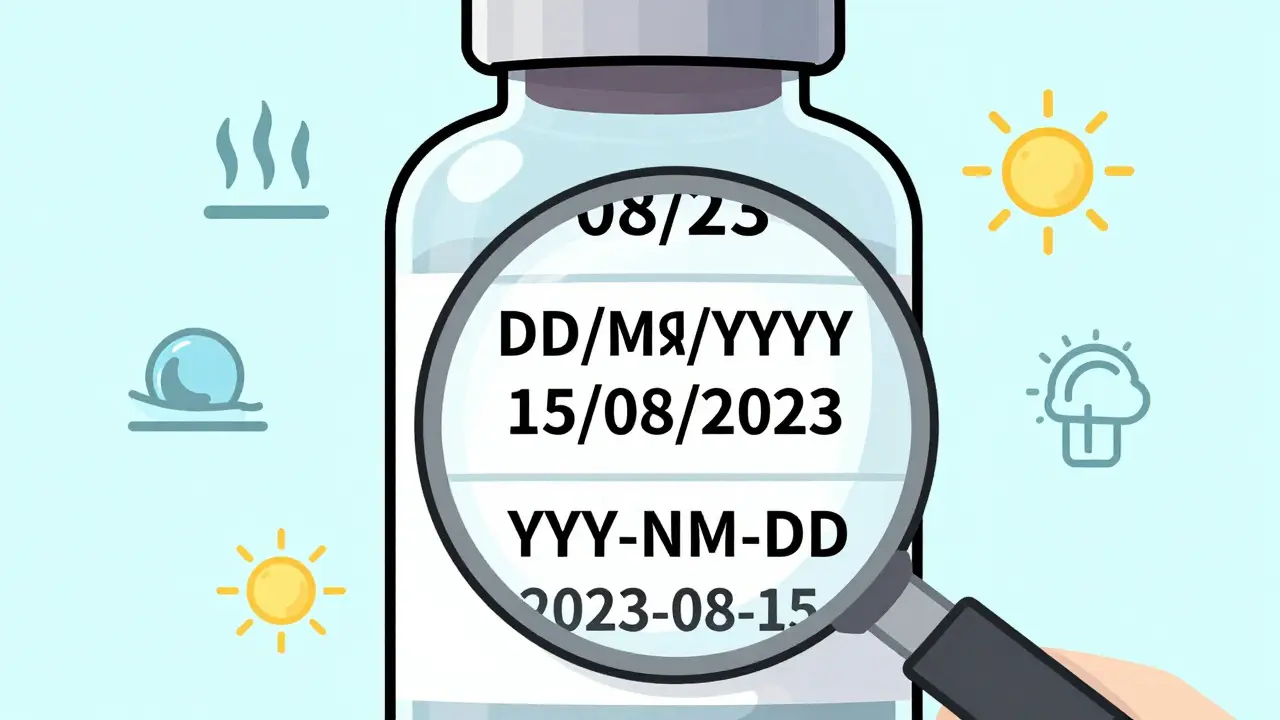
Look closely at your medicine. You’ll see expiration dates written in different ways. The most common formats are:
- MM/YY (like 08/23) - means the last day of August 2023
- DD/MM/YYYY (like 15/08/2023) - common in Europe and Australia
- YYYY-MM-DD (like 2023-08-15) - becoming the global standard
- "Exp" or "Expiry" followed by a date
- "Use by" or "Use before" - same meaning as expiration
If you only see a month and year (e.g., 05/25), the drug expires on the last day of that month. So 05/25 means May 31, 2025. No guessing needed.
Some labels also include a lot number or batch code. That’s not for you to use-it’s for the manufacturer to track recalls. But if you ever need to report a problem with a medication, having that code handy helps.
Pharmacy Labels vs. Manufacturer Labels
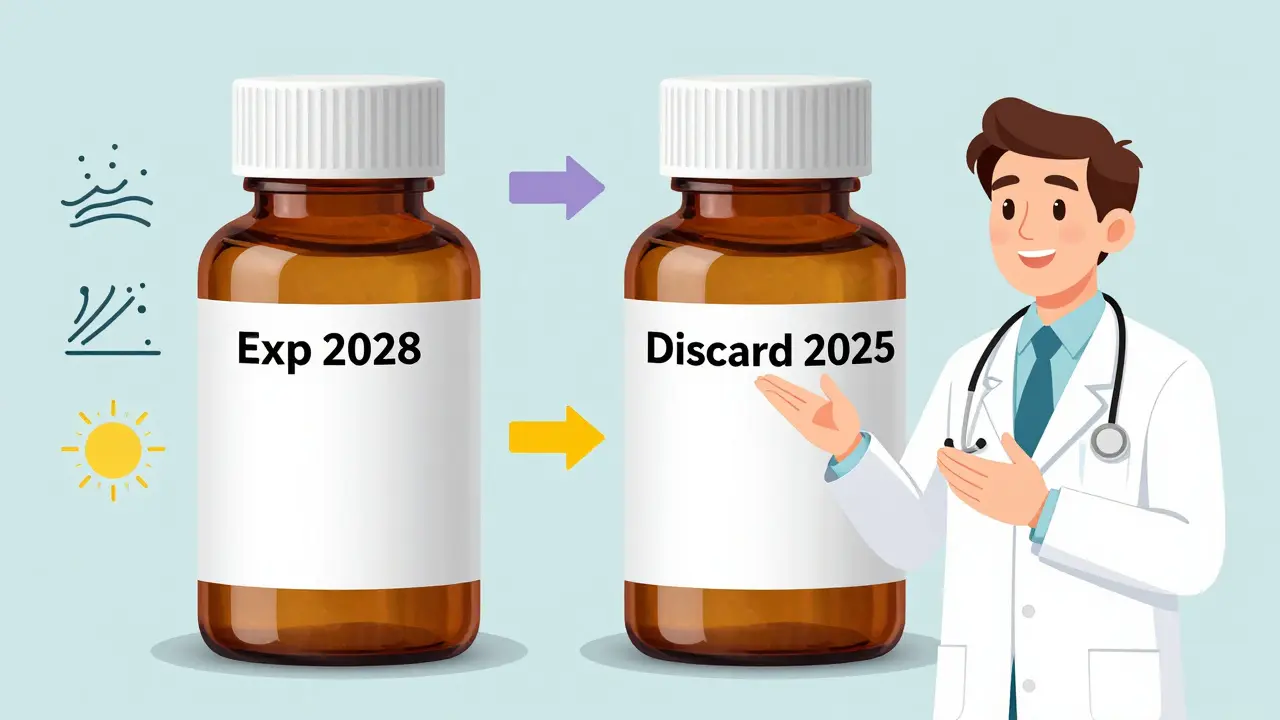
This is where most people get confused. When you pick up a prescription, the pharmacy puts its own label on the bottle. It often says "Discard after [date]" or "Do not use after [date]." That’s not the same as the manufacturer’s expiration date.
Why? Because pharmacies are required to set a "beyond-use date" based on how long the medication will stay stable after being repackaged. For most pills, that’s one year from when you picked it up. But for liquids-like antibiotics or insulin-it might be as short as 14 days. The original bottle might say "expires 2028," but the pharmacy label says "discard after 2025." Which one do you follow?
You follow the pharmacy label. Always. Why? Because once the medication leaves its original sealed container, it’s exposed to air, moisture, and temperature changes. Even if the drug itself is still good, the way it’s stored in your medicine cabinet isn’t the same as the factory-sealed vial.
Here’s a pro tip: When you get a prescription, ask the pharmacist to write the manufacturer’s original expiration date on the bottle too. That way, you’ve got both dates. If you’re ever unsure, call them. Pharmacists are trained to explain this stuff.
Which Medications Are Risky After Expiration?
Most pills are fine past their date. But some aren’t. Taking expired versions of these can be dangerous:
- Insulin - Can lose potency, leading to dangerously high blood sugar
- Birth control pills - Reduced effectiveness = unplanned pregnancy risk
- Thyroid medication - Even small drops in potency can throw your whole metabolism off
- Antibiotics - If they’re weak, they won’t kill the infection. That can lead to antibiotic resistance
- Anti-platelet drugs (like aspirin for heart patients) - If they don’t work, you’re at higher risk of clotting
There’s a myth that tetracycline becomes toxic after expiration. That was true for old formulas from the 1960s. Modern versions don’t have that problem. But still-don’t risk it. If it’s expired, don’t take it.
Storage Matters More Than You Think
Expiration dates assume your medicine is stored correctly. If you keep it in the bathroom, next to the shower, or in a hot car, it degrades faster. Heat, moisture, and sunlight break down chemicals. A pill that should last until 2026 might be useless by 2024 if it’s been sitting in a steamy bathroom.
Here’s what to do:
- Store pills in a cool, dry place-like a bedroom drawer, not the kitchen or bathroom
- Keep them in their original bottle with the cap tightly closed
- Never transfer pills to pill organizers unless you’re using them within a week
- If the label says "refrigerate," keep it cold. Don’t assume it’s okay at room temp
- Keep medications away from direct sunlight
Even if the date hasn’t passed, improper storage can make your medicine useless. And that’s just as risky as taking an expired one.
How to Check If Your Medicine Is Still Good
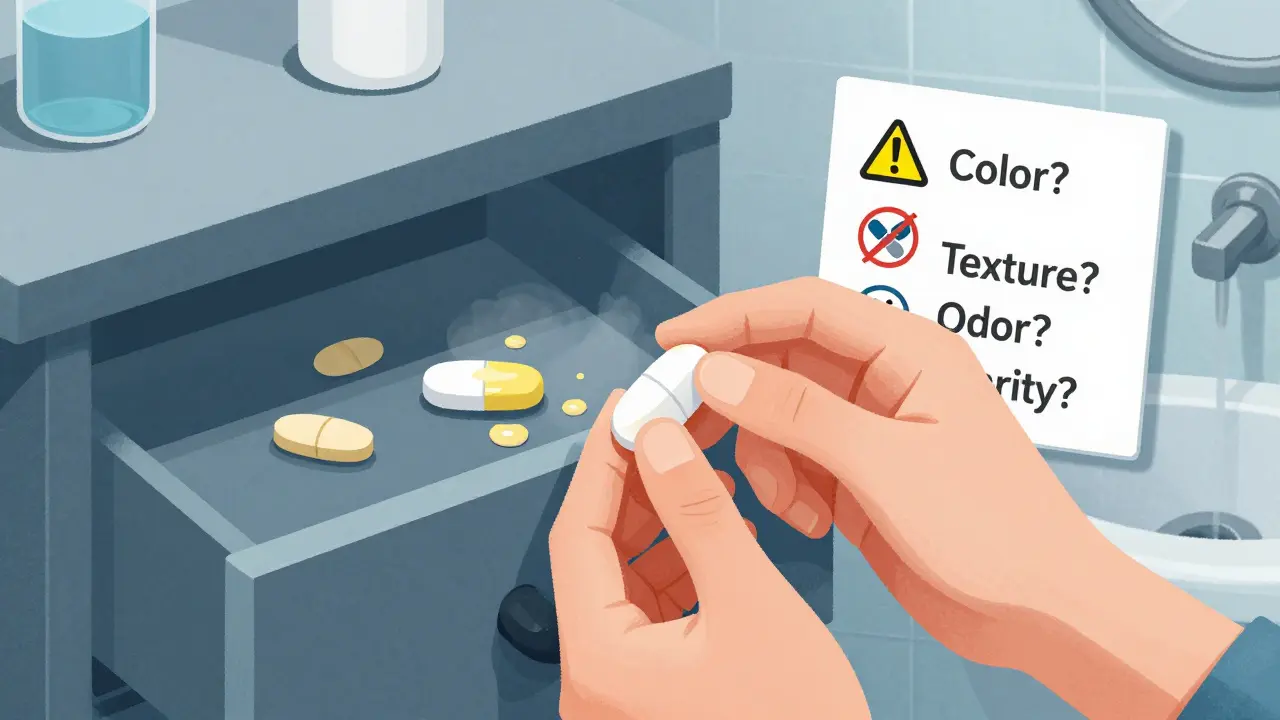
Look at it. Smell it. Feel it.
- Color changes? A white tablet turning yellow? Toss it.
- Crumbly or sticky? If tablets break apart easily or feel tacky, they’ve absorbed moisture.
- Unusual odor? If it smells weird-like vinegar or mold-don’t take it.
- Cloudy liquid? Eye drops or suspensions should be clear. If they’re cloudy, hazy, or have particles, discard them.
These signs mean degradation has already happened. Even if the date says "still good," the medicine is no longer reliable.
Also, check for the Drug Identification Number (DIN) in Australia or the GP number. If it’s missing from the label, the product might not be approved for sale here. That’s a red flag.
What to Do With Expired Medication
Don’t flush it. Don’t throw it in the trash. Don’t give it to someone else.
Take it to a pharmacy. Most Australian pharmacies have take-back bins for expired or unwanted medicines. It’s free, safe, and environmentally responsible. Some local councils also run medicine disposal days. Check with your local council website.
If you’re unsure whether a medicine is expired, call your pharmacist. They’ll tell you if it’s safe to use or if you need a new prescription. No judgment. No rush. They’ve seen it all.
Smart Tools to Stay on Top of Expiry Dates
There are apps designed to help. MedSafe, MyTherapy, and Medisafe let you scan barcodes on medicine bottles and set reminders for when things expire. Some even notify you when it’s time to refill.
Or, keep it simple: write the expiration date on a piece of tape and stick it to the bottle. Or mark your calendar. Set a reminder three months before the date. That gives you time to get a refill before it runs out.
What Experts Say
A U.S. government program called the Shelf Life Extension Program (SLEP) tested over 100 drugs stored under perfect conditions. Ninety percent were still effective 15 to 66 months past their expiration date. That’s more than five years.
But here’s the catch: SLEP tested drugs in sealed, climate-controlled labs-not your bathroom cabinet. So while the science says many drugs last longer, real-world storage makes a huge difference.
Dr. Sarah Pace, an internal medicine physician, says: "Most medications are safe past their expiration date. But if you’re taking something critical-like insulin or heart medication-don’t gamble. Get a new prescription. Your health isn’t worth the risk."
Final Rule: When in Doubt, Don’t Take It
Expiration dates aren’t magic. They’re guidelines based on science. But your health? That’s not a guideline. If you’re unsure, if the pill looks odd, if the date is faded, if you can’t remember when you got it-don’t take it. Go to the pharmacy. Ask. Get a new one.
Medicines are meant to help you. But only if they work as intended. And that means knowing when they’re still good-and when they’re not.
Can I still take medicine after the expiration date?
Many medications remain safe and effective for months or even years after their expiration date, especially if stored properly. However, certain drugs-like insulin, birth control, thyroid medication, and antibiotics-can lose potency or become unsafe. When in doubt, don’t take it. Consult your pharmacist.
What does "Exp 08/23" mean?
"Exp 08/23" means the medication expires on August 31, 2023. If only a month and year are listed, the expiration is the last day of that month.
Should I follow the pharmacy label or the original bottle’s expiration date?
Always follow the pharmacy label. Pharmacies set a "beyond-use date" based on how long the medication will stay stable after being repackaged. This date is often shorter than the manufacturer’s expiration date because once opened and repackaged, exposure to air and moisture can reduce shelf life.
Is it dangerous to take expired medicine?
For most pills, the main risk is reduced effectiveness-not poisoning. But for critical medications like insulin, antibiotics, or heart drugs, taking expired versions can lead to serious health consequences, including treatment failure or antibiotic resistance. Never take expired eye drops, liquid suspensions, or injectables.
How should I store my medications to make them last?
Store pills in a cool, dry place away from sunlight and moisture-like a bedroom drawer. Avoid bathrooms and kitchens. Keep them in their original containers with tight caps. If the label says "refrigerate," keep them cold. Heat and humidity degrade medicine faster than the expiration date suggests.
Can I use medicine past its expiration date if it looks fine?
Appearance alone isn’t enough. Many medications lose potency without changing color or texture. If the expiration date has passed and the medicine is critical (like insulin or heart medication), get a new prescription. For non-critical OTC meds like ibuprofen, you might be fine-but don’t rely on appearance. When in doubt, replace it.