
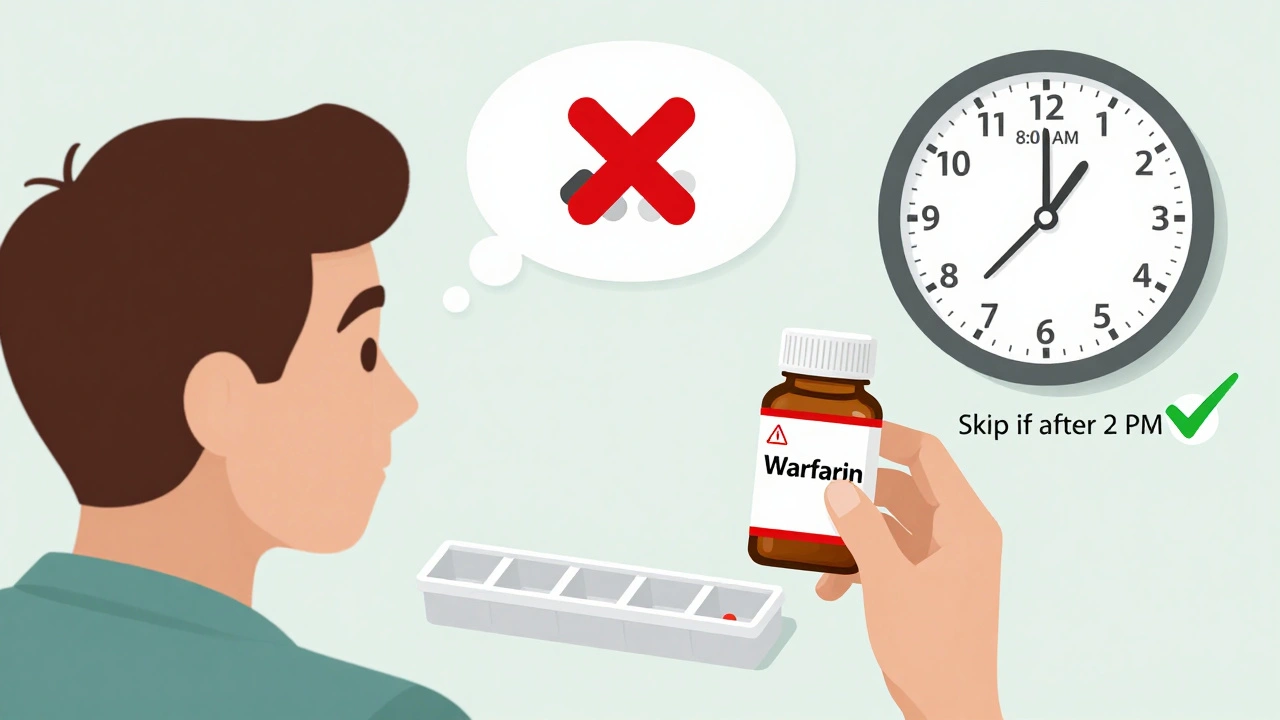
Missing a dose of your medication happens to almost everyone at some point. Maybe you overslept. Maybe you were in a rush. Maybe you forgot because you’re juggling five different pills. The instinct is clear: take two now to make up for it. But that’s exactly what you shouldn’t do - and here’s why.
Taking a double dose doesn’t fix the problem. It creates a new one. Too much medication in your system at once can lead to dangerous side effects - from dizziness and nausea to internal bleeding, kidney damage, or even seizures. The risk isn’t theoretical. In England alone, 14.2% of preventable hospital admissions from medication errors come from people doubling up after a missed dose. That’s nearly one in seven cases that could have been avoided with simple, clear guidance.
Why Doubling Up Is Never the Answer
Your body doesn’t work like a bank account where you can deposit extra to cover a withdrawal. Medications are designed to maintain a steady level in your bloodstream. When you take a double dose, you spike that level. For some drugs, even a small increase can be harmful.
Take warfarin, a blood thinner. Its therapeutic range is narrow - too little and you risk a clot; too much and you risk a bleed. A 2022 study in JAMA Internal Medicine found that 68.4% of patients who doubled their warfarin dose saw their INR levels jump above 5.0. That’s a red flag. INR above 5.0 means your blood is taking way too long to clot. Major bleeding can happen without warning.
Same goes for digoxin, used for heart conditions. A single extra dose can cause life-threatening heart rhythms. Or methotrexate - a drug used for autoimmune diseases and cancer. The NHS specifically warns: never take a double dose of methotrexate. Even one extra milligram can cause organ failure.
It’s not just high-risk drugs. Antibiotics, blood pressure pills, even antidepressants can cause problems if you double up. Your liver and kidneys aren’t designed to process double the load at once. The side effects might not be immediate, but they’re real.
What You Should Do Instead
The rule isn’t one-size-fits-all. It depends on the medication, how often you take it, and how long you’ve missed it.
Once-daily medications (like most blood pressure pills, statins, or thyroid meds): If you realize you missed it on the same day, take it as soon as you remember. If it’s already the next day, skip it. Don’t take two the next morning. Your body will be fine. Missing one dose won’t undo weeks of treatment.
Twice-daily medications (like some antibiotics or diabetes drugs): If you miss the morning dose and remember by early afternoon - say, before 2 p.m. for an 8 a.m. and 8 p.m. schedule - take it. If it’s after 2 p.m., skip it. The window is usually about 6 hours. After that, the risk of overlapping doses outweighs the benefit of catching up.
Oral contraceptives: If you miss an active pill by less than 12 hours, take it right away and continue as normal. If it’s been more than 12 hours, take the missed pill as soon as you remember (even if that means taking two pills in one day), but use backup contraception (like condoms) for the next 7 days. Missing more than one pill in a row requires a different plan - check your pill pack instructions or call your doctor.
GLP-1 weight-loss drugs (like semaglutide or tirzepatide): These are injected once a week. If you miss your scheduled day, you can take it up to 4 days late. After that, skip it and resume your regular schedule. Don’t try to make up two doses. You might feel nauseous, and it won’t help your results.
Antiepileptics: These are non-negotiable. Missing even one dose can trigger a seizure. If you realize you missed it within a few hours of the scheduled time, take it. If it’s been longer, don’t double up. Contact your neurologist. They may adjust your next dose or recommend a temporary strategy.
How to Know What’s Right for Your Meds
The instructions on your pill bottle or patient leaflet should tell you what to do. But here’s the problem: 25% of high-risk medications don’t even include clear missed-dose advice in their official documents. And 41.7% of patient leaflets give conflicting or confusing instructions.
Don’t rely on memory or guesswork. Ask your pharmacist. Seriously. Walk in, show them your list of meds, and say: “What should I do if I miss a dose of each of these?” Most pharmacies offer free Medicines Use Reviews - a 20-minute chat where they go over your entire regimen. These reviews cut missed-dose incidents by nearly 30%.
Look up your medication on trusted sites like the NHS Medicines A-Z, Australian Prescriber, or the FDA’s database. These are updated regularly and written for patients, not just doctors.
Pay attention to the drug’s half-life - how long it stays active in your body. Short half-life drugs (like metoprolol, 3-4 hours) need more precise timing. Long half-life drugs (like levothyroxine, 7 days) are more forgiving. If you’re unsure, assume the worst-case scenario: skip it if you’re more than halfway to your next dose.
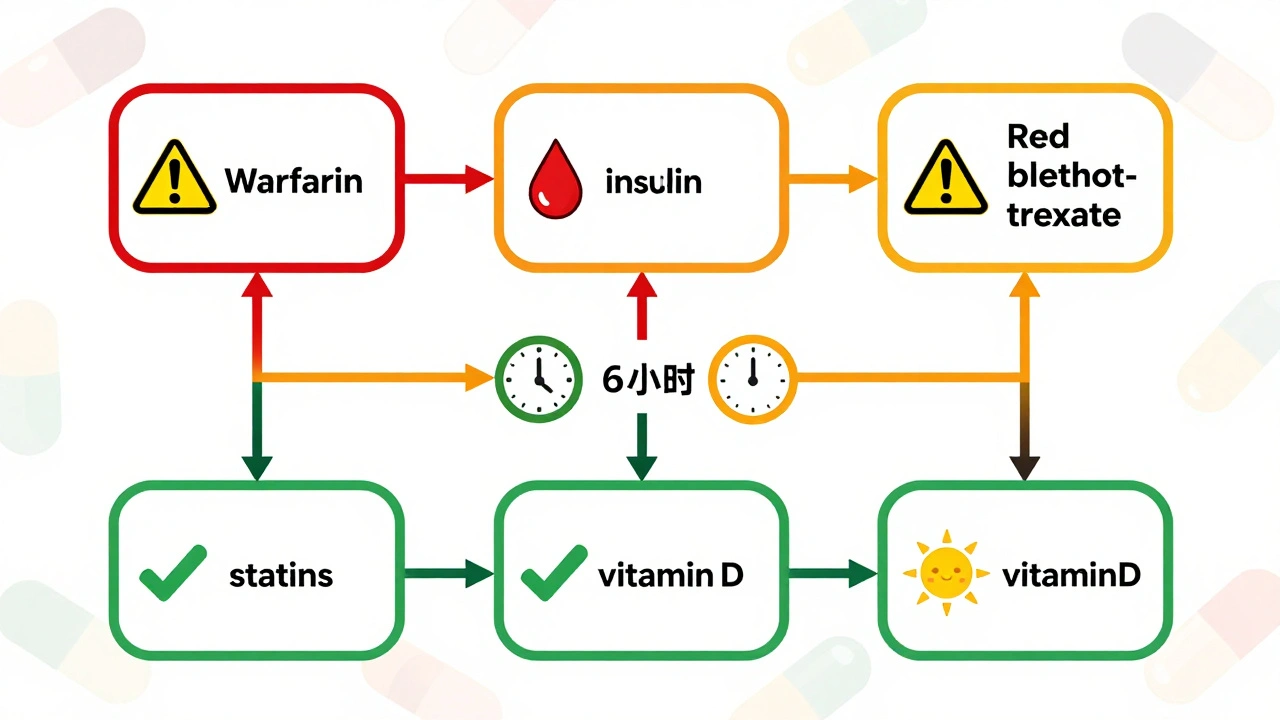
High-Risk Categories to Watch Out For
Not all missed doses are equal. Medications are grouped by risk:
- Red category - Highest risk. Includes anticoagulants (warfarin, rivaroxaban), antiepileptics, insulin, methotrexate, digoxin. One missed dose can be dangerous. Never double up.
- Amber category - Moderate risk. Includes blood pressure meds, some antidepressants, thyroid hormones. Missing one dose won’t cause immediate harm, but consistency matters. Follow the 6-hour or same-day rule.
- Green category - Low risk. Most statins, some pain relievers, vitamin D. One missed dose won’t impact your health. Just take it when you remember, or skip it if it’s too late.
If you’re on a red-category drug, keep a printed copy of the missed-dose instructions in your wallet. Or set a reminder on your phone with the exact rule: “If I miss my warfarin after midnight, skip it.”
Why People Keep Doubling Up
It’s not just ignorance. It’s anxiety. People think: “If I miss one, I’m falling behind. My condition will get worse.” But that’s not how most medications work. Your body holds onto the drug for hours - sometimes days. Missing one dose doesn’t erase progress.
Studies show that 47% of patients believe they should take a missed dose immediately. But only 53% of clinicians agree - and only if it’s within a safe window. The gap between patient belief and clinical advice is wide. And that’s dangerous.
On Reddit, a thread about accidentally doubling a dose got over 1,200 comments. Most were from people scared they’d harmed themselves. One woman took double her blood pressure pill and ended up in the ER with a dangerously low heart rate. She didn’t know what to do - and no one had ever told her.

Tools That Help You Stay on Track
The best way to avoid missed doses is to prevent them in the first place.
- Medication apps - MyTherapy, Medisafe, or even Apple Health’s Medications feature send reminders and track adherence. Users report a 42% drop in missed doses.
- Pill organizers - Weekly or monthly boxes with alarms. Get one with compartments for morning, afternoon, evening.
- Pharmacy blister packs - Many pharmacies now pre-sort your pills by time of day and deliver them weekly. You just open and take.
- Set alarms - Use your phone, smart speaker, or even a kitchen timer. Label them clearly: “Warfarin - 7 PM.”
Traveling? Time zones mess with your schedule. Set your phone to your home time zone, or use an app that auto-adjusts reminders. Daylight saving changes cause 12% of medication errors - don’t let that be you.
What to Do If You Already Took a Double Dose
If you’ve already taken two doses by accident, don’t panic - but don’t ignore it either.
- Call your pharmacist or doctor immediately. Don’t wait for symptoms.
- Have your medication list ready - name, dose, time taken.
- Watch for signs: dizziness, rapid heartbeat, vomiting, confusion, unusual bruising, or extreme fatigue.
- If symptoms are severe, go to the ER. Bring your meds with you.
Even if you feel fine, report it. In Australia, you can report medication errors to the TGA’s Yellow Card system. Your report helps improve safety for everyone.
Final Thought: It’s Not About Perfection
Medication adherence isn’t about never missing a dose. It’s about knowing what to do when you do. The goal isn’t 100% perfect compliance - it’s 100% safe response when things go wrong.
Most people miss doses. The difference between those who stay healthy and those who end up in the hospital is simple: they know what to do next. You don’t need to memorize every rule. Just learn the ones for your meds. Ask your pharmacist. Write them down. Set a reminder. And never, ever double up.
What should I do if I miss a dose of my blood pressure medication?
If you miss a once-daily blood pressure pill, take it as soon as you remember - but only if it’s still the same day. If you don’t remember until the next day, skip the missed dose. Don’t take two pills the next morning. For twice-daily blood pressure meds, take the missed dose if you remember within 6 hours of the scheduled time. After that, skip it. Always check your specific medication’s guidelines, as some may vary.
Can I double my antibiotic dose if I miss one?
Almost never. Most antibiotics, like amoxicillin or doxycycline, should be taken at regular intervals to keep enough drug in your system to kill bacteria. If you miss a dose by a few hours, take it as soon as you remember. If it’s close to the next dose, skip it. Doubling up increases side effects like stomach upset and diarrhea without improving effectiveness. Only in rare cases - like certain short-course antibiotics - might doubling be advised, and even then, only under direct medical instruction.
Is it safe to skip a dose of my cholesterol pill?
Yes, it’s generally safe to skip one dose of a statin like atorvastatin or rosuvastatin. These drugs have long half-lives and build up in your system over time. Missing one day won’t significantly affect your cholesterol levels. Just take your next dose as scheduled. Don’t try to make up for it. Consistency over weeks and months matters more than perfect daily adherence.
What happens if I miss a dose of warfarin?
If you miss your warfarin dose and remember before midnight on the same day, take it. If you don’t remember until the next day, skip it. Never take two doses to make up for it. Warfarin has a narrow therapeutic window - too much can cause dangerous bleeding. The NHS and other health authorities have strict protocols for warfarin because even small changes in dosage can affect your INR level. Always keep a written plan for missed doses and check your INR regularly.
How can I remember to take my pills every day?
Use a combination of tools: a pill organizer with morning, afternoon, and evening slots; phone alarms labeled with the drug name; and a medication app like MyTherapy that tracks your doses and sends reminders. Many pharmacies offer blister packs pre-sorted by time of day. If you’re on multiple medications, schedule a free Medicines Use Review with your pharmacist - they’ll help you simplify your routine and spot potential confusion.
If you’re managing several medications, keep a printed list with each drug’s missed-dose rule next to your pill box. Review it every week. It takes just five minutes - but it could save you a trip to the hospital.
Rashi Taliyan
December 4, 2025 AT 08:40OMG I did this last month with my blood pressure meds 😭 I took two because I thought I was ‘behind’ and ended up dizzy for hours. My mom screamed at me through the phone like I’d committed a crime. Never again. Just skip it. Your body isn’t a spreadsheet.
Kara Bysterbusch
December 5, 2025 AT 17:04It is imperative to underscore the clinical gravity surrounding the inadvertent duplication of pharmaceutical dosages. The pharmacokinetic profiles of anticoagulants, antiepileptics, and cardiac glycosides are exquisitely calibrated; any deviation precipitates a nonlinear escalation in toxicity risk. The 14.2% hospitalization statistic cited is not merely alarming-it is a clarion call for systemic patient education reform. I implore all healthcare institutions to mandate structured, multilingual counseling upon script dispensation.
Rashmin Patel
December 5, 2025 AT 22:16Okay but let’s be real-most people don’t even know what half-life means, and pharmacies give you leaflets written in 8th-grade Latin. I used to double up on my antidepressants because I thought ‘more = better’ until my therapist sat me down and said, ‘Honey, your brain isn’t a microwave.’ 🤦♀️ Now I use MyTherapy app + a pill organizer with color-coded slots. Also, if you’re on warfarin, keep a printed note in your wallet. I printed mine on neon yellow paper so I can’t miss it. And yes, I’m the person who texts my pharmacist at 2 a.m. when I forget if I took my pill. No shame. Your life is worth it.
sagar bhute
December 7, 2025 AT 01:55This article is pure propaganda. Everyone knows doubling up works. My uncle took double his insulin and lived to 87. You’re just scared of people taking control. The pharmaceutical companies want you dependent on their apps and pill boxes. Trust your gut. If you missed a dose, take two. Problem solved.
Cindy Lopez
December 8, 2025 AT 04:06"Never, ever double up." Should be "Never ever double up." Also, "INR above 5.0"-the period after 5 is unnecessary. And "glp-1" should be capitalized as "GLP-1." Fix the grammar before you fix my meds.
James Kerr
December 9, 2025 AT 19:50Been there, done that. Took double my statin once because I thought I missed it. Felt fine. Didn’t die. But yeah, don’t do it. Just set a damn alarm. I use my Alexa: "Alexa, remind me to take my blood pressure pill at 7pm." She doesn’t judge. 🙌
shalini vaishnav
December 10, 2025 AT 15:50Why are we trusting American medical guidelines? In India, we’ve been managing medications for centuries without apps or blister packs. This over-reliance on technology is a Western disease. If you can’t remember to take your pill, you’re not worthy of it. Just take it when you remember. No need for half-lives or INR charts. Simple discipline beats Silicon Valley nonsense.
vinoth kumar
December 10, 2025 AT 23:14Big thank you to the author. I’m a nurse in Delhi and I see this every week. People double up because they’re scared. I always tell them: "Your body doesn’t forget your meds. It remembers. It’s just waiting for the next dose." I hand out little cards with their meds and what to do if they miss one. Works like magic. And yes, the pharmacist review? Free. 20 minutes. Game-changer. Go do it.
bobby chandra
December 12, 2025 AT 15:14Let me tell you something-this isn’t just about pills. It’s about reclaiming your autonomy. You’re not a patient. You’re a warrior managing your own damn health. Apps? Great. Pill boxes? Fine. But the real power move? Knowing your meds so well that you don’t need reminders-you just *know*. And if you miss one? You don’t panic. You don’t double. You breathe. You check your schedule. You adjust. That’s not compliance. That’s mastery.
Archie singh
December 13, 2025 AT 18:35They say don't double up. But what if you're on a plane and your meds are in checked luggage? What if your phone dies and you don't remember the time? What if your doctor gave you conflicting advice? The system is rigged. You're supposed to trust the pamphlet. But the pamphlet lies. The truth? Nobody really knows what to do. So you guess. And sometimes you die. But hey at least you tried.
Gene Linetsky
December 14, 2025 AT 02:34Did you know the FDA doesn’t actually require drug companies to include missed-dose instructions? That’s not an accident. It’s a control mechanism. The real reason they want you to use apps and call pharmacists? So they can track you. Your pill habits. Your body data. Your compliance score. They’re building a database of patients who follow rules. And if you don’t? You get flagged. Watch your meds. Watch your life. Watch your data.