

You might think that telling your doctor what you take is enough, but memory is a tricky thing. Even for the most organized people, it's easy to forget a daily vitamin, an occasional blood pressure pill, or that herbal supplement you started last month. In reality, about 60-70% of transitions in care involve some kind of medication discrepancy. When the list in your medical record doesn't match what's actually in your cabinet, it creates a dangerous gap. That's why medication reconciliation-the process of making sure your official medical list matches your actual usage-is so critical for your safety.
The most effective way to close this gap is a physical review. While digital records are great, research shows that bringing your actual pill bottles can reduce medication discrepancies by 67% compared to just relying on your memory. It's the difference between saying "I think I'm on a statin" and the doctor seeing the exact dose, brand, and expiration date on the label. This simple habit can prevent adverse drug events, which contribute to nearly 20% of primary care office visits.
What exactly is medication reconciliation?
Medication Reconciliation is a formal safety process used by healthcare providers to create the most accurate list possible of all medications a patient is taking. This isn't just a quick chat; it involves comparing your medical record against an external list, which is usually the physical bottles you bring from home. The The Joint Commission has made this a National Patient Safety Goal because so many errors happen when patients move from a hospital to home or switch doctors.
The goal is to identify the drug name, the exact dosage, how often you take it, and the route (like a pill or a cream). By doing this, your provider can spot "prescribing cascades," where a new drug is given to treat a side effect of an old drug that should have been stopped. For older adults, this is especially vital. Many inappropriate medications are only discovered when a doctor physically sees a bottle that the patient forgot to mention.
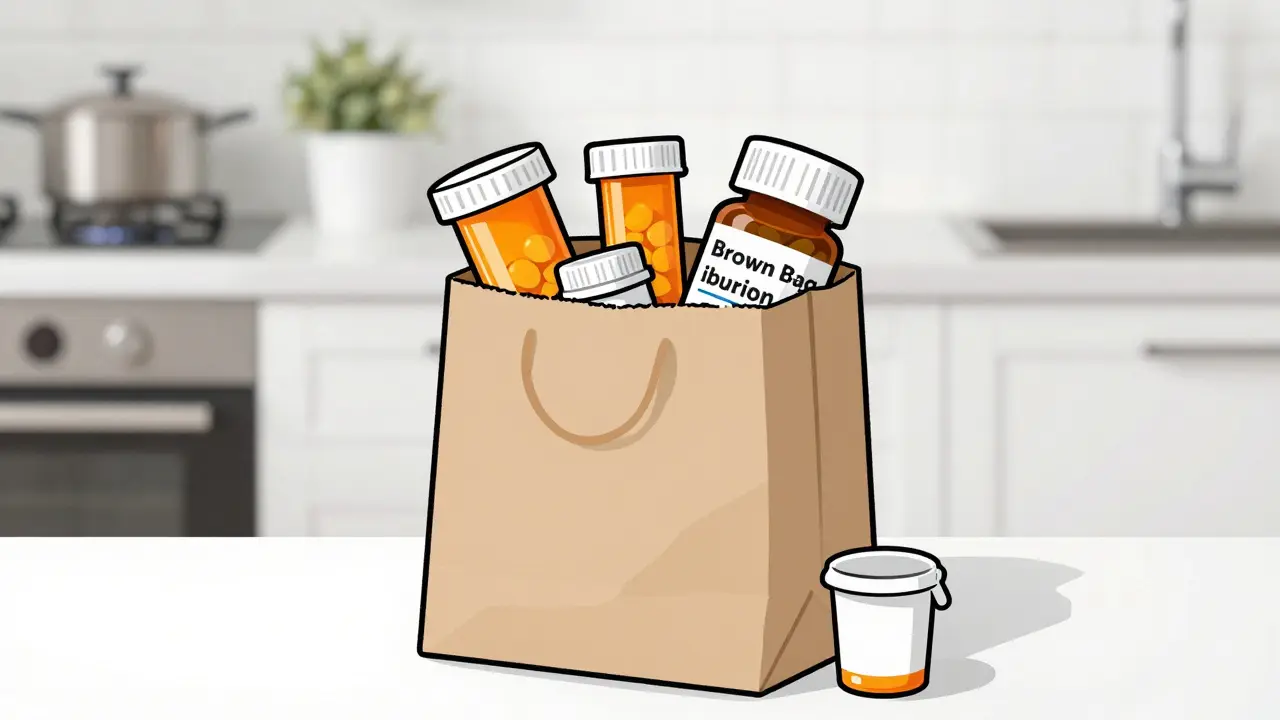
How to prepare your "Brown Bag" for the visit
The gold standard for this process is often called the "brown bag review." Instead of trying to remember everything on the spot, you gather every single thing you ingest in a single bag. To do this right, you should start preparing about 24 hours before your appointment. Spend 15 to 20 minutes scanning your bathroom cabinets, nightstands, and kitchen counters.
Here is exactly what needs to go into that bag:
- All prescription medications: Bring every bottle, even if you think you've stopped taking it or if the bottle is expired.
- Over-the-counter (OTC) drugs: This includes everything from ibuprofen and aspirin to cough syrups.
- Vitamins and Supplements: Don't skip the fish oil, multivitamins, or herbal teas. Some supplements can dangerously interact with prescription meds.
- "As needed" (PRN) medications: Even if you only take a pill once every three months for anxiety or sleep, bring it. Nearly 30% of adverse events involve these occasional medications because patients forget to report them.
A common mistake is discarding empty bottles. About 63% of people throw them away immediately, but those empty containers are valuable clues. They tell your doctor what you were taking and help them understand why a certain symptom might have disappeared or appeared.
The danger of the "pill organizer" trap
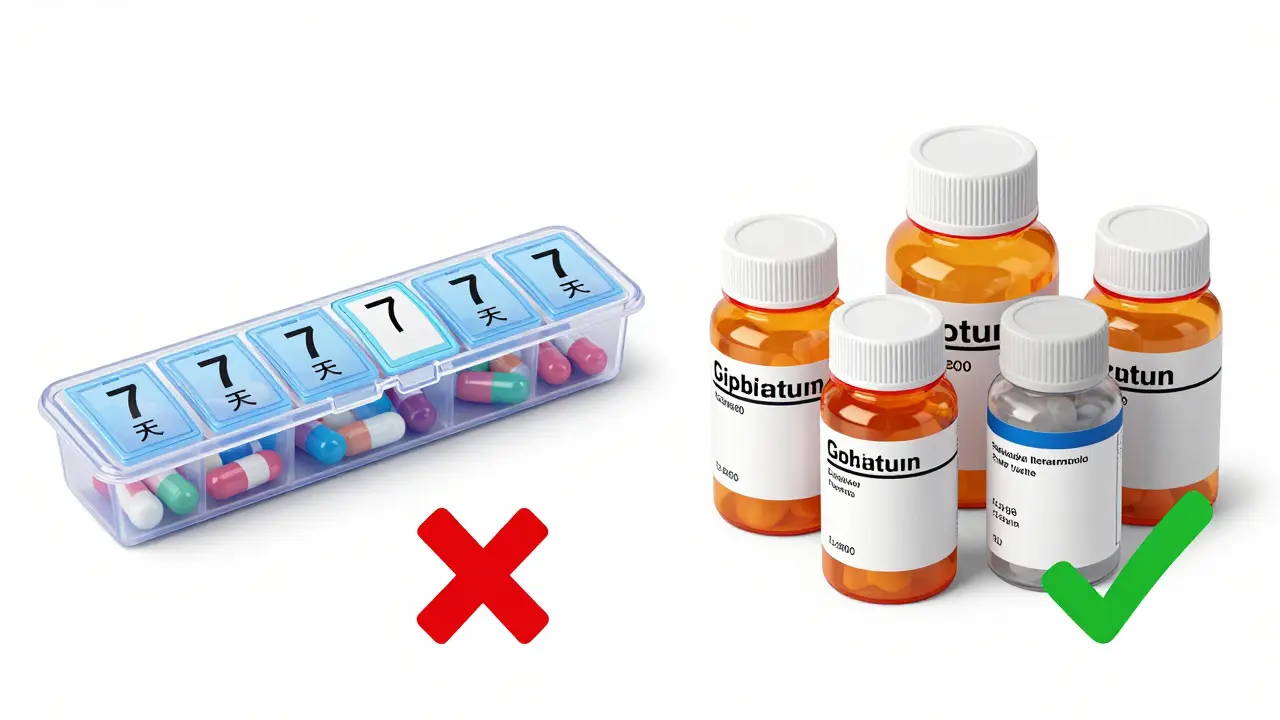
Many of us use weekly 7-compartment pill cases or 14-day organizers to stay on track. While these are great for daily habits, they are a nightmare for Medication Reconciliation. When pills are stripped from their original containers and put into a plastic slot, the vital data-the drug name, strength, lot number, and prescribing doctor-is gone.
Studies show that over 77% of older adults use some form of alternative storage, and nearly 40% consolidate multiple meds into single containers. If you bring only your pill organizer, your doctor has to play a guessing game based on the shape and color of the tablet. This is where mistakes happen. If you use an organizer, you must still bring the original pharmacy bottles along with it so the provider can verify the contents.
| Method | Accuracy Rate | Key Weakness | Best Use Case |
|---|---|---|---|
| Self-Reporting | Lowest (~41%) | Memory lapses, omissions | Quick check-ins only |
| Pill Bottles Only | High (~63%) | Misses stopped medications | Standard office visits |
| Bottles + Pharmacy Records | Highest (~89%) | Requires system integration | Complex polypharmacy |
| Telehealth/Photos | Moderate | Misses 22% of discrepancies | Remote triage |
Dealing with the "shame" of unused meds
It is very common for patients to feel embarrassed when they bring a bottle that is still nearly full, signaling that they haven't been taking their medicine as prescribed. Some avoid bringing these bottles because they don't want to be judged. However, this is actually the most important part of the conversation.
If you aren't taking a medication, your doctor needs to know why. Is it because the side effects are too harsh? Is the cost too high? Or maybe the instructions are too confusing? When you hide an unused bottle, the doctor assumes the medication is working and may increase the dose or add another drug to treat a symptom that is actually just a result of you not taking the first medication. Honesty about non-adherence is a clinical tool that leads to better, more sustainable treatment plans.
Modern tools and the future of reconciliation
While the physical bottle remains the "Rosetta Stone" of healthcare, new tech is helping. Some people use Smart Pill Bottles with digital tracking, and others use apps like Medisafe to keep a running list. These are helpful for daily reminders, but they don't replace the FDA-mandated labeling found on a pharmacy bottle.
We are also seeing a rise in AI-assisted pill identification tools during virtual visits. While these can help identify a loose pill by its imprint, they only have about 78% accuracy for generics. They are a helpful backup, but they can't tell your doctor if the medication is expired or if the dose was changed recently. The most reliable strategy remains the high-tech combination: your physical bottles paired with the clinic's electronic health record and a direct data feed from your pharmacy.
Should I bring medications that I no longer take?
Yes. Bringing discontinued medications allows your provider to confirm exactly when you stopped them and why. It prevents the doctor from accidentally re-prescribing something that caused a bad reaction in the past.
What if I have too many bottles and it feels overwhelming for the staff?
Don't worry about the volume. It is better for a nurse to spend an extra ten minutes sorting through 20 bottles than to miss a dangerous drug interaction. Using a single bag (the brown bag method) helps the staff organize the process quickly.
Do I need to bring my vitamins and herbal supplements?
Absolutely. Many supplements, such as St. John's Wort or high-dose Vitamin K, can significantly change how prescription medications work in your body, either making them less effective or dangerously potent.
What should I do if I already threw away my empty prescription bottles?
In the future, take a clear photo of the label before you recycle the bottle. For now, try to get a printed medication history from your pharmacy, which lists everything filled in the last year.
Can I just show my bottles over a video call during a telehealth visit?
It's better than nothing, but virtual reviews miss about 22% of discrepancies that an in-person check catches. If you have a complex regimen, schedule an in-person visit specifically for a comprehensive medication review.
Next steps for your next visit
If you're managing a few medications, simply bagging them the night before is enough. However, if you are dealing with polypharmacy (taking five or more medications), consider asking your doctor for a dedicated "Medication Review" appointment. This ensures the visit isn't rushed and the provider has the time to truly analyze every interaction.
For those who struggle with organization, try this: every time you get a new prescription, put the old bottle in a special "disposal bag" instead of the trash. Keep that bag until your next appointment. This ensures you never accidentally throw away a piece of your medical history that your doctor might need to see.