
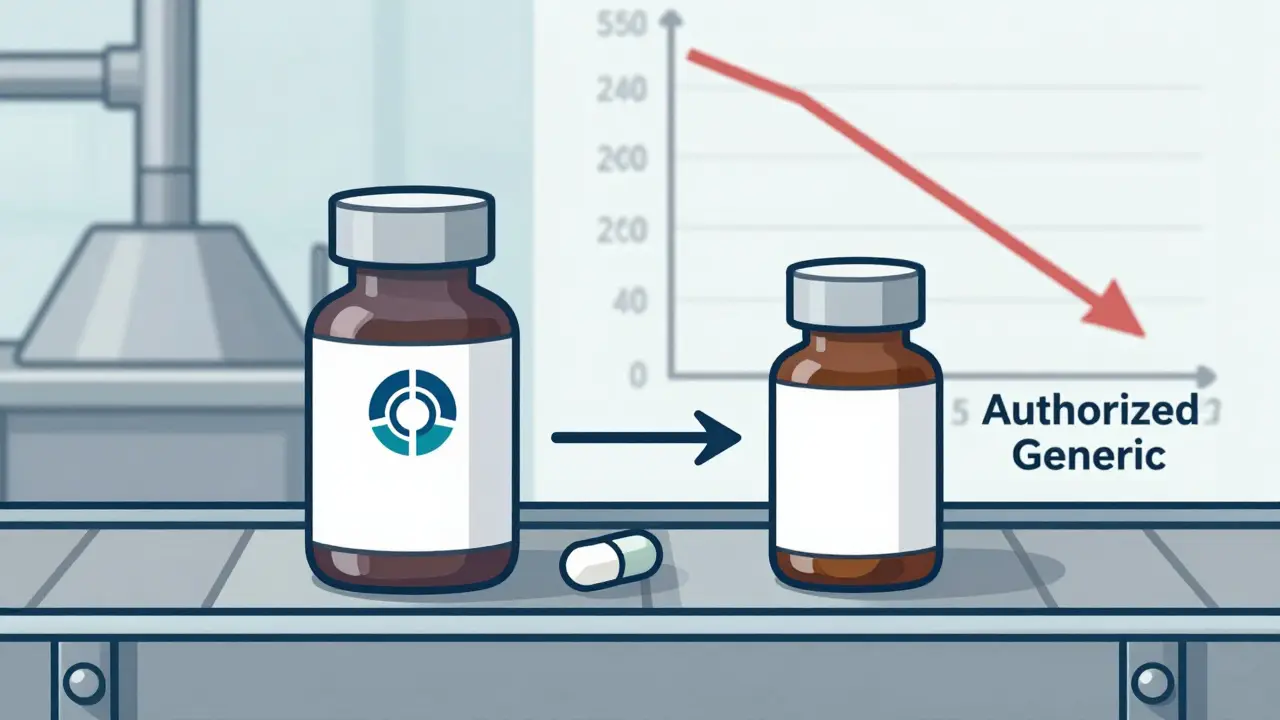
When a brand-name drug loses its patent, you’d expect prices to drop fast - and they usually do. But what if the same company that made the original drug starts selling it under a generic label? That’s not a mistake. It’s called an authorized generic, and it’s reshaping how drugs hit the market after patent expiration.
Authorized generics aren’t copied by rivals. They’re made by the original manufacturer, packaged in plain labeling, and sold at lower prices. Unlike traditional generics that file ANDAs (Abbreviated New Drug Applications), authorized generics skip the approval process because they’re essentially the same pill, same factory, same formula. The FDA has tracked them since 1999, and data shows they’re not rare - 854 launched between 2010 and 2019. The peak? 2014. That’s when brand companies realized they could fight back against generic competition without losing control.
Why Authorized Generics Exist
Think of it like this: when a patent expires, a generic competitor swoops in and cuts the price by 80%. Suddenly, the brand-name company’s sales collapse. But if they launch their own generic version right away, they keep a slice of the market. It’s not charity - it’s strategy.
Here’s how it works: a brand company waits until the first generic competitor gets approval. Then, instead of letting that competitor take 100% of the market, they release their own version. It’s identical. Same active ingredient. Same dosage. Same factory. Just a different label. Customers get the same drug for less money. The company keeps revenue. And the generic competitor? They’re stuck competing against a product they didn’t make.
Studies show that in markets where the first generic got 180 days of exclusivity, about 70% of authorized generics launched before or during that window. That’s not accidental. It’s calculated. The brand manufacturer is using timing as a weapon - undercutting the competitor before they can build momentum.
Where They’re Most Common
Not all drugs get authorized generics. They’re mostly found in oral solid forms - tablets and capsules. Why? Because those are the easiest to replicate. The chemistry is stable. The manufacturing process is well understood. The FDA approves ANDAs for them faster. So when a big-selling pill like omeprazole or metformin goes generic, you’ll often see the brand company’s version pop up too.
Compare that to injectables or biologics. Those are harder to copy. That’s why biosimilars - not authorized generics - dominate those markets. But that’s changing. Starting in 2025, major biologics like ustekinumab and vedolizumab are losing exclusivity. These drugs brought in billions. And now, biosimilars are stepping in. But will brand companies try to launch authorized versions? Maybe. The rules are still being written.
The Changing Game: Why Delays Are Ending
For years, brand companies held off on launching authorized generics. They’d wait months - sometimes years - hoping to milk the brand name as long as possible. But that’s fading. According to RAPS in June 2025, the practice of delaying authorized generic launches is declining. Why?
- Regulators are watching closer. The FDA and Congress are asking tough questions about how these strategies affect drug prices.
- Payers and patients are pushing back. If a drug is identical, why should it cost more just because it has a brand name?
- Market pressure is rising. With over $200 billion in branded drugs set to lose patents between 2025 and 2030, companies can’t afford to sit back.
The result? More timely launches. More competition. More savings. That’s good for patients - and maybe even for manufacturers who realize that controlling the market beats losing it entirely.
The FDA’s New Pilot Program
In October 2025, the FDA announced a major shift: a pilot program to fast-track ANDA reviews for drugs made entirely in the U.S. That includes ingredients, testing, and manufacturing. It’s a direct response to supply chain risks exposed during the pandemic.
What does this mean for authorized generics? Everything. If a brand company wants to make their generic version faster, they’ll now have an incentive to produce it domestically. That could mean more authorized generics made in American factories - not overseas. It could also mean more transparency. If the FDA is prioritizing U.S.-made products, they’ll likely demand clearer data on where these drugs come from.
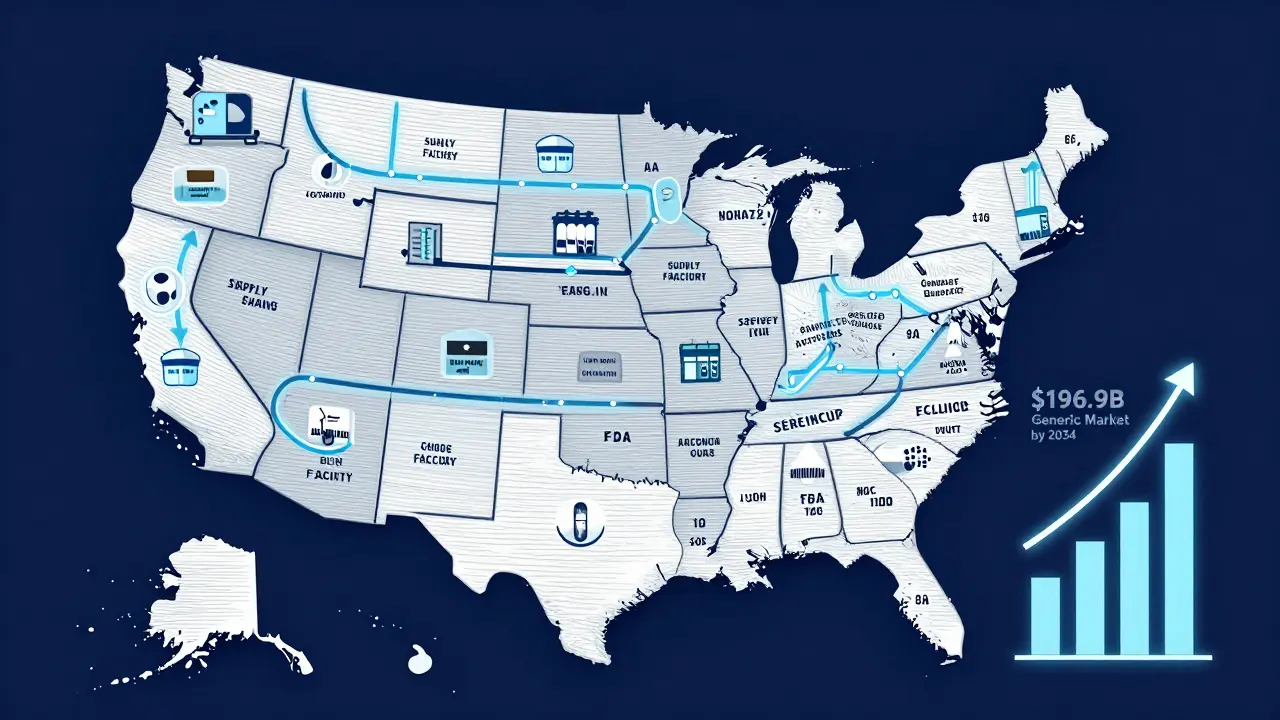
This isn’t just about safety. It’s about economics. The U.S. generic market is expected to hit $196.9 billion by 2034. And the global CRO market supporting these drugs is growing too - projected to reach $11.7 billion by 2034. Companies that adapt to domestic production will have a real edge.
What This Means for Prices and Savings
Generic drugs saved the U.S. healthcare system $467 billion in 2024 alone. Over the last decade? $3.4 trillion. That’s huge. But authorized generics complicate the story.
On one hand, they bring down prices. On the other, they can delay true competition. A 2025 JAMA Health Forum study found that when companies extend market exclusivity - even by delaying generics - they add $2.5 billion in extra costs to commercial insurance plans and $2.4 billion to Medicare over three years. Drugs like imatinib and celecoxib are prime examples.
So here’s the twist: authorized generics aren’t inherently bad. They’re a tool. Used well, they can lower costs quickly. Used poorly, they can stifle competition. The difference? Timing. Transparency. And whether the brand company is trying to help patients - or just protect profits.
The Road Ahead
The future of authorized generics isn’t about disappearing. It’s about evolving.
With over $200 billion in branded drugs losing exclusivity between 2025 and 2030, the pressure to act fast is real. Authorized generics will keep being used - but likely more openly, more quickly, and with more oversight. The FDA’s push for domestic manufacturing will change how they’re made. And as biosimilars enter the scene for complex drugs, we may see hybrid models emerge.
One thing is clear: the days of dragging out patent expirations are ending. Patients, insurers, and regulators are demanding faster access to affordable drugs. Authorized generics can be part of that solution - if they’re used to compete, not to control.
For patients, the message is simple: if your drug suddenly looks different - cheaper, plain packaging - it might be an authorized generic. And that’s not a bad thing. It’s a sign the market is working.
What’s Next for the Market?
By 2030, the global generic drug market could hit $700-800 billion. That’s a massive shift from where we are today. Authorized generics will play a role, but they won’t dominate. Biosimilars, new manufacturing rules, and tighter regulation will shape the real future.
Brand companies aren’t going away. But their power to delay competition is. The winners? Patients who get cheaper drugs faster. And companies that adapt - not resist.
Jack Havard
February 11, 2026 AT 23:43Gloria Ricky
February 12, 2026 AT 00:17christian jon
February 12, 2026 AT 09:24Pat Mun
February 12, 2026 AT 20:11Sophia Nelson
February 13, 2026 AT 11:19Skilken Awe
February 13, 2026 AT 21:15andres az
February 14, 2026 AT 05:28Steve DESTIVELLE
February 15, 2026 AT 05:50Neha Motiwala
February 15, 2026 AT 07:12Craig Staszak
February 16, 2026 AT 10:55alex clo
February 17, 2026 AT 03:54Alyssa Williams
February 17, 2026 AT 22:21