
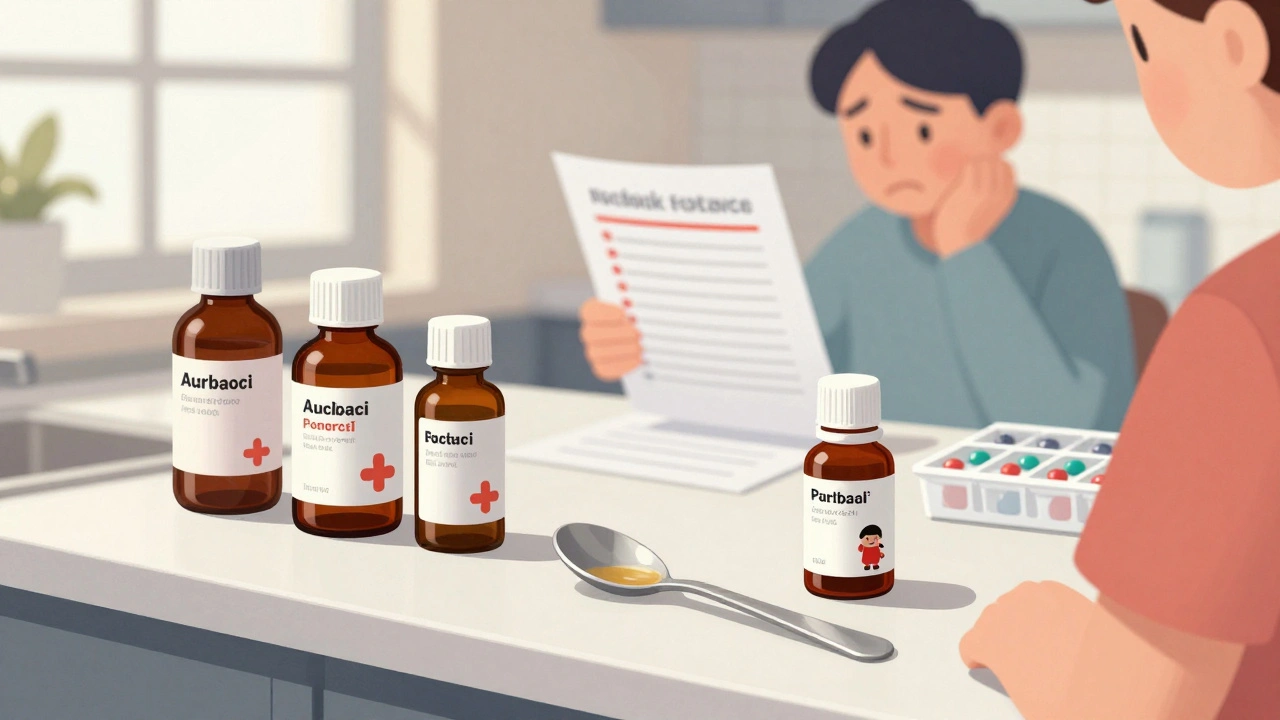
Every year, medication errors send hundreds of thousands of people to the hospital - and many of them happen right in your kitchen, bedroom, or bathroom. It’s not because people are careless. It’s because the system is confusing. One wrong pill, one misread label, one skipped dose - and what should be healing turns dangerous. This isn’t rare. It’s common. And it’s preventable.
What Are the Most Common Medication Mistakes at Home?
Most home medication errors fall into a few predictable patterns. The biggest ones:
- Wrong dose - too much or too little. This happens when people guess based on age instead of weight, or use kitchen spoons instead of measuring cups.
- Missing doses - skipping pills because you forgot, felt better, or couldn’t afford them.
- Wrong medication - grabbing the wrong bottle because they look alike, or mixing up brand and generic names.
- Wrong timing - taking medicine with food when it should be on an empty stomach, or doubling up because you missed a dose.
- Keeping old meds - continuing a drug your doctor stopped, or using leftover antibiotics from last year.
- Double-dosing - taking acetaminophen in your cold medicine and your pain reliever, not realizing they’re the same thing.
Children and older adults are at highest risk. For kids under six, a medication error happens every eight minutes. Parents often confuse infant and children’s concentrations of Tylenol - one is five times stronger. Mixing ibuprofen and acetaminophen to fight fever increases error risk by 47%. For seniors on five or more drugs, the chance of a mistake jumps 30%. And 92% of parents give antibiotics for ear infections for fewer days than prescribed, letting bacteria survive and grow stronger.
Why Do These Errors Keep Happening?
It’s not laziness. It’s not stupidity. It’s complexity.
Doctors rush. Pharmacies print tiny labels. Patients forget half of what they’re told during a 10-minute visit. Studies show 40% to 80% of medical instructions are misunderstood or forgotten right after leaving the clinic. Language barriers, poor lighting, cluttered medicine cabinets, and multiple caregivers all add to the risk.
Look-alike, sound-alike drugs are a hidden trap. Amlodipine and Amiodarone. Hydroxyzine and Hydralazine. One letter off, same color bottle - and you’re giving a heart drug instead of an allergy pill. Even pharmacies make mistakes. A 2023 NCBI review found that 68% of preventable home errors trace back to bad handoff from hospitals - wrong instructions, missing paperwork, unclear discharge summaries.
And cost plays a role. People skip doses because they can’t afford refills. Others cut pills in half, not realizing the medication isn’t designed to be split. One study found that nearly 1 in 3 home care patients skips doses because of money worries.
How to Prevent Medication Errors - Simple, Proven Steps
You don’t need a pharmacy degree to keep your family safe. Here’s what actually works:
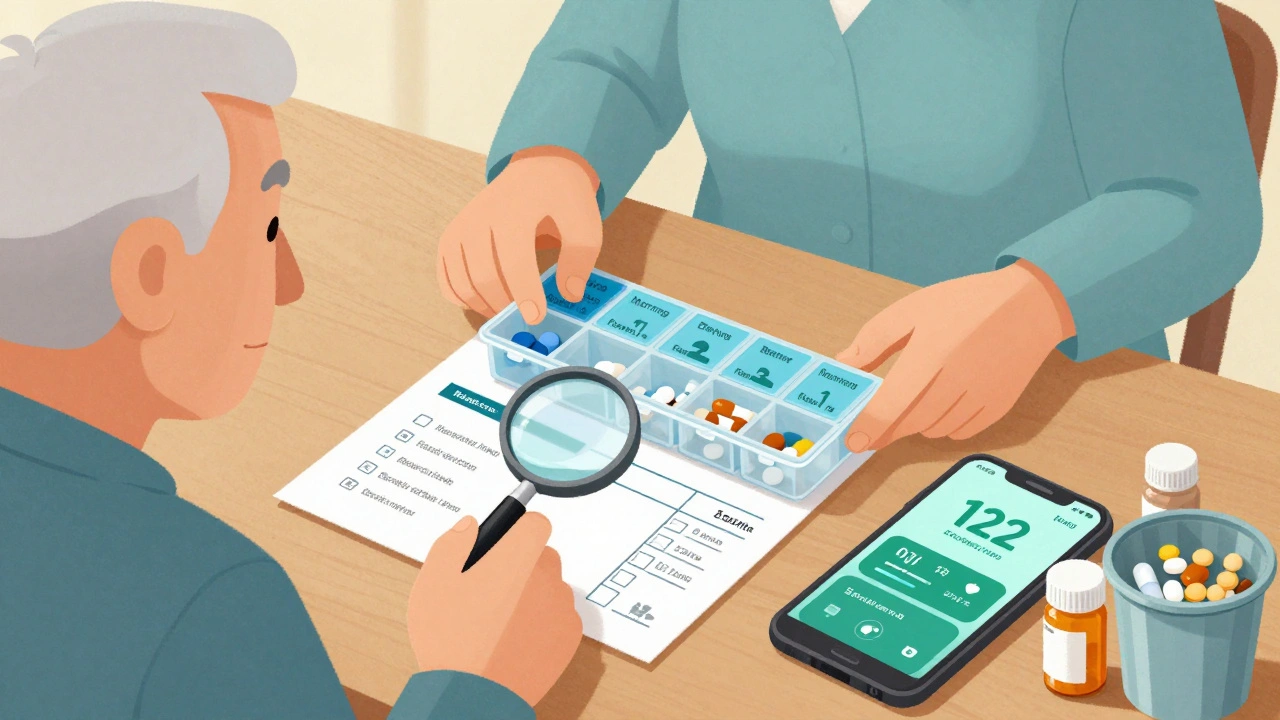
- Keep a live, updated list - Write down every medication you take, including vitamins, supplements, and over-the-counter drugs. Include the dose, why you take it, and when. Update it every time your doctor changes something. Show this list to every new provider - even the dentist.
- Use a pill organizer - Buy one with clear labels and separate compartments for morning, afternoon, evening, and night. Fill it weekly. If you’re not sure what goes where, ask your pharmacist to help you set it up.
- Always check the label - Don’t assume. Look at the name, dose, and instructions every single time you take a pill. Compare it to your list. If it looks different, stop. Call your pharmacy.
- Use the right measuring tool - Never use a kitchen spoon. Use the dosing cup, syringe, or dropper that came with the medicine. If it’s missing, ask your pharmacy for one. They’ll give it to you free.
- Know your child’s weight - Dosing for kids isn’t based on age. It’s based on weight. Keep a recent weight on file. When buying fever medicine, check the label for weight-based dosing, not age.
- Never mix cold and fever meds - Many cold syrups already contain acetaminophen or ibuprofen. Taking them with separate pain relievers can lead to overdose. Read every ingredient.
- Ask for the teach-back - When your doctor gives you new instructions, say: “Can you help me explain this back to you?” If you can’t repeat the instructions in your own words, you didn’t understand them. Keep asking until you can.
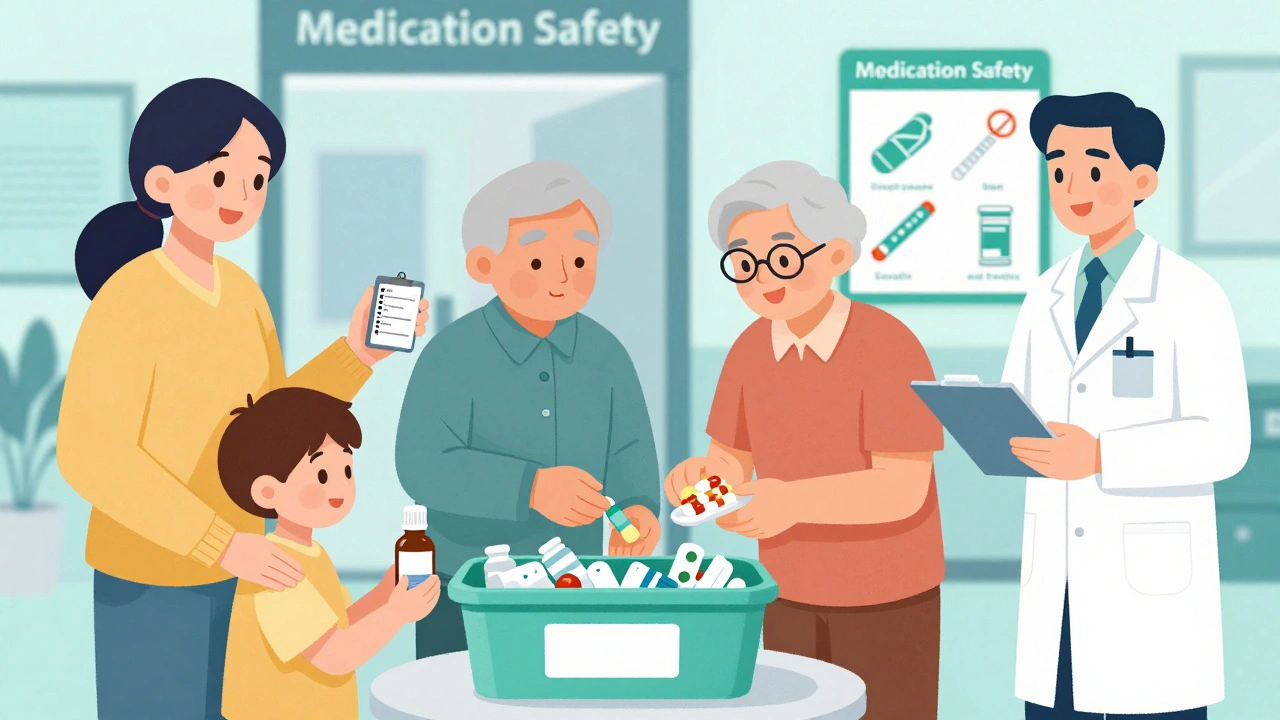
- Dispose of old meds safely - Don’t flush them. Don’t throw them in the trash. Take them to a pharmacy drop box or a community drug take-back day. Expired or unused meds are a major source of accidental poisoning, especially in kids.
Special Cases: Kids and Seniors
Children under six need extra care. Their bodies process medicine differently. Always:
- Use the concentration listed for your child’s weight - infant drops are 5x stronger than children’s liquid.
- Never alternate acetaminophen and ibuprofen unless your doctor says so - it’s tempting, but it increases mistakes.
- Keep all meds locked up and out of reach, even if you think they’re “just a little.”
For older adults:
- Use a pill dispenser with alarms or smartphone reminders.
- Ask your pharmacist to review all your meds at least once a year - they can spot dangerous interactions.
- Don’t be afraid to ask: “Is this still necessary?” Many seniors take drugs they no longer need.
- Ask for large-print labels or audio instructions if vision or memory is an issue.
What to Do If You Suspect a Mistake
If you think you gave the wrong dose, took the wrong pill, or mixed medications:
- Don’t panic. Don’t wait.
- Call your pharmacist immediately. They’re trained to handle this.
- If the person is sick, dizzy, vomiting, or having trouble breathing, call emergency services.
- Have the medicine bottle handy - they’ll need the exact name and strength.
Pharmacists see this every day. They won’t judge. They’ll help. And if you’re ever unsure - call. Better safe than sorry.
Final Thought: Safety Is a Habit, Not a One-Time Fix
Medication safety isn’t about being perfect. It’s about building systems that catch mistakes before they hurt someone. A labeled pill box. A written list. A phone call to the pharmacy. These aren’t extra steps - they’re your safety net.
Every year, 1.5 million Americans are injured by medication errors at home. Most of them never had to happen. You don’t need to be a nurse. You just need to be careful. And consistent. And willing to ask questions.
Because the right medicine, at the right time, in the right dose - that’s what heals. Everything else? That’s just risk.
Carole Nkosi
December 6, 2025 AT 10:21Let’s be real - this whole system is designed to fail you. Pharma companies don’t want you to understand your meds, they want you dependent. The labels are tiny, the instructions are gibberish, and the pharmacists are overworked and underpaid. This isn’t about ‘carelessness’ - it’s about corporate negligence wrapped in a white coat. You think you’re safe with your pill organizer? Nah. They still mix up the bottles. They still mislabel. They still profit from your confusion. And you? You’re just the collateral damage in a $1.5 trillion industry that doesn’t care if you live or die - as long as you keep buying.
Stop blaming yourself. Start blaming the machine.
Stephanie Bodde
December 7, 2025 AT 16:18This is SO important!! 💪 I started using a pill organizer after my grandma almost took double her blood pressure med - total scare. Now I fill it every Sunday with my mom and we check the list together. Small habits = big safety net. 🙌 You don’t need to be perfect, just consistent. And PLEASE, if you’re unsure - call your pharmacy. They’re angels in lab coats. ❤️
Philip Kristy Wijaya
December 8, 2025 AT 02:05Jennifer Patrician
December 9, 2025 AT 11:51Ever wonder why all the meds look the same? They’re designed that way. Big Pharma wants you confused. They want you mixing pills. They want you taking expired stuff because you don’t know what’s what. The government? They’re in on it. FDA doesn’t test generics properly. Pharmacies get kickbacks from manufacturers. Your ‘pill organizer’? It’s a placebo for safety. Real solution? Burn the whole system down. Or at least stop trusting anything labeled ‘OTC.’ They’re just gateway drugs to bigger profits.
And don’t even get me started on the ‘teach-back’ thing. That’s just a PR stunt to make doctors feel good while they rush out the door. You think they remember your name? They don’t even remember their own kid’s birthday.
Mellissa Landrum
December 11, 2025 AT 00:33Mark Curry
December 11, 2025 AT 06:34I’ve been using a simple notebook for my meds since my dad had a bad reaction. Just write it down. Date. Name. Dose. Time. Why. I keep it in my wallet. I show it to every doctor. No fancy apps. No alarms. Just pen and paper. It’s not glamorous. But it works.
And yeah - if you’re not sure, call the pharmacy. They’ve seen it all. No judgment. Just help.
Simple things save lives.
Manish Shankar
December 12, 2025 AT 19:17As a healthcare professional from India, I have observed that the challenges described are universal, transcending borders. In rural communities, where literacy rates are low and access to pharmacists is limited, the consequences are even more dire. The use of kitchen spoons for dosing is not merely a mistake - it is a cultural norm born of necessity. The solution lies not only in individual vigilance but in systemic interventions: community health worker training, pictorial medication guides, and multilingual labeling in vernacular languages. We must move beyond Western-centric solutions and design for the realities of those without access to technology or formal education. Safety must be accessible, not aspirational.
Annie Grajewski
December 14, 2025 AT 00:19Oh wow. A 10-step guide to not dying from your own medicine. How revolutionary. Did you get this from a corporate wellness webinar? ‘Keep a live list’ - sure, because I have nothing better to do than update a spreadsheet every time my doctor changes my blood pressure med. And ‘ask for the teach-back’? Like my 78-year-old mom is gonna say ‘Hey doc, can you explain this like I’m 5?’ while you’re checking your watch and wondering if lunch is ready?
And let’s not forget the real issue: no one can afford these meds. So they skip doses. And now we’re supposed to feel guilty for that? Nah. The problem isn’t that people are dumb. It’s that the system is rigged. But hey - go ahead and buy that $25 pill organizer. It’ll make you feel better. And that’s what they want.
Mark Ziegenbein
December 14, 2025 AT 04:31One cannot help but observe with a profound sense of existential melancholy the grotesque ballet of human vulnerability enacted daily within the domestic sphere - the trembling hands of the elderly, the distracted parent, the overwhelmed caregiver - all navigating a labyrinth of pharmaceutical nomenclature that has been deliberately obfuscated by profit-driven institutions whose sole liturgy is the sacrament of capital accumulation.
And yet - and yet - we are told to ‘use a pill organizer’ as if this plastic compartmentalized toy, this bourgeois trinket of order, could possibly atone for the collapse of the social contract that once ensured that the sick were not left to decipher hieroglyphs on vials while their children slept in the next room.
Where are the physicians? Where are the regulators? Where is the dignity of care? We have outsourced our mortality to a system that treats the human body as a revenue stream - and now we are expected to solve its failures with Post-It notes and syringes from the back of the medicine cabinet?
It is not negligence. It is annihilation dressed in wellness jargon.
Rupa DasGupta
December 14, 2025 AT 22:14I’m just gonna say it - my mom took her husband’s heart med by accident last year because they both had blue bottles. He almost died. Now she won’t even look at pills. She cries every time she opens the cabinet. And yeah, I use a pill organizer… but I still double-check everything. Three times. I’m not okay with this. No one should have to live like this. I just want to know why no one’s doing anything real about it. Like… actually fixing the system. Not just telling us to write things down. We’re tired. We’re scared. And we’re not stupid. We just need help.
😭
Marvin Gordon
December 15, 2025 AT 20:43Love this breakdown. Real talk - safety isn’t about being perfect. It’s about building habits so strong they become automatic. I started using the dosing cup from the pharmacy after my niece got the wrong dose of Motrin. Now I keep it next to the cereal box. No thinking. Just do it.
And yeah - if you’re unsure? Call the pharmacy. They’ve seen a thousand mistakes. They’ve helped people like you. No shame. No rush. Just call.
You’re not alone in this. And you’re doing better than you think.