
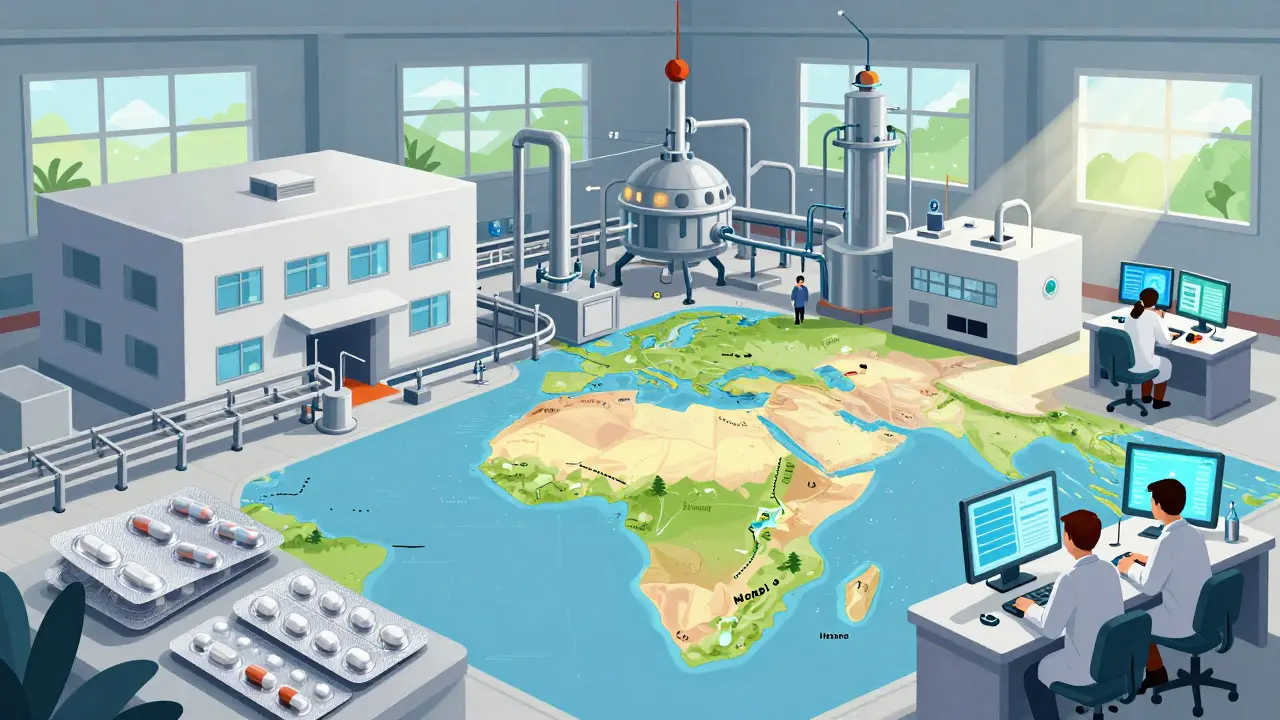
For the first time in history, a first-line HIV treatment made in Africa is being shipped across the continent - and it’s changing everything.
On May 6, 2025, a shipment left a factory in Kenya bound for Mozambique. Inside were pills - not just any pills, but TLD: a combination of tenofovir, lamivudine, and dolutegravir. This was the first time the Global Fund bought an HIV medicine manufactured on African soil. And it wasn’t a test run. This batch was enough to treat more than 72,000 people every year.
For decades, African countries relied on imported drugs - mostly from India - to fight HIV. Even though the continent carries 65% of the world’s HIV cases, it imported about 80% of its medicines. That meant delays, price spikes, and supply breaks when global logistics failed, like during the pandemic. Now, that’s starting to change. Local production isn’t just a nice idea. It’s becoming the new normal.
Why TLD is the gold standard in HIV treatment
Not all HIV drugs are the same. The old regimens - like those based on efavirenz - had side effects that made people stop taking them. They also didn’t work as well if someone missed a dose. TLD changed that. It’s simpler: one pill, once a day. It’s more effective. It’s harder for the virus to become resistant. And it’s gentler on the body.
The World Health Organization (WHO) gave TLD its prequalification stamp in 2023. That’s not easy to get. Manufacturers have to prove their pills are just as safe and strong as the brand-name version. Universal Corporation Ltd in Kenya became the first African company to do it. That wasn’t luck. It took years of investment, training, and support from the WHO and the Global Fund to get there.
Now, TLD is the go-to first-line treatment in most low-income countries. And for the first time, it’s being made right where it’s needed.
How Africa is building its own drug-making capacity
Manufacturing medicine isn’t like assembling phones. It needs clean rooms, strict quality controls, trained chemists, and regulators who know what to look for. Countries like Kenya, Nigeria, Rwanda, and South Africa are now investing in this.
Universal Corporation in Kenya didn’t start from scratch. They partnered with the Medicines Patent Pool, which helped them access the patents for dolutegravir without paying huge fees. That’s how generics work - they copy the formula after the patent expires, but only if they can prove they’re just as good.
Nigeria’s Codix Bio is doing something similar with HIV tests. They got a license from SD Biosensor to make rapid diagnostic kits locally. Before, African clinics had to wait months for test kits from Europe or Asia. Now, they’re being made in Lagos, shipped within days, and priced 40% lower.
This isn’t just about pills and tests. It’s about building a whole system: labs, supply chains, regulatory agencies, and skilled workers. The African Union’s Pharmaceutical Manufacturing Plan for Africa wants local production to jump from 2-3% of the continent’s needs to 40% by 2040. It’s ambitious. But it’s no longer a dream.
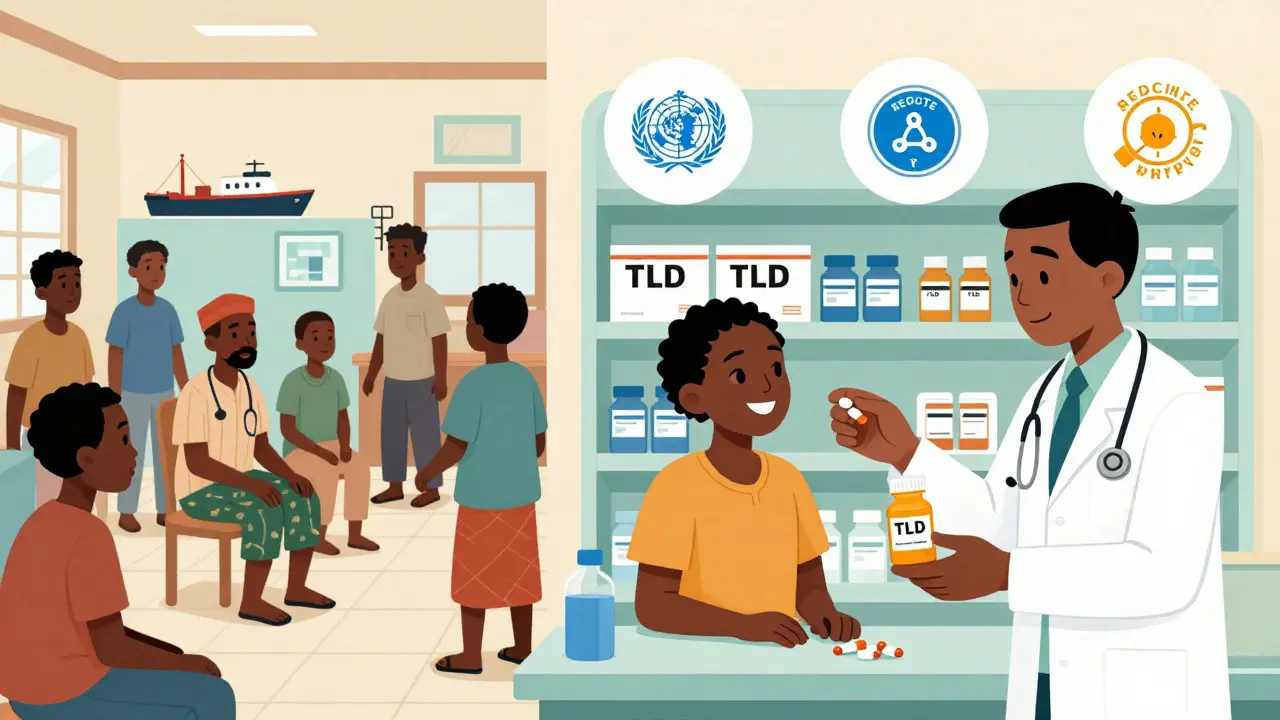
The Global Fund’s role: buying African-made drugs to create demand
Here’s the key insight: no company will build a factory if no one is buying. That’s where the Global Fund stepped in.
For years, the Global Fund bought almost all its ARVs from India. It was cheap. It worked. But it didn’t help African economies grow. So in 2024, they changed their rules. They started setting aside a portion of their budget - about $100 million annually - specifically for African-made products.
That’s called market-shaping. It’s not charity. It’s smart economics. By guaranteeing demand, they gave Kenyan, Nigerian, and South African manufacturers the confidence to invest in bigger factories, hire more staff, and upgrade equipment.
Mark Edington, who runs grants at the Global Fund, said it plainly: “Procuring African-made health products is now a top priority.” That’s not just a slogan. It’s a policy shift backed by real money.
What’s next? Long-acting injectables and PrEP breakthroughs
HIV treatment is moving beyond daily pills. In October 2025, South Africa became the first African country to approve a twice-yearly injection for HIV treatment: cabotegravir long-acting. It’s a game-changer for people who struggle with daily pills - teens, truck drivers, sex workers, people living in remote areas.
And it’s not just treatment. Prevention is getting better too. Gilead Sciences, the maker of the brand-name PrEP drug Truvada, signed agreements to let African manufacturers produce generic versions of lenacapavir - a new, ultra-long-acting PrEP option that works for up to six months with one shot. They’re giving it away at cost until generics can take over.
Six African companies already have licenses to make the injectable cabotegravir. Experts say prices could drop 80-90% once these generics hit the market. That means millions more people could get protection - not just in cities, but in villages with no clinics.
The numbers don’t lie - progress is real, but the gap is huge
Let’s look at the data. In 2010, 1.3 million people died from AIDS-related causes globally. In 2022, that number dropped to 630,000. Why? Because more people got on treatment.
By 2023, Eastern and Southern Africa hit 93% of people knowing their HIV status, 83% on treatment, and 78% with the virus suppressed. That’s huge progress. But in Western and Central Africa, the numbers are lower: 81%-76%-70%. Why? Because access is still patchy. Remote areas lack clinics. Pharmacies run out of stock. Health workers are stretched thin.
Africa needs about 15 million person-years of first-line ARVs every year. Right now, local manufacturers can supply maybe 1-2 million. That’s less than 15%. Even with new factories opening by late 2025, it will take years to catch up.
The Clinton Health Access Initiative says the bottleneck isn’t just manufacturing. It’s regulation. Each country has its own rules. A drug approved in Kenya might take two years to get cleared in Nigeria. Harmonizing those rules is the next big challenge.
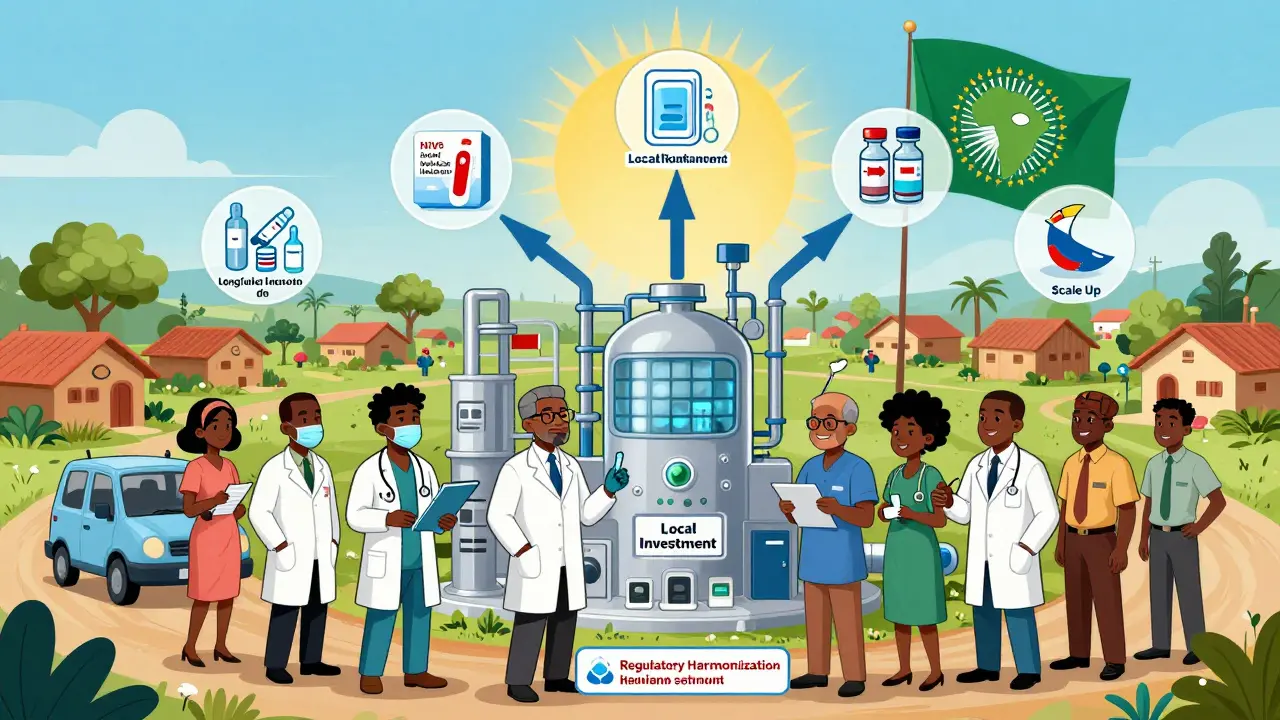
Why local production means more than just medicine
Building drug factories in Africa isn’t just about saving lives. It’s about building resilience.
When a country can make its own medicines, it doesn’t have to wait for a shipment from halfway across the world. It doesn’t get held hostage by shipping delays or currency crashes. It can respond faster to outbreaks - whether it’s HIV, Ebola, or the next pandemic.
It also creates jobs. Not just factory workers. Engineers. Lab technicians. Quality control inspectors. Logistics managers. Export specialists. A single modern pharma plant can employ 500-1,000 people directly - and thousands more in supporting roles.
And it shifts power. For too long, African health decisions were made in Geneva, New York, or Basel. Now, African scientists, regulators, and manufacturers are shaping the future of their own health systems.
As Dr. Ussene Hilário Isse, Mozambique’s Health Minister, said: “Africa’s growing capacity to locally produce lifesaving medications marks a strategic shift.”
What still needs to happen
There’s no sugarcoating it. The job isn’t done.
Regulatory systems need to be faster and more aligned across borders. Right now, each country tests the same drug separately. That’s slow and expensive. The WHO is pushing for mutual recognition - if a drug passes in Kenya, it should be accepted in Tanzania, Uganda, and Zambia too.
Funding is still uneven. Most investment comes from international donors. African governments need to spend more on their own health manufacturing - not just on buying drugs, but on building factories, training people, and keeping the lights on.
And there’s the issue of scale. One factory in Kenya can’t meet the needs of 1.3 billion people. We need more. Dozens more. And they need to be spread out - not just in big cities, but in regions with high HIV rates but no infrastructure.
Finally, the focus can’t stop at HIV. The same systems being built for ARVs can be used for malaria, TB, diabetes, and hypertension drugs. This isn’t just an HIV story. It’s the foundation of a new African health economy.
What you need to know right now
- African-made HIV drugs are real, approved, and being used now - starting with TLD from Kenya.
- The Global Fund is buying them on purpose to create a market.
- Long-acting injectables for treatment and prevention are coming fast, with African companies ready to make generics.
- Local production cuts costs, cuts delays, and builds health security.
- But we’re still far from enough. We need more factories, faster approvals, and African governments stepping up.
This isn’t a future vision. It’s happening now. And it’s the most important shift in global health in a decade.
Are African-made HIV drugs safe?
Yes. All African-made antiretroviral drugs that are procured by the Global Fund must pass WHO prequalification. This means they meet the same strict quality, safety, and effectiveness standards as brand-name drugs made in the U.S. or Europe. Universal Corporation in Kenya, the first African manufacturer to produce WHO-prequalified TLD, underwent multiple inspections and lab tests before being approved.
Why not just keep buying from India?
India still makes high-quality, low-cost ARVs. But relying only on imports creates risks. Shipping delays, political tensions, and global supply chain shocks - like during COVID - can cut off medicine. Local production means faster delivery, lower transport costs, and more control. It also builds skills and jobs inside Africa, which helps the whole economy.
How much cheaper are African-made generics?
TLD made in Kenya costs about 15-20% less than the Indian version. That’s not a huge difference yet, but it’s growing. Once more manufacturers enter the market and scale up, prices could drop another 30-40%. For long-acting injectables, generic versions are expected to cost 80-90% less than the brand-name product once they launch.
Can African countries make other medicines too?
Absolutely. The same factories making HIV drugs can produce malaria treatments, TB medicines, insulin, and even vaccines. Nigeria is already making rapid HIV tests. Rwanda is building a vaccine plant. The goal isn’t just HIV - it’s to reduce the continent’s total dependence on imported medicines, which currently stands at 80%.
Is this sustainable without foreign aid?
Not yet - but it’s getting closer. Right now, international donors like the Global Fund, Unitaid, and the Gates Foundation are funding the early stages. But African governments are starting to invest too. South Africa and Kenya have created national pharmaceutical funds. The long-term goal is for African countries to buy locally-made drugs using their own budgets, not just donor money. That’s the real test of sustainability.
Diksha Srivastava
January 31, 2026 AT 15:54Local production isn’t just cheaper-it’s dignified.
Sidhanth SY
February 1, 2026 AT 19:20Rohit Kumar
February 2, 2026 AT 16:40Lily Steele
February 3, 2026 AT 02:51Marc Bains
February 3, 2026 AT 11:54Natasha Plebani
February 4, 2026 AT 10:31Darren Gormley
February 4, 2026 AT 12:41Mike Rose
February 5, 2026 AT 13:35Russ Kelemen
February 5, 2026 AT 13:48When a mom in rural Malawi can get her kid’s treatment in 3 days instead of 3 months? That’s not a policy win. That’s a miracle. And it’s happening.
Now let’s make sure the next generation of factories aren’t just in Nairobi or Lagos-but in Kinshasa, in Bamako, in Juba. That’s where the need is deepest.